



When we talk about organization, it might seem strange to focus on the kitchen before any other room in the house. It would be like putting the cart before the horse. But, even at the risk of seeming a bit disorganized (which isn't the case), we're going for it. Intuition—and interior designers—tell us that the kitchen has become the heart of the home, the place from which all the design work begins. And who are we to argue with that?
From the 1960s onwards, kitchens became one of the most important parts of the house
Architect Jaime Prous, who always tries to push the boundaries of architectural solutions, recalls that, until the 1960s, kitchens were relegated to a separate and usually secondary space. "But, from then on, with the Case Study Houses by Richard Neutra, the Eameses, and Eero Saarinen, they began to form part of the main, public life of homes," he explains.
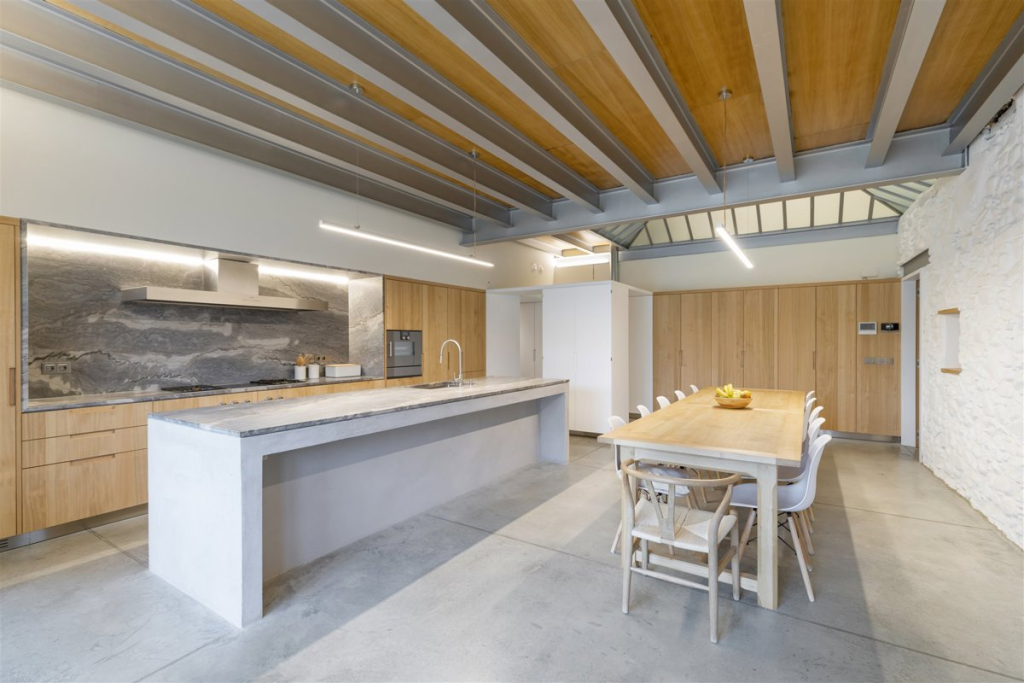
And from there, the can of worms opened, and "kitchens that hide and disappear behind a sliding door, island or peninsula designs where you can hide or cover up everything you don't want to show, games with different levels to differentiate the categories of spaces... Even going back to segregating it, as was done in the past," he says.
Hooked solutions for kitchen organization
This increased visibility has led to the development of more complex, more subtle cooking systems. Three-Michelin-starred chef Quique Dacosta agrees with Prous's observation: "In terms of spatial design, there has been significant progress," says the renowned chef from Extremadura. "I remember that, in the past, the oven was practically just a place to store the pans. Now there are hooks for hanging utensils... Everything is much more thoughtfully designed than before."
A collaborator with Porcelanosa, when he has designed for Gamadecor, the multinational's kitchen brand, he says that he has tried to transfer the automation of the professional sphere to the domestic sphere, replicating that order and that organized way of working so that, when we invite a group of friends for dinner, disorder does not prevail.
"Sometimes you're preparing something simple, like spaghetti with tomato sauce, and it descends into absolute chaos, like something out of a Marx Brothers movie. And that's because they're not designed for optimal functionality," Dacosta explains. He illustrates: "For example, the sink can't be next to the dishwasher or the trash can drawer, because if two people are cooking and you need to open the drawer, you have to ask permission.".
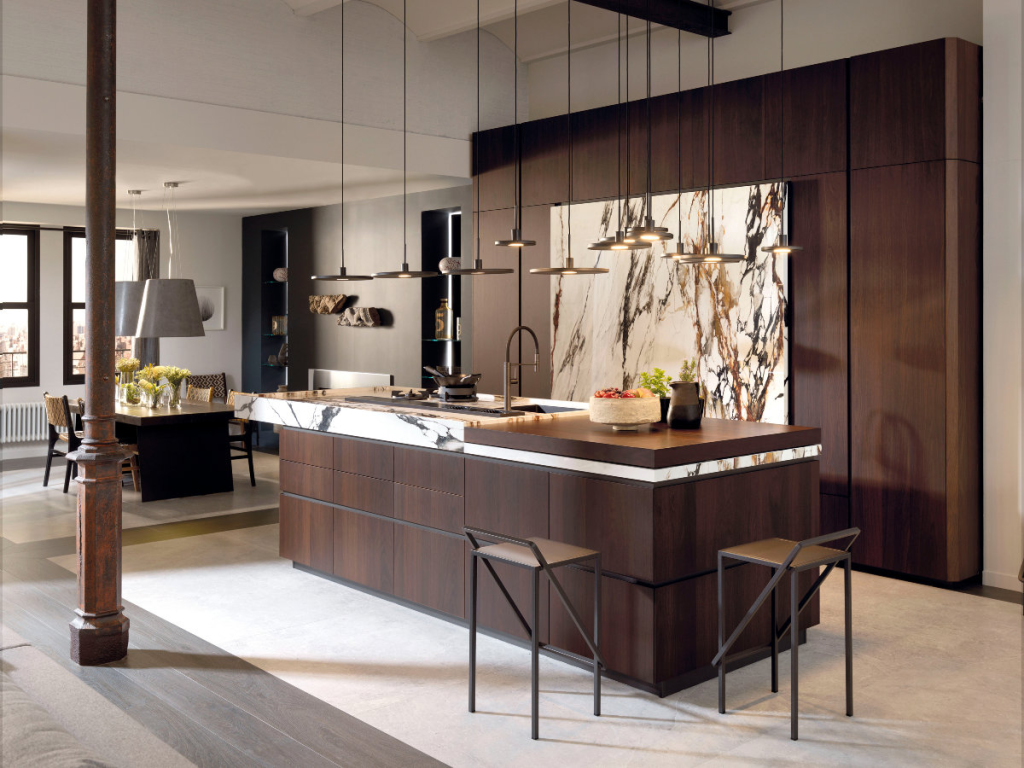
As journalist Daniela Santos notes in her book 200 Ideas for Organizing Your Home (Loft), the contemporary kitchen is a highly technological space where aesthetics and practicality merge like nowhere else. "Above all, it must have great functionality in its different work areas. A well-designed kitchen saves time and makes cooking and cleaning up easier. It should also integrate appliances, with their placement often dictated by the availability of electrical outlets."
How do you achieve order in the kitchen?
The kitchen is a workspace, and as such, organization and order are paramount. Furthermore, as chef Quique Dacosta reminds us, it's also a potentially dangerous place, since "we're using knives, hot oil... We can cut ourselves, burn ourselves..." he warns.
We need to be extra careful and resourceful, making the most of the walls and all available space. And keep the countertop clear to ensure a good first impression every time we enter. If we have a pantry, instead of improvising, we need to plan it, installing shelves, drawers, baskets, and everything else we need.
Quique Dacosta: haute cuisine applied to the home
The chef with three Michelin stars acknowledges that a very pre-established, not anarchic, order is necessary when working in haute cuisine, "so that everyone goes through the same processes, so that they are doing the things that have to happen at the same time."
At home, she also likes to follow a certain method, but without being obsessive. "Knowing that the legumes are here and the paellas there, and that they're arranged from the bottom up, gives our family a sense of security." Above all, she likes to practice a structured approach to cooking because she has a 12-year-old son and a 14-year-old daughter. "It's a code of conduct that will create mechanisms that will make their lives run more smoothly.".
Jaime Prous: architecture of daily life
The architecture of the living-dining-kitchen area is one of Jaime Prous's specialties. "This multi-spatial setting—with which he also identifies personally—has brought about a change in the way we relate to each other," he says. "For example, in Victorian houses, the kitchen was a segregated and gloomy space intended for servants, which had nothing to do with the main or public areas of the house," he maintains.
“Today, in a much more advanced society, the kitchen represents the heart of the home.” The architect applies this vision to the space he inhabits, and recalls the evolution that the world of kitchens has undergone: “from Joe Colombo’s famous Minikitchen (1963), reissued by Boffi, which becomes a flexible and mobile element, to the workshop module of the b2 system by bulthaup, where a wooden chest opens up and everything is inside,” he says.







