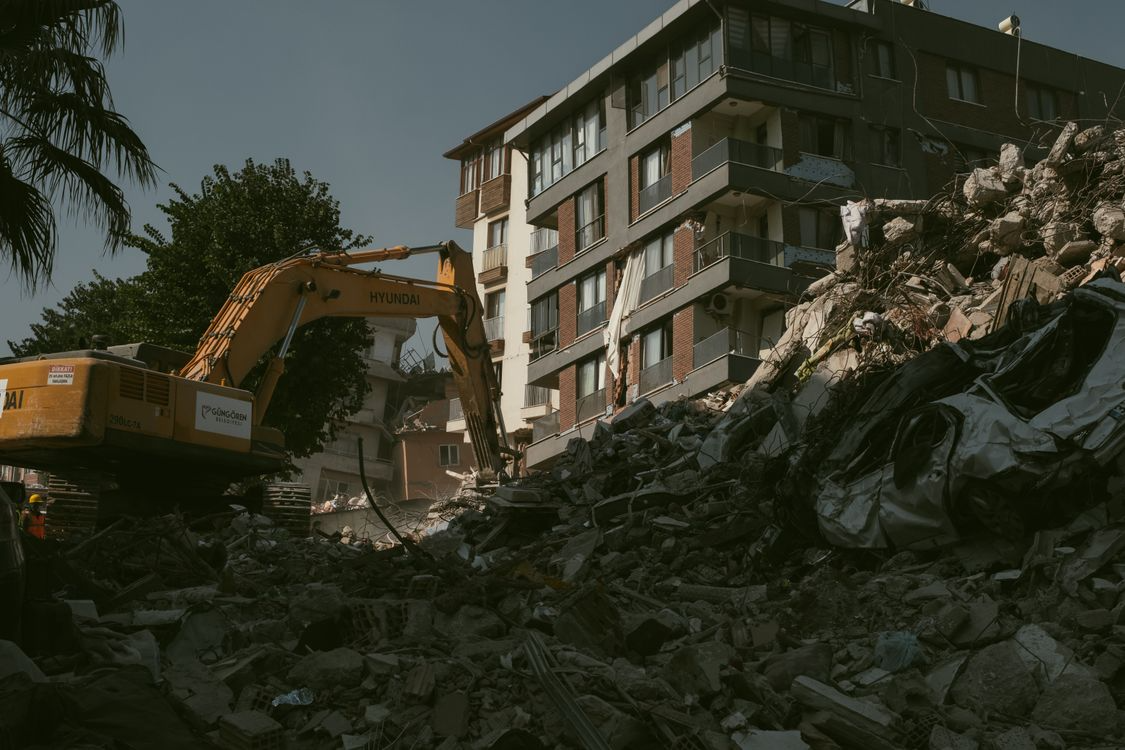
The earthquakes that struck Venezuela this week have reignited a natural concern among Dominicans: are our buildings truly prepared to withstand a major event? The answer deserves to be analyzed calmly, but also responsibly.
The Dominican Republic is part of a highly seismic region. Our history demonstrates this, and the 2010 Haiti earthquake forever changed how structures are designed in our country. Based on that experience, the Regulation for Seismic Analysis and Design of Structures (R-001) came into effect, a much more demanding set of regulations that incorporated lessons learned from major earthquakes around the world.
The standard stipulates that buildings must be designed for a seismic hazard with a return period of 2,475 years, equivalent to a mere 2% probability of being exceeded in 50 years. In other words, modern structures are designed to withstand highly severe seismic events, far exceeding the magnitude of the most frequent earthquakes.
Likewise, the regulations require the evaluation of fundamental parameters such as the seismic zone, the type of soil, the importance of the building, structural regularity, ductility (the ability to deform without collapsing) and the control of displacements between floors.
It also restricts high-risk configurations, such as so-called soft floors, which are responsible for the collapse of numerous buildings in earthquakes around the world.
In cities like Santo Domingo, Santiago, Punta Cana, La Romana, Puerto Plata and Samaná, where much of the urban and tourist development is concentrated, compliance with these requirements is crucial for the safety of thousands of families and important investments.
However, there is an aspect just as important as design: technical supervision during construction. An excellent structural design can lose much of its responsiveness if, during execution, the plans are not followed, materials are substituted, the reinforcing steel is modified, dimensions are altered, or construction procedures are omitted.
Therefore, a great guarantee of the construction of a safe building depends not only on having good regulations, but on each stage of the work being verified through objectively professional technical supervision, capable of ensuring that what is built is exactly what was designed and adheres to the standards.
It is also important to understand that no regulation in the world guarantees that a building will remain intact in the event of an earthquake that exceeds the values for which it was designed.
Modern engineering has an even more important goal: to prevent the collapse of the structure and preserve people's lives.
The tragedy in Venezuela should prompt us to reflect, not to live in fear. It should remind us that structural safety begins long before the earth shakes.
It begins with responsible design, continues with construction carried out according to standards, and is consolidated with rigorous, ethical, and interest-free technical supervision.
Ultimately, when the next major earthquake strikes, the difference between a tragedy and a story of resilience will not depend on chance. It will depend on the commitment we have shown—as professionals, authorities, builders, and society—to complying with regulations and ensuring the quality of every project we deliver.
That is the true investment in security and the greatest peace of mind we can offer to the public.
Recommended readings: