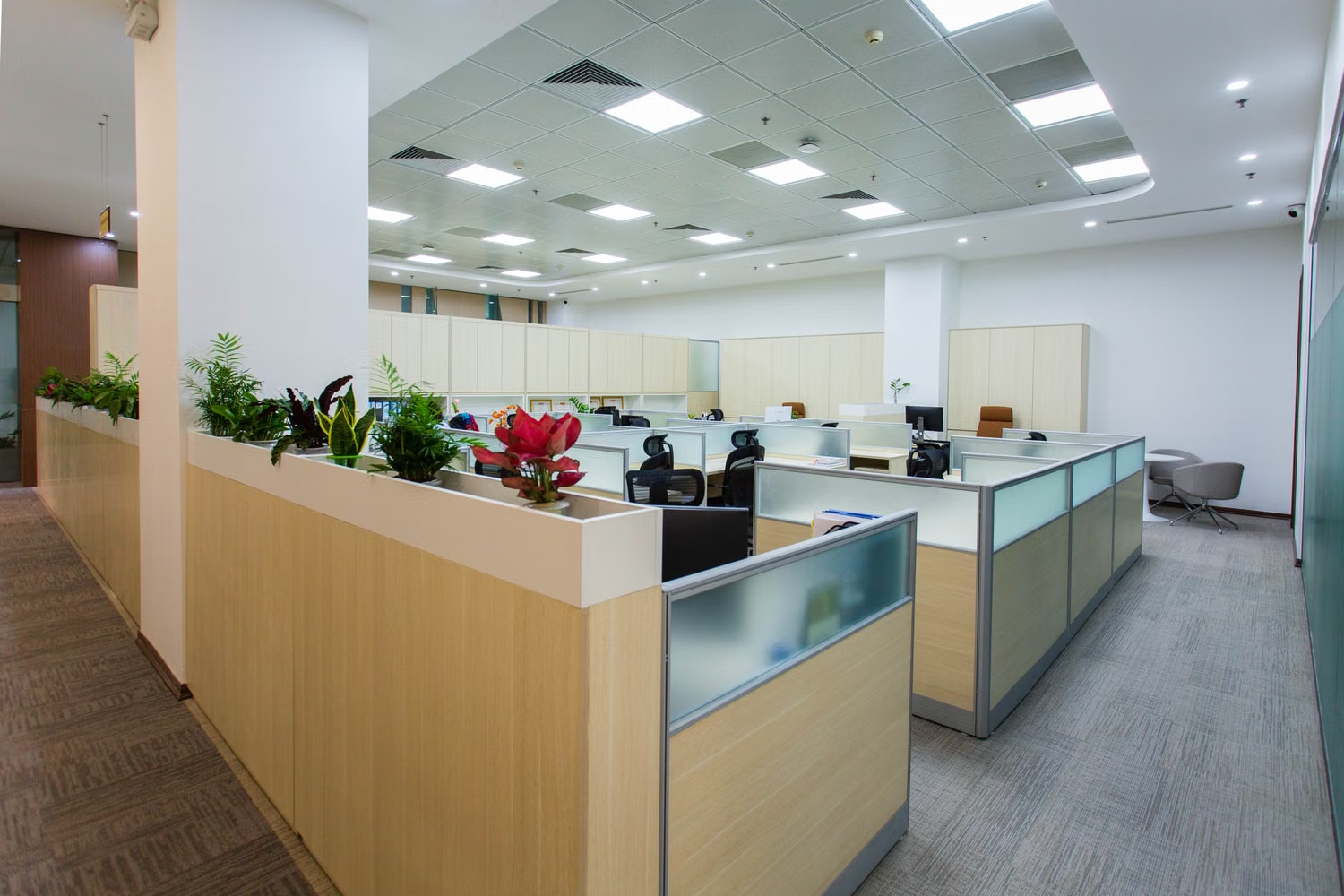
Buying 100, 300, or 700 square meters of office space might seem simple until you actually enter the market. Not all corporate buildings were designed to be sold, and that's transforming the available supply. There's a conversation that's being repeated more and more:
—Indhira, I want to buy an office.
—Perfect. How many meters?
—300.
—In what type of building?
—Class A, good location, good parking and, preferably, new.
It seems like a relatively simple requirement. Until we start looking. Because one of the peculiarities of the Santo Domingo corporate market is that having a significant supply of offices doesn't necessarily mean having the same inventory available for sale.
Not all buildings are built to be sold
The market has evolved. Some projects are designed from the outset to remain under a single owner and generate income. Others may end up in the hands of institutional investors or investment vehicles that prefer to retain the entire asset. There are also developments structured specifically to sell individual offices, combinable units, entire floors, or spaces of varying sizes within the same project.
Therefore, a company can find many rental options but far fewer when it decides to buy. The difference isn't necessarily in the number of offices available, but in how many are for sale and truly meet the buyer's needs.
Who is buying offices?
There isn't just one type of buyer. There's the business owner who's been paying rent for ten or fifteen years and is starting to wonder if they should build real estate assets. There's the company that has a good understanding of its future space needs and wants to control its corporate headquarters. There's the private investor who already owns apartments, vacation properties, or other assets and is looking to diversify their portfolio.
There are also family offices and wealth buyers who see corporate real estate as another asset class. Each profile has different objectives and, therefore, should buy in a different way.
100 square meters is not the same as a whole apartment
The market offers different scales. There are relatively small corporate offices, units of around 100 or 150 square meters, spaces that can be combined to create larger areas, and projects where it's possible to acquire 300, 500, or 700 square meters, and even entire floors. The question isn't just how much I want to invest. The question is which product makes sense for my strategy.
For an end user, what matters is how their business will operate there: the layout, location, accessibility, parking, and potential for growth. For an investor, what also matters is who might rent that space in the future and how competitive it will be against other market alternatives.
Buying to let requires further analysis
Here's a common mistake I see: buying an office simply because you think the price per square meter is going to rise. If the intention is to invest, I want to know the future demand and the property's income-generating potential.
What type of company could occupy it? What sizes are the market looking for? How many parking spaces are needed? What rent could it be charged at? How long could it remain vacant? Is it delivered in shell condition? Who will handle the fit-outs? What will the maintenance costs be? And what conditions will a corporate tenant likely require?
Valuation matters, but so does the asset's ability to generate income and maintain its attractiveness over time.
An office may seem like a good buy because of its price, and yet become an uncompetitive investment if it is difficult to rent or maintain in conditions attractive to the market.
Parking is also part of the investment
In offices, I would never evaluate the price per square meter without considering the included parking spaces.
Two units of the same size can have very different values and placement possibilities depending on how many parking spaces they offer and the occupant's needs. Plant efficiency, access, building systems, management, operating costs, and the overall project profile also matter. Price is important. The future competitiveness of the asset is even more so.
Buy a finished office or wait for it to be built?
An existing office offers something valuable: certainty. I can see it, understand how the building works, assess its condition, and potentially find it ready to occupy or rent. Buying during construction offers other advantages: early selection of units, payment structures that can be tailored to specific buyer profiles, and the possibility of entering a project before its completion.
However, both alternatives involve different risks and conditions. The important thing is to determine which one best suits our investment horizon, available cash, operational needs, and wealth management goals. It's not about deciding whether it's better to buy a completed property or one under construction. It's about identifying which of the two options makes the most sense for each buyer.
First, let's define what we want to buy
Often, I get calls after the decision has already been made: "I want to buy. Send me what you have." I prefer to start a little earlier. Is it for occupation or investment? How much capital do we want to allocate? What's our investment horizon? What size office might be in demand tomorrow? What location do we need? How many parking spaces are essential? Are we looking for a new building, an existing one, or a project under construction?
Answering these questions allows you to better filter the alternatives and recognize a good opportunity when it arises. Because, in a market where not all corporate inventory is available for sale, searching without a defined strategy can waste time and cause you to overlook options that do meet your needs. Buying an office doesn't begin with finding a property. It begins with understanding what kind of asset you want to own in five, ten, or fifteen years. And that difference can completely change the purchasing decision.
You may be interested in: