


Indotel allocated more than $900,000 for the purchase, installation and commissioning of the technological equipment that makes the system possible.
SANTO DOMINGO– Were you one of those who got scared yesterday, Tuesday, when you heard your cell phone alarm? It's a government initiative to address reports from the public in risky situations and safeguard lives.
The first test was conducted on Claro Dominicana's network using Android devices. Claro Dominicana is the first provider to adapt its systems to Cell Broadcast (CB) technology, which enables the sending of immediate notifications targeted only to high-risk areas. Unlike traditional SMS messages, which were slow and imprecise, this new technology ensures that alerts arrive in real time and are directly relevant to those who truly need them.
The system includes two main alert levels: emergency and disaster. Managed by the Emergency Operations Center (COE), these cover natural phenomena such as hurricanes, floods, earthquakes, and tsunamis. The institution, which already had contingency plans for these scenarios, will now be able to notify the public more quickly and focus its efforts on the most affected communities
Citizen security alerts , coordinated by the Public Prosecutor's Office, the National Police, and 911, are also geared toward the search for missing persons. These include Amber Alerts (children), Pink Alerts (women at risk), Blue Alerts (people with disabilities), and Silver Alerts (senior citizens). Unlike a simple announcement, these notifications aim to involve the public in the search, providing key information and contact details for the authorities.
The system always begins with a report, whether at a police station, the Public Prosecutor's Office, or a 911 call. From that moment, a protocol is activated that connects the authorities: 911 coordinates the information, the National Police deploys its teams in the field, and the Public Prosecutor's Office provides support to the families, coordinates internationally, and establishes the legal consequences in the event of criminal activity.
To ensure its effectiveness, the project is supported by a collaboration agreement signed between Indotel and the 9-1-1 System, through which the telecommunications regulatory body allocated more than $900,000 for the purchase, installation, and commissioning of the technological equipment that makes the National Alert System possible. These funds were approved by Indotel's Board of Directors at its Session 027-2025, held on August 14, consolidating state investment in security infrastructure.
Authorities specified that the system will operate under strict protocols, with technological redundancies in Santo Domingo and Santiago, ensuring continuity of service. Furthermore, each alert will be clear, brief, and actionable, preventing message overload and building public trust.
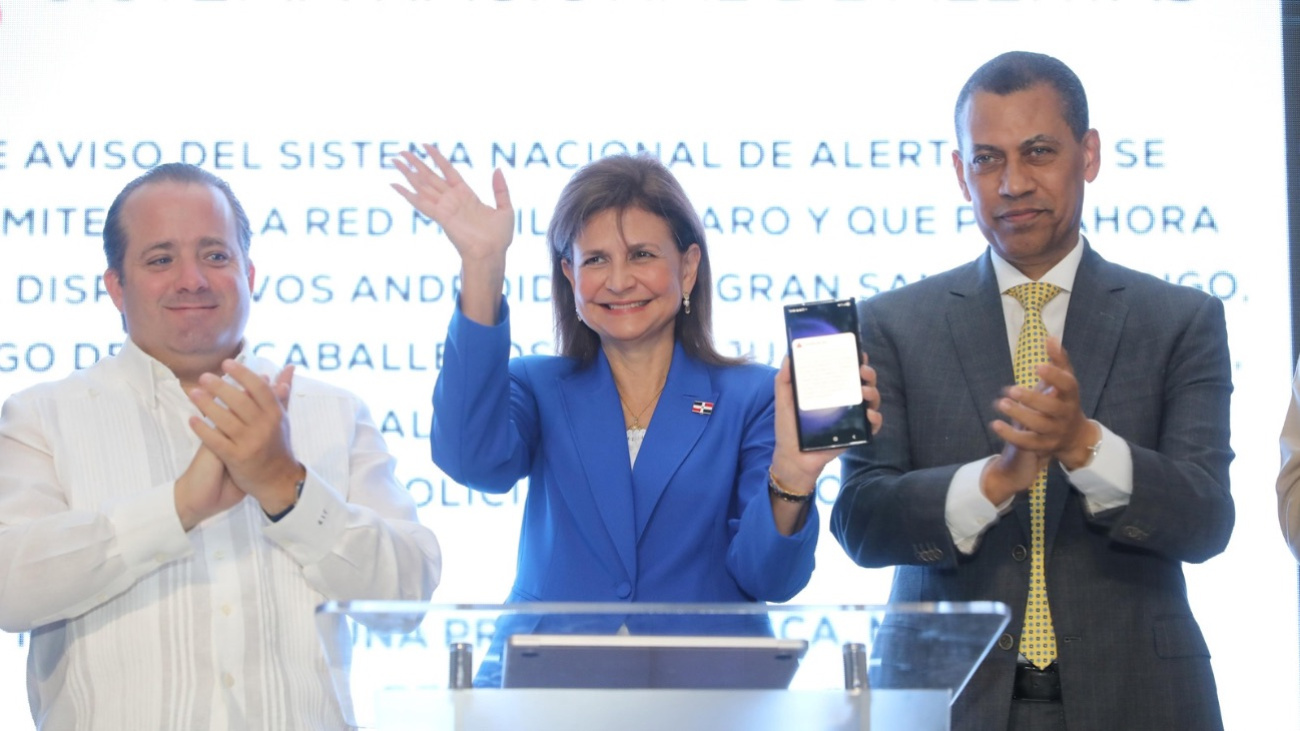
The Dominican Telecommunications Institute (Indotel) is involved. Guido Gómez Mazara, head of the Board of Directors, led the first technical test of the National Alert System, along with Vice President Raquel Peña.
The System is a tool that will allow emergency messages massively, immediately and geolocated to the mobile phones of the population, in order to safeguard human lives.
Also part of it are the National Emergency and Security System 9-1-1, the National Police, the Public Ministry and the Emergency Operations Center (COE), in combination with other state entities that join efforts to protect the life and safety of citizens.
Mazara stated that the implementation of the National Alert System constitutes a historic step in the protection of the most vulnerable sectors of society, by combining inter-institutional cooperation, technology and public responsibility for the benefit of citizens.
He pointed out that this progress translates into concrete facts, moving from theory to action, so that "today the inter-institutional agencies act with the level of coordination, using technology so that at the end of the day, all sectors, but fundamentally the most fragile in society, feel that there is a Government that designs policies that protect them," he expressed.
For his part, the executive director of the National Emergency and Security System 9-1-1, pilot colonel Randolfo Rijo Gómez, stated that with the implementation of the first phase of the National Alert System, the country marks a transcendental milestone in the history of citizen protection.
He also acknowledged that this project would not be possible without the firm support of President Abinader, who has placed citizen security and the protection of life at the center of the national agenda.
With this first test, the Dominican Republic takes a firm step towards the progressive implementation of the National Alert System, integrating technology, inter-institutional coordination and the active participation of citizens, for the benefit of public safety and the protection of human life.
Currently before the National Congress is the draft law on national prevention and response in case of absence of vulnerable population: “Amber Alert”, which aims to regulate the operation of the National Alert System for the location, assistance and protection of missing persons.
Among those present were the President of the Senate, Ricardo de los Santos; the Minister of the Presidency, José Ignacio Paliza; the Minister of Defense, Carlos Antonio Fernández Onofre; the Minister of the Interior and Police, Faride Raful; the Attorney General of the Republic, Yeni Berenice Reynoso; the Director of the National Police, Ramón Antonio Guzmán Peralta; the Director of the Emergency Operations Center (COE), Major General (Ret.) Juan Manuel Méndez García; the CEO of Claro Dominicana, Carlos Cueto; the President of the National Directorate for Drug Control, Vice Admiral José Manuel Cabrera Ulloa; and the District Attorney of the National District, Rosalba Ramos, among others.







