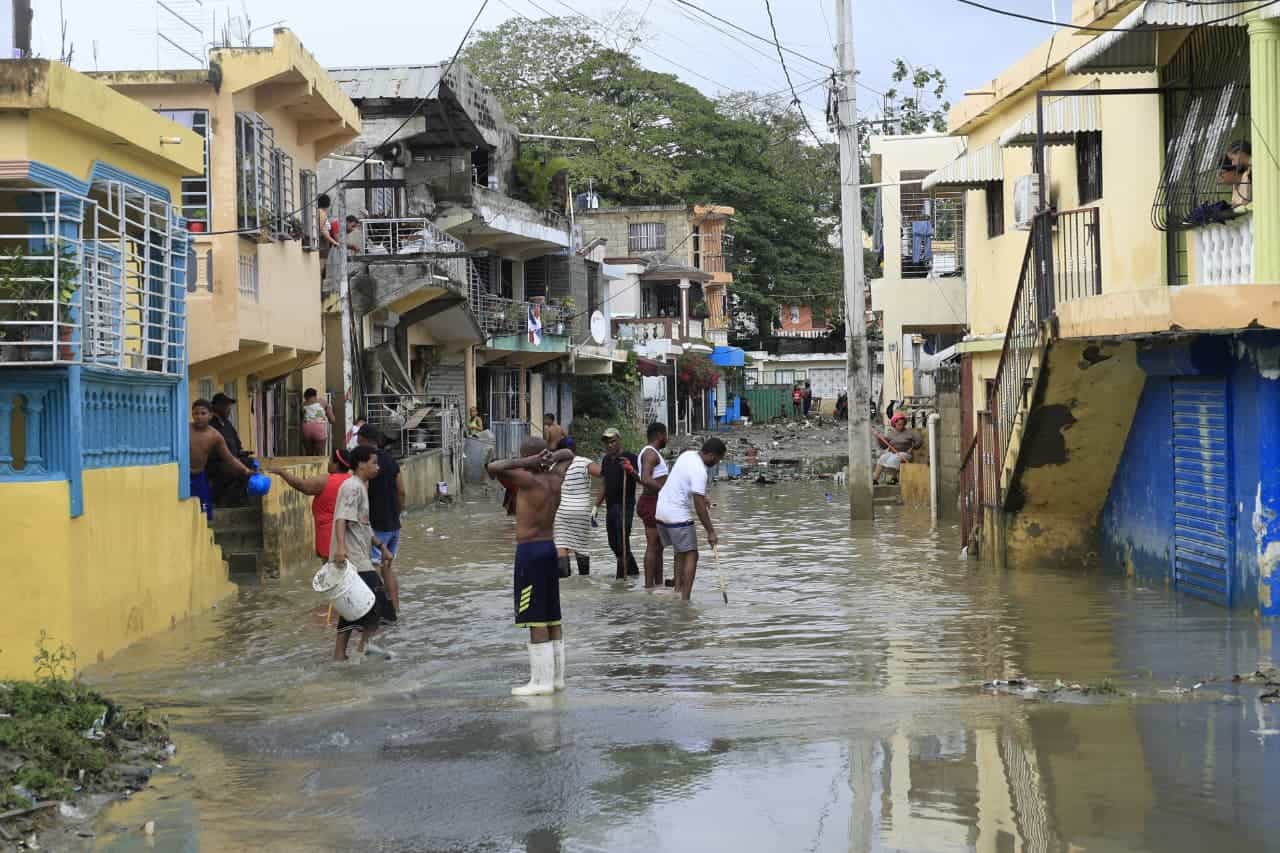
SANTO DOMINGO – The rain didn't fall on its own; it arrived with force, soaking the streets, seeping into homes, and forcing thousands to flee with what little they could salvage. In several provinces across the country, the trough affecting the nation has left a trail of flooding, displacement, and collapsed structures, which authorities are still assessing.
According to the Emergency Operations Center (COE), more than 30,500 people have been displaced and at least 6,100 homes have been affected as a result of the rains in recent days. The agency also reported 14 isolated communities and damage to various infrastructure, including roads and bridges.
Puerto Plata: between collapsed bridges and flooded houses
In Puerto Plata province, one of the hardest hit, the night of April 11th was marked by flooding and emergency rescues. According to reports from the area, the bridge over the Camú River on the tourist highway collapsed completely, leaving several communities isolated.
The rains also caused flooding in parts of Villa Montellano, Imbert, and Altamira, where dozens of homes were submerged. In communities like Monte Bravo, one family had to take refuge on their roof until they were rescued by emergency crews.
According to Civil Defense, the overflowing of rivers such as the Camú, La Ceiba and Bajabonico has been a determining factor in the damage recorded, causing urban flooding and the displacement of dozens of people in different locations.
Damage that is repeated in several provinces
The impact is not limited to the north. According to data provided by the COE, damage has also been reported in provinces such as Espaillat, María Trinidad Sánchez, Valverde, and other areas of the Cibao region, where the rains have been more intense.
The director of the Emergency Operations Center (COE), Juan Manuel Méndez, indicated that at least five bridges have sustained damage, while assessments continue in the affected areas. In addition, landslides have occurred on sections of highways, such as those reported in Altamira, hindering traffic and assistance in some communities.
Heavy rains and worrying accumulations
The system's behavior has been particularly intense. According to the Dominican Institute of Meteorology (Indomet), significant rainfall accumulations have been recorded in some locations, such as 181 millimeters in Montecristi, 123 in Santiago , and more than 100 millimeters in other areas of the north.
According to predictor Wagner Rivera, these levels demonstrate the intensity of the phenomenon and explain the sudden rises in rivers and streams, as well as the floods recorded in different provinces.
Provinces under alert and at risk of new floods
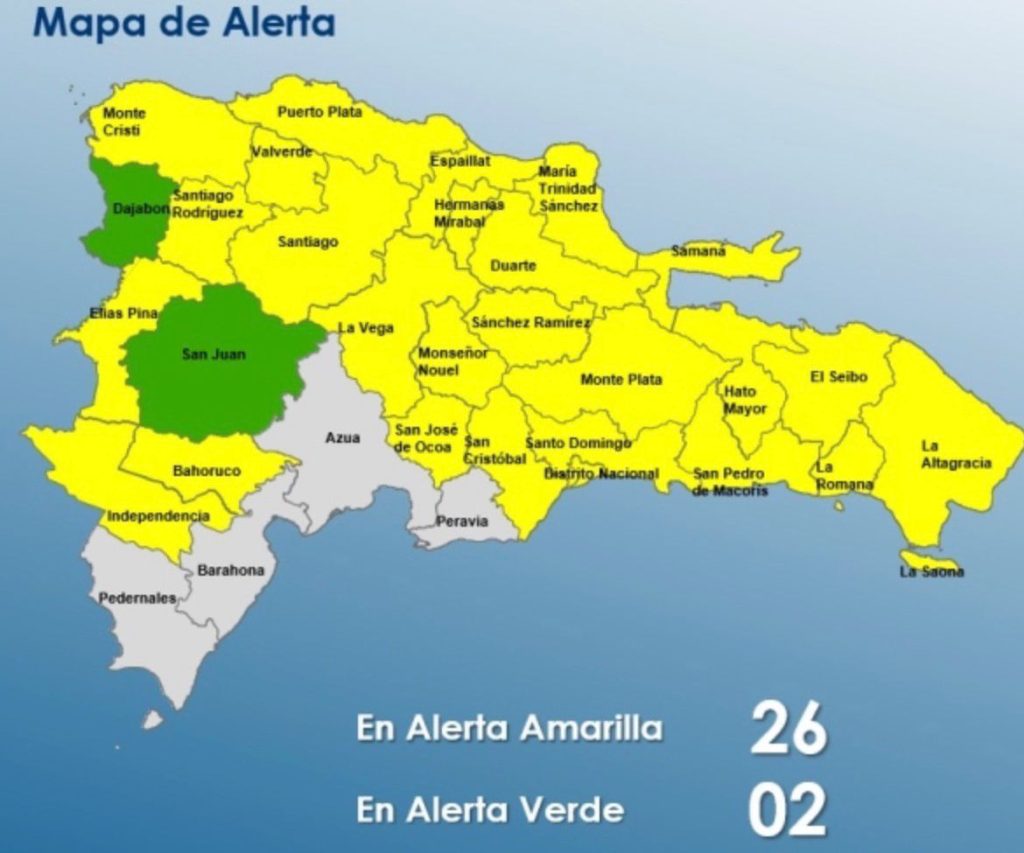
The Emergency Operations Center (COE) maintains alert levels across much of the country due to saturated soils and the possibility of further rainfall. A total of 25 provinces and the National District remain under yellow alert, while others are under green alert.
The agency recommends that the public avoid crossing rivers, streams, and ravines with high water levels, and refrain from using swimming areas in the affected zones. Small boats are also urged to navigate with caution along the Atlantic coast.
Unstable conditions persist
For this Monday, April 13, Indomet forecasts continued moderate to heavy downpours, accompanied by thunderstorms, gusts of wind, and possible hailstorms, due to the impact of a trough and a frontal system over the national territory.
According to the weather report, rainfall will affect provinces in the north, south, and east, including Santo Domingo, Santiago, La Vega, San Cristóbal, and other locations, with greater intensity in areas near mountain ranges.
Authorities warn that atmospheric conditions will remain favorable for significant rainfall in the coming hours, maintaining the risk of urban flooding, river overflows, and landslides in various parts of the country.
State of emergency
President Luis Abinader declared a regional state of emergency , in five provinces and the National District, following the effects of a trough associated with a low-pressure system that has impacted much of the national territory.
Decree No. 234-26 establishes that the provinces under this measure are Puerto Plata, Espaillat, Valverde, Santiago, Santo Domingo and the National District, where significant damage has been recorded due to intense rains, thunderstorms and gusts of wind.
According to the decree, the decision is based on reports issued by the Emergency Operations Committee (COE) and the Commission. The document indicated that the rainfall has caused significant damage to agriculture, road infrastructure, housing and other productive sectors, worsening the situation in the aforementioned provinces.
National Emergency Commissions (CNE) warn of the effects of the trough combined with high humidity levels, creating a risk scenario for life, human safety and the continuity of essential public services.
Recommended readings: