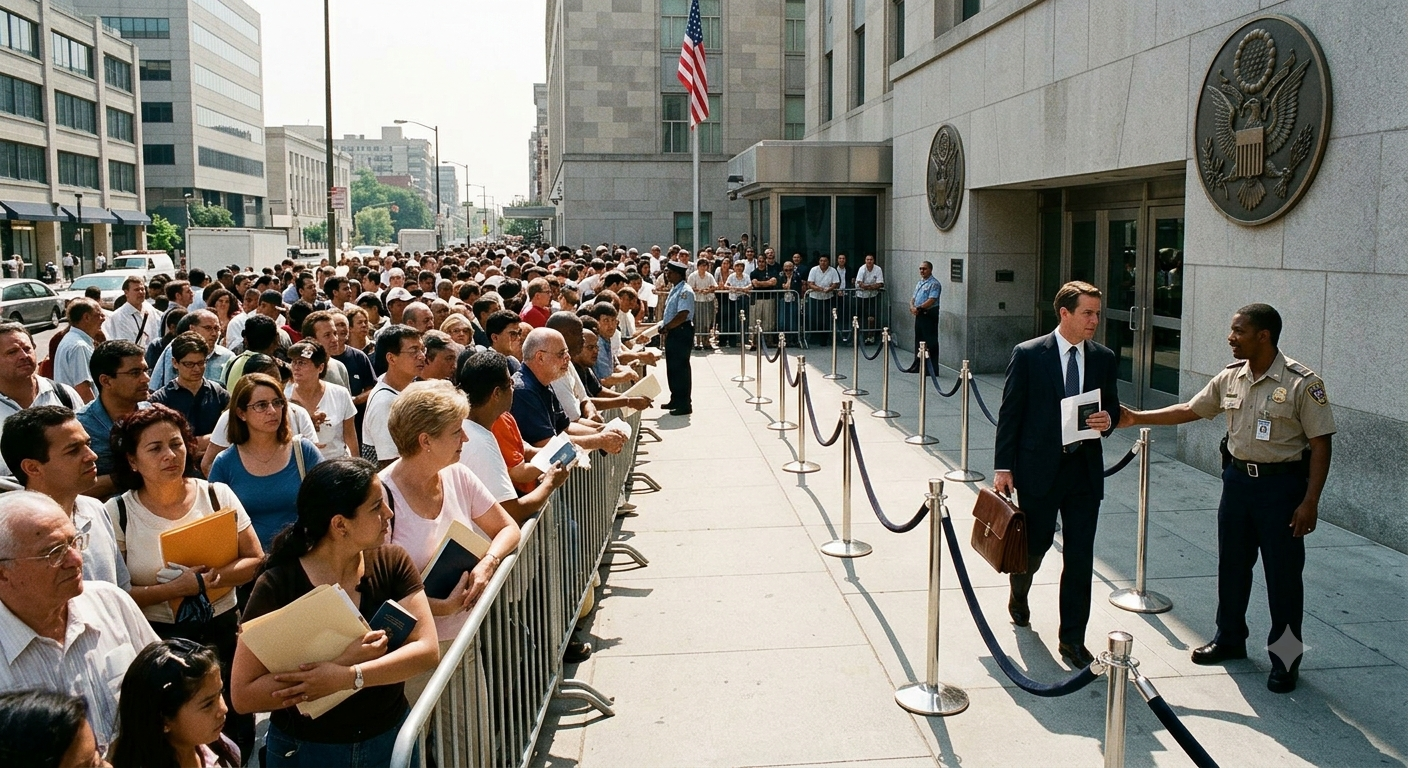
It will allow certain applicants for tourist and business visas (B-1/B-2) to obtain a consular interview within a maximum of ten business days
SANTO DOMINGO – Obtaining an appointment for a U.S. visa may no longer depend solely on consular availability. Starting in July, those willing to pay more will be able to access interviews much faster.
The U.S. State Department announced a pilot program that will allow certain applicants for tourist and business visas (B-1/B-2) to obtain a consular interview within a maximum of ten business days by paying an additional fee of US$750, according to reports from the Associated Press, Infobae, and other international media outlets.
The measure would raise the total cost of the process to US$935, in addition to the regular fee of US$185 that applicants currently pay.
Although the new service does not guarantee visa approval, it does offer an advantage that for many travelers can be decisive: avoiding months of waiting to get an interview.
A response to the accumulated backlog
The initiative comes amid pressure on the US consular system.
According to information cited by the Associated Press, delays in obtaining interviews have increased in different parts of the world due to immigration changes implemented in recent years, increased security controls, and a growing demand for appointments.
The program seeks precisely to create a fast track for those who need to travel for tourism or business and are willing to assume the additional cost.
The American media outlet, Dallas News, emphasized that the premium fee will only expedite access to the interview and will not modify the criteria used to approve or reject applications.
The United States has not yet revealed the selected venues
The State Department reported that the plan will initially operate between July 1 and December 31, 2026.
However, it has not yet announced which embassies and consulates will participate in the program. That information will be published later on the entity's official channels.
The initiative will also serve as a test to assess whether the model can help reduce congestion in consular services and whether there is sufficient demand to make it a permanent option.
Recommended readings: