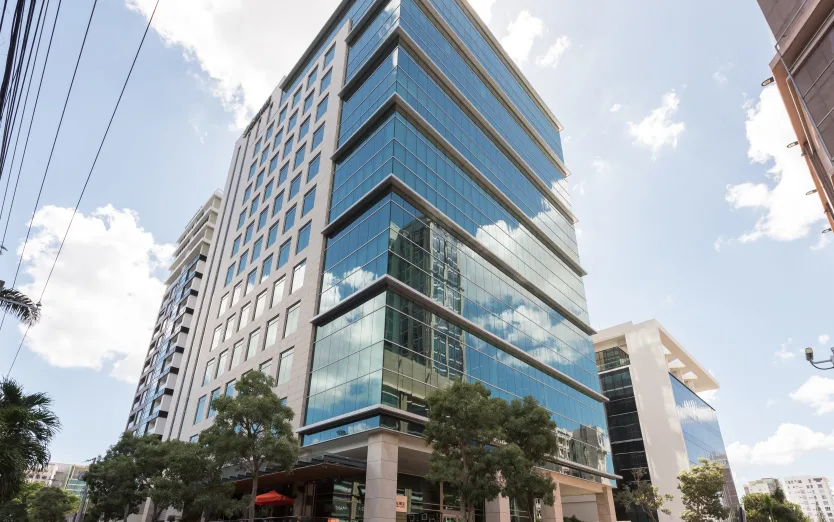
But beyond growth, there is a more relevant change: the evolution of the type of operations and the actors involved in them
For a long time, most commercial, corporate, and industrial transactions used to be conducted directly.
A company would buy its land and develop its building.
An investor would build its plaza and rent out its premises.
A group would build its warehouse or industrial park and operate, rent, or sell it directly.
It was a simpler market, with less intermediation. Today that is changing.
A more dynamic and structured market
The entry of new players, the growth of sectors such as logistics, BPOs, free zones, multinationals and industry, and the arrival of international companies have transformed the market.
Today we see more:
• corporate buildings for sale and rent,
• plazas, small plazas, shopping centers under development for sale and rent,
• industrial and free zone parks,
• structured investors looking for opportunities.
And with that growth, the way of operating has also changed.
It's no longer always the customer going directly to the owner.
Now there's more analysis, more structure, and a greater need for advice.
From a generalist market to one that demands specialization
About 15 years ago, if a company was looking for a broker specializing in offices, free zones or industrial buildings, it probably had to talk to many people to find that level of knowledge.
The market wasn't so segmented. Today, that reality is changing.
In recent years, we've seen the sector become more dynamic, with more professionals receiving training and international companies entering the market and raising the bar for service. This compels us, as the Dominican real estate sector, to evolve.
To specialize. To understand that the client who is coming in—often a multinational—isn't looking for options, they're looking for expertise. And it also prepares us to work with international brokers who need a local partner who understands the market, the language, and the operations.
Decisions based on operations, not emotion
After more than a decade in the luxury real estate tourism sector, I can say that the behavior of the residential client is very different. Many decisions are driven by emotion: family, lifestyle, the desire to own a property.
In the commercial, corporate and industrial sectors, the logic is different.
An asset is sold because:
• it has ceased to be functional,
• capital is needed,
• the business has changed or disappeared,
• the tenant has left and it needs to be repositioned.
It is rented or purchased with the following in mind:
• efficiency,
• costs,
• strategic location,
• growth.
These are more technical decisions and aligned with the business.
The role of the specialized broker
In this context, the role of the broker is also evolving. It's no longer just about showing properties.
It's about understanding the client's operations, speaking their language, knowing the market, and supporting decisions that directly impact the business. A specialized broker doesn't just connect. They interpret.
And that makes a real difference. An opportunity for the sector. This moment isn't a criticism. It's an opportunity. For those in the sector, it's an invitation to explore a growing niche that offers greater professional depth.
For clients, it's an opportunity to work with advisors who truly understand what they're doing. And for the country, it's an opportunity to raise the bar in the market, attracting better tenants, better investors, and better projects.
In real estate, as in any other profession, specialization doesn't limit. It elevates. And in an increasingly sophisticated market, understanding that difference can completely change the outcome of a transaction.
Recommended readings:
- Where to invest in the Dominican Republic today: sectors that are growing and those that are adjusting
- Nobody buys well alone: the team behind every real estate decision
- Funds, companies, and private equity are redefining real estate in the Dominican Republic: Understanding who is buying is key to making better decisions