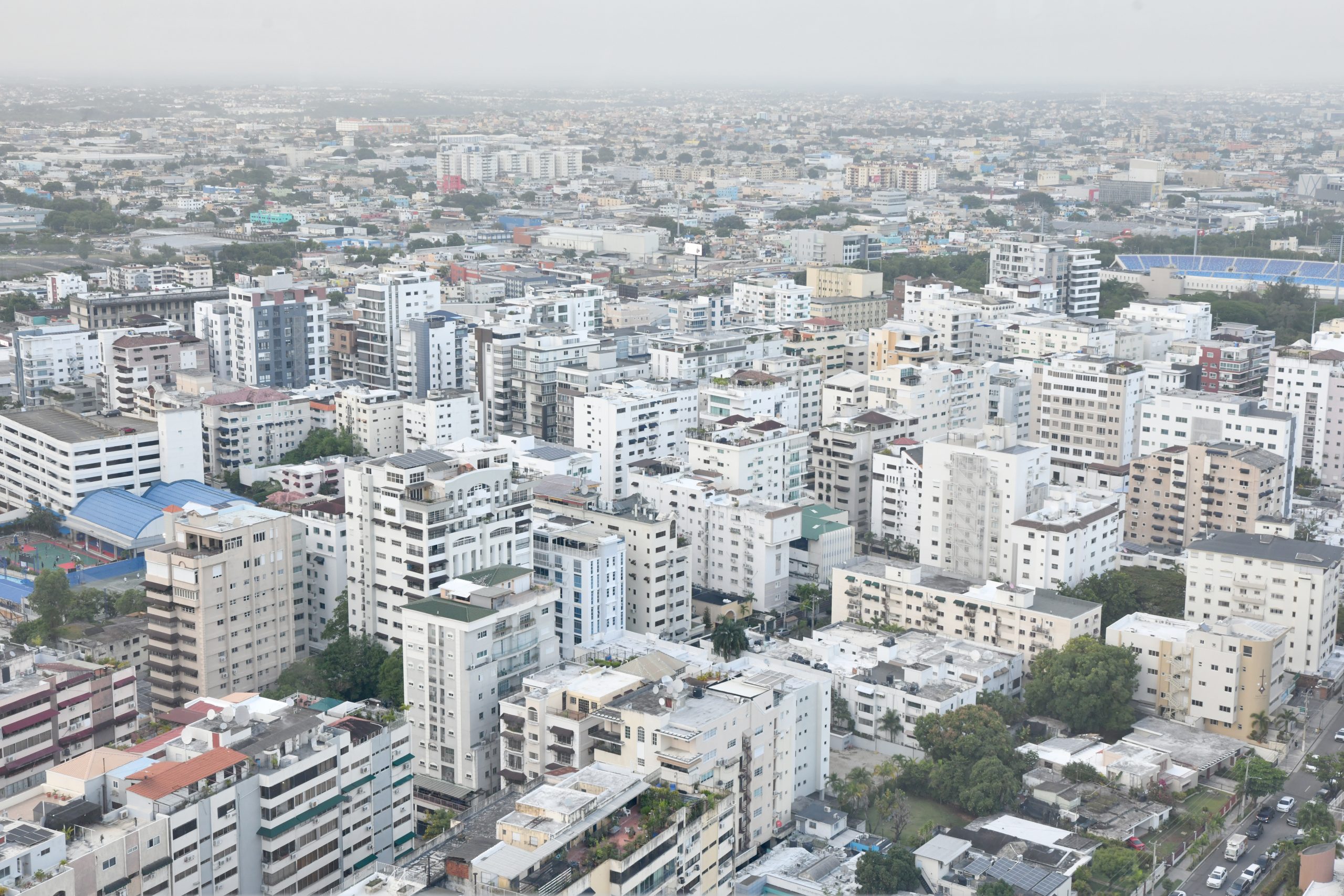
Not all real estate in the Dominican Republic is growing at the same rate. Understanding which sectors are expanding and which are adjusting is key to making sound decisions.
When a CEO, investor, or international company considers entering the Dominican Republic, they often start from a mistaken premise: assuming that the entire real estate market is growing at the same rate.
That's not the case.
Today, commercial, corporate, and industrial real estate in the country is moving in two very clear directions: sectors that are growing due to real demand and sectors that are entering an adjustment phase.
Understanding that difference isn't a technical issue. It's a strategic decision.
Because right now, investing without that understanding not only reduces the return, it can jeopardize the operation.
Logistics: growth that responds to real flow
If there's one sector that has a clear direction today, it's logistics. Just look at what's happening in Caucedo, in the ports, and on the country's main road corridors.
More and more companies are looking for distribution spaces near highways, with easy access and suitable operating conditions. It's no longer just about having a warehouse available, but about ensuring it's functional for their operations.
Today's market demands height, maneuvering yards, and logistical efficiency. And that's not a fad. It's a direct consequence of the growth of commerce and distribution.
Offices and BPO: less volume, more focus
The office sector has not disappeared, but it has changed.
Companies no longer acquire spaces impulsively. They evaluate parking, operating costs, location for their talent, and space efficiency.
In practice, this has generated something interesting: well-located Class B buildings are capturing demand that was previously concentrated in Class A.
It's not a step backward. It's an evolution toward more rational decisions.
Retail: the concept rules
Retail is still active, but it no longer works the same for everyone.
Structured brands, franchises, and clear concepts continue to expand. This is evident in food chains and international brands that continue to gain ground.
However, businesses without a clear offering are finding it more difficult to stay afloat.
Today, a good location helps, but it doesn't replace a solid business model.
Industrial: a more technical market
The industrial sector has also become more sophisticated. Specific requirements are increasingly common: floor strength, height, electrical capacity, and actual logistical access. This raises the market standard and excludes assets that do not meet these conditions.
It's no longer just about availability. It's about functionality.
The Dominican real estate market is not moving uniformly. It is becoming segmented.
Some sectors grow because there's investment behind them. Others hold steady, but under greater pressure.
The opportunity lies not in following the general trend, but in understanding where the real demand is.
Because in the end, the market doesn't reward those who arrive first. It rewards those who understand where it's headed.
Recommended readings: