


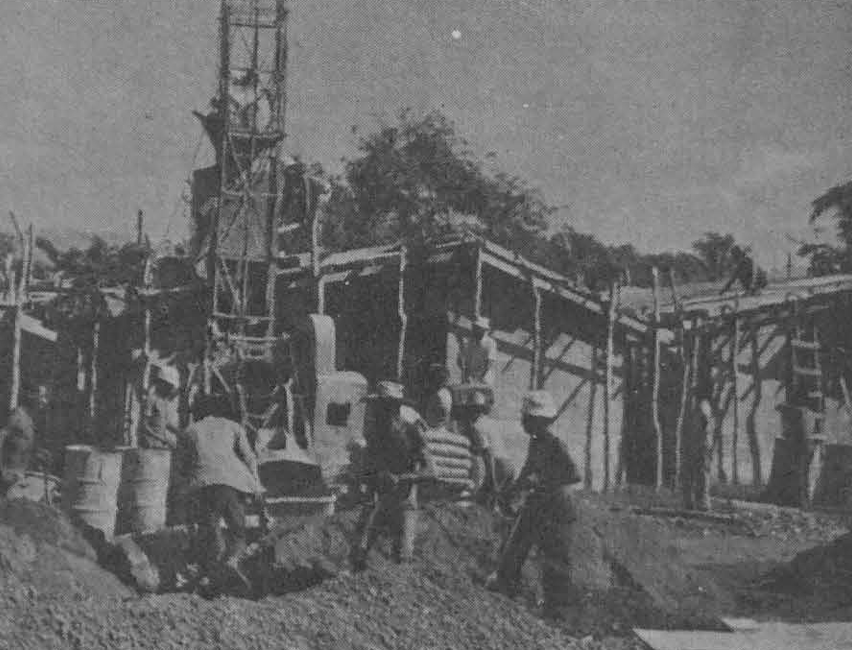
Two years after Hurricane David, the National Housing Institute (INVI) had a reconstruction program underway or completed in Peravia, San José de Ocoa, San Cristóbal, Constanza, Barahona, and the National District. The INVI 1981 Annual Report, deposited in the General Archive of the Nation, lists the names of the communities, the number of units, and the exact amounts
SANTO DOMINGO – The academic research that has supported this series to date, the doctoral theses of Natalia Ulloa Cáceres and Evelyn González Mueses, rigorously document the Dominican State's housing policy from the capital. Neither of them had been able to complete the picture of the emergency program in the provinces following Hurricane David in 1979.
That gap is now filled by the primary source: the INVI Activity Report for the year 1981, number 3 of the Invivienda magazine, written by the institution itself and deposited in the General Archive of the Nation with signature 10110-1.
The document records a specific programmatic line called Emergency and Reconstruction, with 1,487 units completed by the end of 1981, 439 under construction, and 1,720 in the design phase. The provinces served were Peravia, San José de Ocoa, San Cristóbal, Constanza, Barahona, and the National District, with a total budget allocated to this line of 566,264 pesos and an investment of 312,445 pesos executed in 1981.
“Destruction, mourning and misery/David left in his wake/and it is sad to look at/what is now my country…” sang Johnny Ventura, summarizing in 3:49 minutes the aftermath of the atmospheric phenomena between the end of August and the beginning of September 1979. “To Build” was a song of solidarity and resilience to rebuild a country that was devastated.
Community-by-community projects
The table below lists all the projects in the Emergency and Reconstruction program recorded in the Annual Report, with the exact source data. The projects in the design phase, Las Barías and Los Botados, are included because the document dedicates complete fact sheets to them, detailing typology, materials, and site plans.
| Project | Province | Units | Budget (RD$) | Investment 1981 (RD$) |
| Foundation | Peravia | 63 | 22,530 | 18,048 |
| Mata Gorda | Peravia | 161 | 42,658 | 42,520 |
| Santa Rosa | Peravia | 43 | 8,266 | 12,429 |
| Catherine | Peravia | 14 | 557 | 557 |
| Monte Bonito on the Move | Peravia | 20 | 1,470 | 1,755 |
| The Baní Swamp | Peravia | 205 | 42,870 | 30,309 |
| The Little Rose | Peravia | 86 | 13,990 | 13,939 |
| The Hidden One | Peravia | 149 | 51,700 | 51,700 |
| Roblegal | Peravia | 150 | 55,400 | 36,475 |
| The Barías | Peravia | 163 (design) | 180,354 | — |
| Nizaito | San José de Ocoa | 156 | 51,951 | 44,046 |
| Rancho Arriba | San José de Ocoa | 30 | 12,860 | 832 |
| The Last | San José de Ocoa | 89 | 39,400 | 15,639 |
| The Pine Tree | San José de Ocoa | 111 | 150,000 | 31,365 |
| The Anones | San José de Ocoa | 110 | 48,251 | 13,123 |
| Madre Vieja and Guázuma Improvement | Saint Christopher | 214 | 130,984 | 27,872 |
| The Thrown Out | Saint Christopher | 39 (design) | — | — |
| Arroyo Arriba | Constanza (La Vega) | 90 | 15,179 | 3,943 |
| La Peñuela / La Peñuela | Barahona | 202 | 64,000 | 10,572 |
| Reconstruction in Sabana Perdida | National District | 10 | 9,182 | 28,565 |
| El Escondido Improvement | Peravia | 25 | 18,103 | 29,426 |
| Total program (completed + under construction) | 8 provinces | 1,926 | — | — |
Peravia: the hardest hit province
Peravia has the highest concentration of projects in the program. Nine communities in that province appear in the INVI inventory: Fundación, Mata Gorda, Santa Rosa, La Catalina, Monte Bonito, La Ciénaga de Baní, El Rosalito, El Escondido, and Roblegal, plus the Las Barías project, which is currently in the design phase.
It was predictable: Peravia was one of the provinces most directly impacted by the eye of the cyclone, and communities like Palenque, Sainaguá and Don Gregorio had lost more than 90% of their homes.
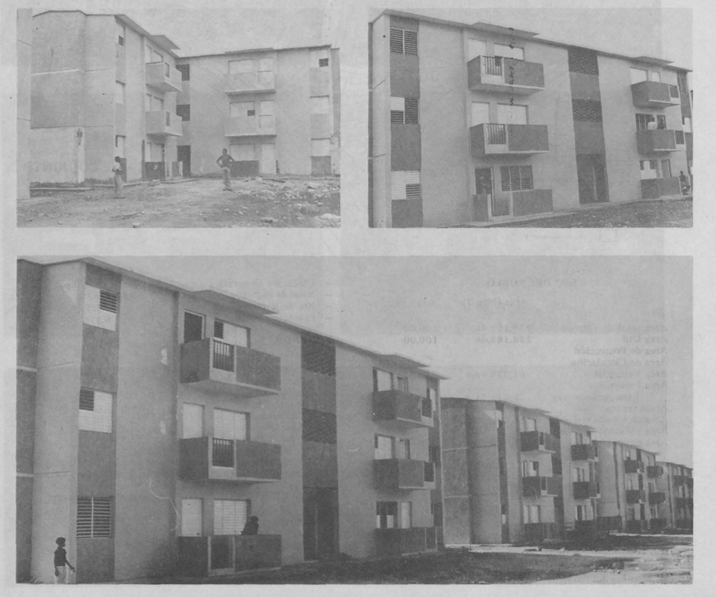
The Las Barías project, fully documented in the report, illustrates the program's logic. It was aimed at families who lost their homes due to the flooding of the Nizao River and the winds of Hurricane David, and the land selection specifically sought to locate them in high areas to avoid future flood damage.
These are 163 single-family homes of 40.83 m², with concrete block walls and wood and zinc roofs, allowing residents the freedom to subdivide the interior spaces and expand the homes according to their needs. Construction was planned through self-help and mutual aid, meaning with the direct participation of the beneficiary families.
Saint Christopher and emergency technology
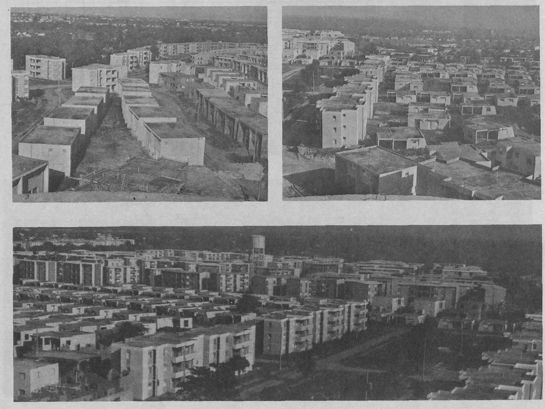
The Los Botados project, in the Reparadero section of San Cristóbal, is aimed at families affected by Hurricane David in the El Cerro community of that city. It consists of 39 homes of 35.84 m² each, built with corrugated concrete blocks and asbestos cement roofs, on plots of approximately 1,300 m².
The execution was planned in coordination with the Dominican Agrarian Institute: the IAD would build the streets and service infrastructure and INVI would direct the construction of the units.
The duplex housing improvement program in Madre Vieja and Guázuma, also in San Cristóbal, serves 214 units with an investment of 27,872 pesos in 1981. Its total allocated budget was 130,984 pesos.
Barahona: prefabricated homes
The La Peñuela project, in the municipality of Cabral, Barahona, was a response to a fire that occurred in August 1981 in the neighborhood of the same name, not directly to the hurricane. However, the construction typology it employs is exactly the same as that used in emergencies during that period: 202 single-family, forest-style homes of 36.90 m², with prefabricated wooden walls, floors, doors, and windows, and zinc roofs.
The report is explicit in its austerity: no electrical or sanitary infrastructure is planned; the units would only be equipped with latrines. The project was carried out in coordination with the General Directorate of Forestry.
The comparison between Las Barías in Peravia and La Peñuela in Barahona defines the spectrum of the state's response to disasters: in one case, concrete blocks with the possibility of progressive expansion; in the other, wood and zinc without potable water or electricity. Both are institutional responses from the same state, from the same year, documented in the same report.
What the document does not say
The 1981 INVI Annual Report records what was done, not what remained to be done. The document does not quantify the total number of homes destroyed by Hurricane David in each province, nor the gap between the demand for reconstruction and the supply provided.
Nor does it record the fate of families who were not served by the institutional program. For this assessment, Ciudad Alternativa's investigation into temporary shelters that became permanent in communities like Canta La Rana, in Los Alcarrizos, where families displaced by Hurricane David in 1979 were still living in the same shacks 38 years later, offers another perspective on the official figure.
Sources consulted: National Housing Institute (INVI), INVI 1981 Annual Report, Invivienda magazine no. 3, Santo Domingo, 1981. General Director: Eng. Frida Aybar de Sanabia. Deposit: General Archive of the Nation, signature 10110-1.
Series: History of social housing in the Dominican Republic. (Chapter XIII).
Recommended readings:







