


Hipólito Mejía handed over power to Leonel Fernández in August 2004 without having resolved the housing deficit, but he left something that no previous government had produced: an official, census-based figure to measure it
SANTO DOMINGO. – On May 16, 2004, Leonel Fernández defeated Hipólito Mejía at the polls by a margin of 57.11% to 33.65% of the votes, and three months later he returned to the National Palace for a second term.
Fernández would inherit an economy that was just beginning to recover after the 2003 banking crisis: in the first quarter of 2004, the gross domestic product still contracted, by 0.2% compared to the previous quarter, and the rights-to-draw agreement that the country had signed with the International Monetary Fund was suspended, as detailed by the Economic Commission for Latin America and the Caribbean in its assessment of that two-year period.
In housing matters, however, Mejía left something that transcends the balance of completed or unfinished works described in the previous installments of this series: for the first time in Dominican history, the country had its own official census measurement of its housing deficit.
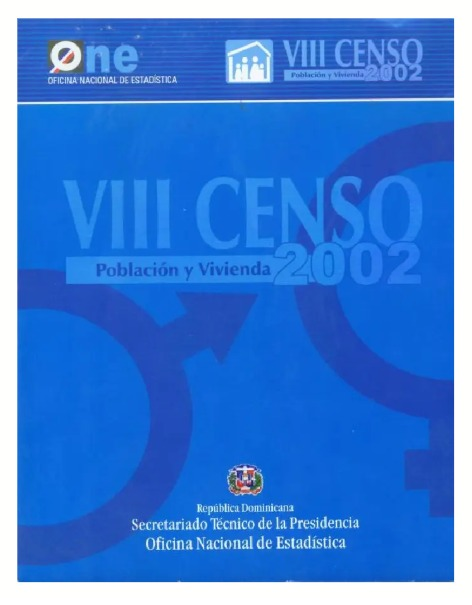
The VIII Population and Housing Census, carried out in 2002, allowed the National Statistics Office to calculate, years later, that only 27.63% of Dominican homes lacked any type of qualitative deficiency, while 56.83% presented some deficiency related to construction materials, basic services or type of housing.
The quantitative dimension of the problem—that is, the number of new homes the country needed to build to address overcrowding and the overcrowding of families sharing a single roof—was estimated at 689,812 units nationwide, of which 422,936 were in urban areas and 266,876 in rural areas. In other words, the burden of those living in overcrowded conditions.
In addition, 25.94% of Dominican households lived in overcrowded conditions, with more than 2.5 people per bedroom.
The National Statistics Office did not process or publish these results until years later, already under Fernández's second term, so Mejía governed and left power without having in front of him the exact number that his own census had captured.
What it did bequeath, however, was the database that made it possible to calculate it: without the 2002 census, no subsequent administration, not even the one that would compare that figure with the 2010 census to measure the country's progress or regression, would have had a reliable starting point.
This contrast encapsulates the paradox of the four-year period that this series has documented. The institutional architecture described in the first installment, with its successive cabinets, councils, and decrees, sought precisely to systematize the way in which the State understood and addressed the housing problem.
The 2003 banking crisis dealt a severe blow to that ambition, tightening credit and causing construction to contract by 8.5% that year. And Invivienda, the project that had been dragging on for four consecutive administrations, ended under Mejía with hundreds of unfinished apartments and an episode of military recapture unprecedented in any previous government.
And yet, amidst that bittersweet assessment, the country emerged from 2004 with a statistical snapshot of itself that it did not have in 2000. Fernández would inherit that picture, along with an economy in convalescence and a financial system that was barely recovering from the disappearance of three of its main banks.
How he used, or did not use, that information to design the housing policy of his second chance government is a matter for the next stage of this series.
Sources: National Statistics Office (ONE), “The Housing Deficit in the Dominican Republic: Updated Overview of Housing Requirements, 2010” (Research Division, in collaboration with CELADE, April 2014), with data from the VIII Population and Housing Census of 2002. | Economic Commission for Latin America and the Caribbean (ECLAC), “Economic Survey of Latin America and the Caribbean 2003-2004”, chapter on the Dominican Republic. | Results of the Dominican presidential election of May 16, 2004.
Recommended readings:







