


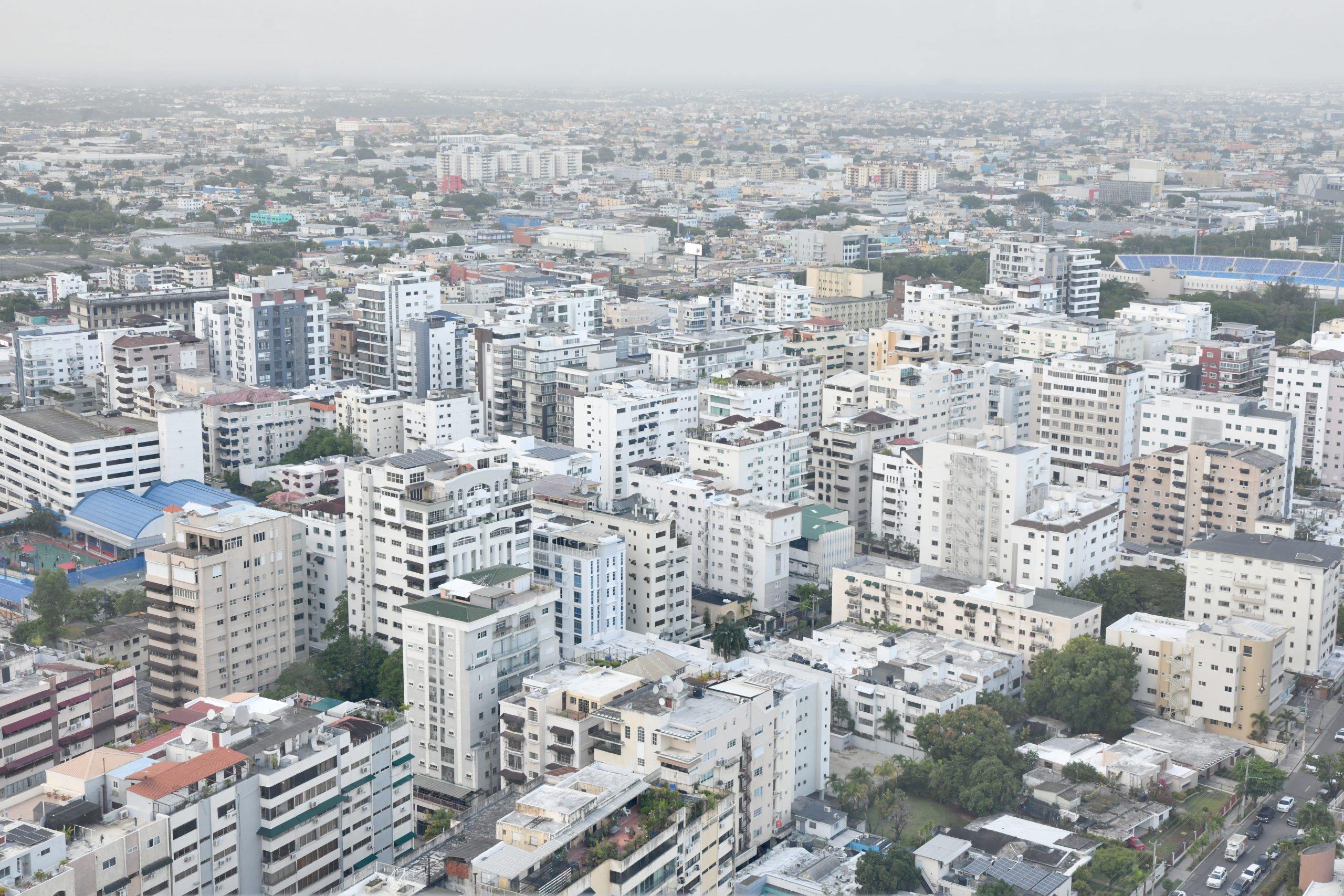
Loans for home purchases reached RD$471,940.4 million in March, in a market where year-on-year inflation stood at 5.47% in July and the average active rate of multiple banks reached 13.79%
SANTO DOMINGO. – Financing for home purchases continues to grow at a double-digit rate in the Dominican Republic, despite a scenario in which the Central Bank maintains its monetary policy rate at 5.25% annually.
As of March 2026, loans for home purchases reached RD$471,940.4 million, an increase of 11.9% year-on-year, according to statistics from the Central Bank of the Dominican Republic (BCRD).
The growth in mortgage lending is occurring in a context where the cost of money continues to be a determining factor for those seeking to finance a home purchase. In July, the weighted average lending rate of multiple banks stood at 13.79%, while the monetary policy rate remained at 5.25%.
The behavior of mortgage credit becomes more relevant when observing the overall financing related to the sector: according to figures from the Central Bank, the resources channeled by the financial system towards construction and acquisition of housing totaled RD$650,306.6 million in March, for a growth of 15.1% compared to the same period in 2025.
Of that total, RD$471,940.4 million corresponded to loans for home purchases and RD$178,366.2 million to construction financing. This latter component registered a year-on-year growth of 24.5%.
The reference rate: 5.25%
The Central Bank decided in August to maintain the monetary policy rate at 5.25% annually, a decision that keeps unchanged the main instrument used by the monetary authority to influence the financial conditions of the economy.
The TPM is not the rate that home buyers directly pay for their mortgage loans, but it constitutes an important reference within the mechanism by which monetary policy decisions are transmitted to the financial conditions of the system.
In July, the weighted average active rate of multiple banks was 13.79%, while the interbank rate stood at 8.82% and private credit in national currency, for its part, registered a year-on-year growth of 8.0% in July, according to the BCRD.
For the real estate market, the behavior of these variables is particularly relevant because it determines the conditions under which households and companies can access the financing necessary to buy, build or develop projects.
The financing scenario is also contingent on price trends. The Consumer Price Index (CPI) rose 0.19% in July, a smaller increase than the 0.51% recorded in June, according to the Central Bank.
With this result, year-on-year inflation fell from 5.67% in June to 5.47% in July, while core inflation stood at 4.96%. Although inflation remains within the Central Bank's target range of 4.0% ± 1.0%, it continues to be above its midpoint of 4%.
More money towards housing and construction
The growth in mortgage financing coincides with an expansion of construction activity, which grew 6.6% year-on-year during January-March 2026, driven by greater dynamism in private investment in residential, commercial and tourism projects, according to the BCRD.
During that same quarter, real estate and rental activities registered a growth of 3.8% and the increase in financing for construction was even greater than that registered by loans for home acquisition: 24.5% versus 11.9%.
The difference shows two simultaneous market movements: on the one hand, money allocated to those who buy homes increases, and on the other hand, financing for works intended to expand the real estate supply accelerates.
Demand finds credit
The behavior of loans for home acquisition offers a relevant signal about real estate demand, and the figures reveal that the RD$471,940.4 million financed as of March represents an increase of RD$50,207.6 million compared to the amount recorded a year earlier, according to data from the Central Bank.
This growth comes as the Dominican economy also shows acceleration. The Monthly Indicator of Economic Activity (IMAE) grew 6.4% year-on-year in June 2026, accumulating an expansion of 4.5% during January-June, according to preliminary figures from the Central Bank of the Dominican Republic (BCRD).
Among the activities that influenced this performance are sectors closely related to the real estate market: in the first quarter, in addition to the 6.6% growth in construction, financial services increased by 5.9%, hotels, bars and restaurants by 6.2%, transport and storage by 4.8% and commerce by 1.9%, according to the Central Bank.
The data therefore paints a picture of a housing market that continues to receive financing in an environment of economic expansion, but in which the cost of money remains a determining factor.
With a Monetary Policy Rate (MPR) of 5.25%, an average bank lending rate of 13.79%, and an annual inflation rate of 5.47%, the evolution of interest rates will be one of the variables to follow for buyers, developers, and financial institutions during the second half of 2026.
Meanwhile, the data most directly linked to the real estate market maintains a positive sign: credit to acquire homes grows at a rate of 11.9% year-on-year and already reaches RD$471,940.4 million, according to the Central Bank of the Dominican Republic.
Recommended readings:







