


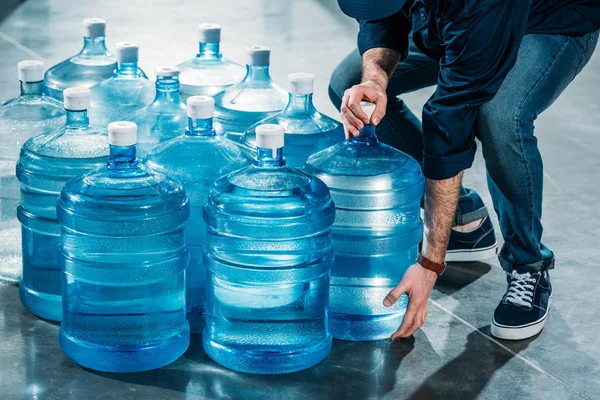
What the 2022 Census reveals about drinking water in Dominican homes, and what that means for the real estate market: the solution has the merit of solving a problem that the ONE has just put in black and white: in the Dominican Republic, having an aqueduct does not mean having water to drink
SANTO DOMINGO– What will be the source of drinking water for the project? This question, or its answer, is unlikely to appear in a brochure or rendering, and it's highly improbable that a buyer will ask it and the developer will reply: "Bottled water." The lack of running drinking water has become so commonplace, whether on a plot of land on a hill in Cabrera, a property in Barahona, or a high-rise in Ensanche Ozama.
Fascicle II Water and sanitation in the homes of the Dominican Republic, published in May 2026 by the National Statistics Office, based on the X National Population and Housing Census 2022, confirms it: 84.3% of Dominican households drink bottled water.
The figure doesn't depict a marginalized sector or a rural area without pipes. It reflects almost the entire country, with minimal differences between urban and rural areas.
In the urban area, where 2.7 million households live, the percentage rises to 87% and in the rural area it falls to 77.1%, but only because there the small truck, the rain and the public tap compete, not because the aqueduct has arrived to solve the problem.
Direct access to piped drinking water inside the home, which in any other regional context would be the minimum condition for urban habitability, is only available to 5.9% of households nationwide: just 220,867 out of the 3.7 million counted.
The gap that is not in the purchase agreement
The data that the real estate market should read carefully is not that of the bottled water but that of the aqueduct: that 62.7% of Dominican households use domestic water for washing, scrubbing and bathing, while only 5.9% use it for drinking, draws a clear line: the water reaches the home, but nobody trusts to drink it.
That distrust comes at a price, because the bottled water isn't free, nor is the small truck that travels through the housing developments selling processed water, the only source of supply for 3.6% of urban households.
Every family living in an apartment with a nominal water supply and buying bottled water is paying twice: the water service fee and the cost of the water they actually drink. Weekly consumption for a family of four could be four bottles, and we leave it to the readers to calculate the annual cost of this, based on current prices of between 110 and 130 pesos per five-gallon jug.
Drinking water is an almost invisible economic burden that never appears in the profitability analysis of a residential project or in the valuation tables of expert appraisers.
How much does that add up to over the useful life of an asset? Does the market factor it into the price per square meter? Does anyone disclose it during the mortgage due diligence process?
The little savior truck
According to the ONE document, 3.2% of Dominican households, 119,637 in absolute numbers, drink "processed" water from the small trucks: that small vehicle that circulates through residential streets selling "potable" water to homes.
In urban areas the percentage is higher than in rural areas (3.6% vs. 2.3%), which shows that it is not a phenomenon of areas without infrastructure: it is a market service that fills the gap where the aqueduct does reach, but it is not drinkable.
For the real estate sector, the geographical distribution of that small truck is, unintentionally, a map of water scarcity. The provinces most dependent on this resource are also actively developing markets, and these are not marginal areas but rather territories where the network exists but is insufficient.
The 37,241 households that rely on large tanker trucks, a qualitatively different source associated with communities without a network, complete the picture: in rural areas of tourist and industrial interest, such as the eastern corridor or the northern coast, water arrives by vehicle or it does not arrive at all.
What the developer doesn't calculate
The question that the ONE report poses without naming it is regulatory: what drinking water standard does a residential project guarantee?
Dominican regulations require connection to the water supply network as a condition for the authorization of a building, but there is no parameter that obliges the developer to demonstrate the quality of the water delivered or to provide filtration or treatment systems in the units.
The result is a silent externality: the buyer assumes the cost of solving what the infrastructure they paid for does not do.
In mid- to high-end projects—towers in Piantini, Naco, Los Cacicazgos, and gated communities in the East—the solution is usually a kitchen water filter, bottled water by subscription, or connection to a centralized purified water system managed by the condominium association. And the problem continues to generate costs.
In low-cost projects, the solution is the small truck or the individual water bottle, with a disproportionate budgetary burden for low-income households.
But none of these scenarios appear in the sales promise.
An opportunity for differentiation
What the census documents as a deficit, the market can interpret as an advantage. Developers who incorporate centralized filtration systems, guaranteed potable water in their units, or water quality certification into their projects have an argument that 94% of Dominican urban households cannot take for granted: tap water is drinkable.
In a context where product differentiation is increasingly difficult, with similar amenities, comparable finishes, and locations competing in the same corridors, the drinking water solution has the merit of solving a real problem that the 2022 Census has just put in black and white: in the Dominican Republic, having an aqueduct does not mean having drinking water.
Source: Fascicle II. Water and sanitation in households in the Dominican Republic. X National Population and Housing Census 2022, ONE, May 2026.
Recommended readings:







