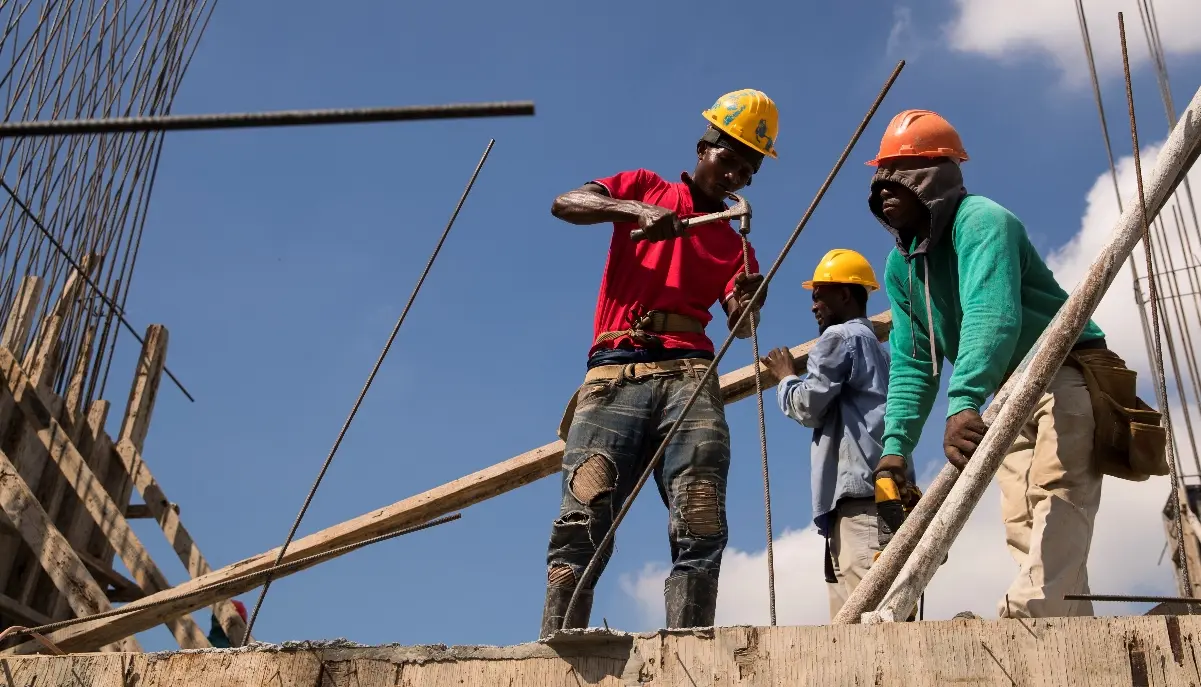
The authorities must intervene to ensure that Haitian workers with legal status enjoy the same labor rights as Dominicans.
SANTO DOMINGO.– The proper regulation of entry and transit across the border, as well as the stay and free exercise of the work of foreign nationals “duly authorized” to live and interact on Dominican soil, constitutes one of the main points raised in the National Pact in response to the crisis in Haiti, signed yesterday by President Luis Abinader and leaders of national life.
The document, signed by 28 political parties and 23 academics and intellectuals, including seven university rectors, proposes setting labor requirements for the Dominican labor market and defining the criteria that productive sectors currently require to establish "admission quotas by activity sectors," referring to the number of temporary workers they would need, and provides for the promotion of business sectors to progressively incorporate Dominican labor.
It establishes "to cease as soon as possible and in an exemplary manner the hiring of Haitian labor in migratory conditions contrary to the law, in works or activities of the central government, autonomous and decentralized bodies and of the municipalities.".
Within this pillar, the pact presents a series of actions focused on reviewing, strengthening, and reformulating public policies aimed at addressing the migration problems facing the country due to the Haitian crisis.
For the entry of immigrants to serve as labor, it is established that the National Migration Council grants permits, according to annual admission quotas by sectors of activity.
To eliminate the need for these workers, they expressed their intention to promote, with the business sectors, the generation of commitments to productive transformation and the subsequent progressive incorporation of Dominican labor in those sectors where a process of denationalization of labor markets has been experienced.
Also included in the list are aspects such as developing or reviewing border control protocols and the entry of urban and agricultural workers; identifying contracting companies; investigating the granting of visas to "seasonal workers" and developing a "biometric control program" of foreign nationals to collect all the necessary information to allow for "greater control".
The Government proposed to reformulate the rule of the General Directorate of Internal Taxes (DGIl) so that companies submit the payroll with the personal data of the workers and the amount paid.
The authorities must intervene to ensure that Haitian workers with legal status enjoy the same labor rights as Dominicans.
In this Pact, the State assumed the task of "deporting, in accordance with laws 285-04 and 344-98 and adhering to due process, foreigners in an illegal immigration situation, whether they are unemployed or employed in service sectors not provided with a quota of permanence for temporary foreigners.".
Regarding Haitian workers in legal status, the agreement states that "they will enjoy the same labor rights established in the regulations for Dominicans.".
Regarding the border fence, it includes technologically monitoring from a distance, with cameras, the work of the personnel located at the border, as well as monitoring the possible illegal passage of people and, based on these actions, administering a regime of consequences to the detriment of those who violate the laws.
In the case of deportations, it maintains the process of leaving foreigners in an illegal immigration situation, who are unemployed or employed, but not provided with a quota of permanence for temporary foreigners.
However, it establishes the exception that the National Council for Children and Adolescents (Conani), through its offices at all border points, will verify that deportation processes do not include unaccompanied minors.
Border
Actions were established to manage strict border control, such as remote technological monitoring; equipping the border fence with technological devices; evaluating the performance of civilian and military agents guarding the area; and administering a system of consequences for those involved in organizing illegal journeys.
Also, to care for, restore or replace missing or displaced border markers, to establish real-time and high-resolution satellite surveillance, and to evaluate the use of arches that detect weapons, explosives, ammunition and radiological and chemical components.
With the purpose of promoting the prosperity of border communities, the Government must develop plans, including a salary policy and a special and differentiated service statute in favor of civilian, police and military public servants in that region.