


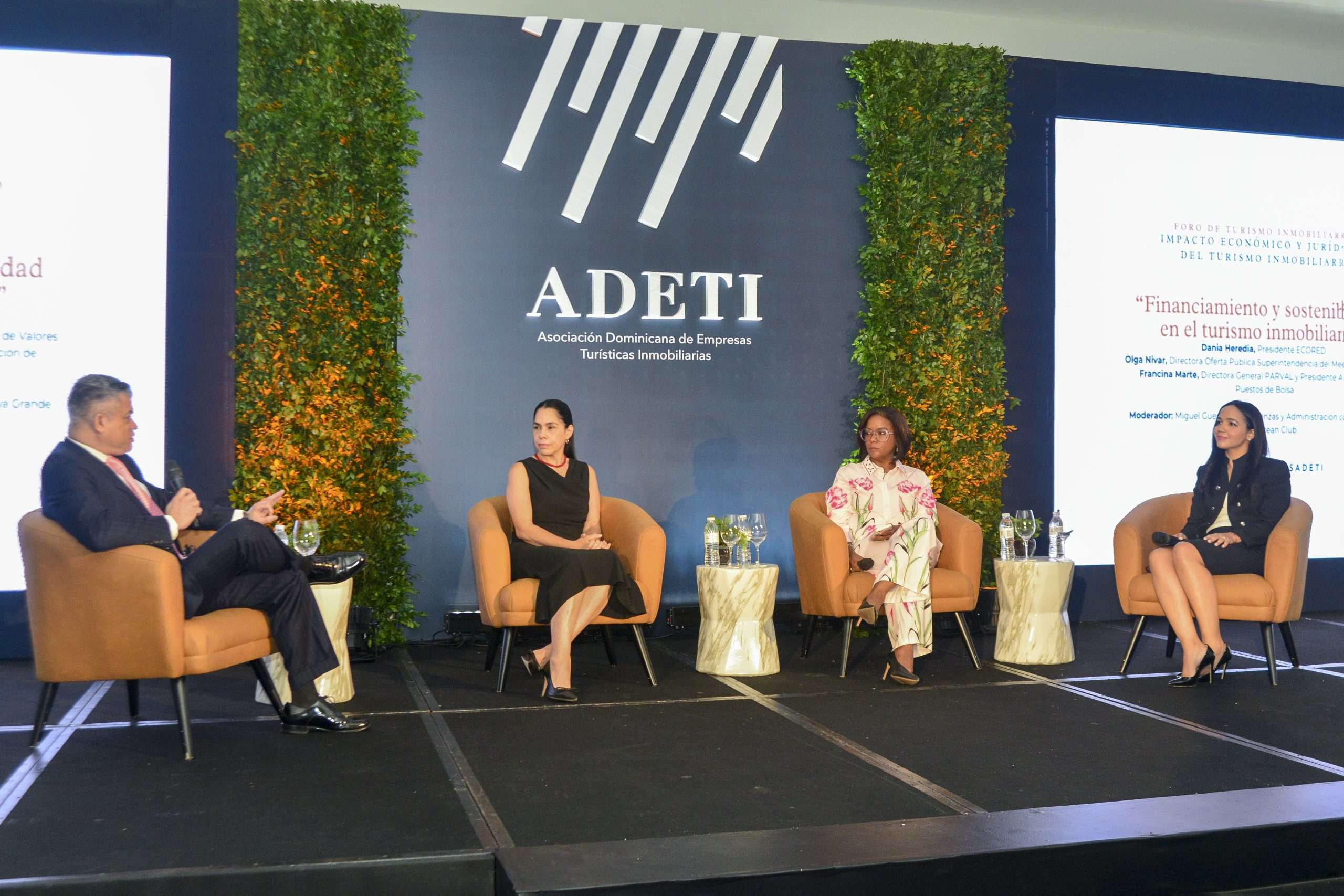
SANTO DOMINGO– The development of green structures using environmentally friendly building materials must translate into financial incentives for builders so that the conversion process can be accelerated, said Dania Heredia, president of ECORED.
Speaking on the panel “Financing and Sustainability in Real Estate Tourism”, within the Real Estate Tourism Forum held this week by the Dominican Association of Real Estate Tourism Companies (Adeti), the professional considered that “not everyone understands the concept of what sustainability implies”, after commenting that in the country being green is extremely expensive.
“And above all, many times the immediate benefit of being sustainable isn't seen, and I link that to the issue of builders. In this matter of developing green structures, we all have a role to play, including the financial sector,” the expert stated.
He said that this requires being able to access green credit quickly and that those who decide to go green see the appeal not only as a matter of will, philosophy and love, but also that it translates into a win-win profitability for everyone.
He said that public policies play a fundamental role and that there is still much to be done in that regard.
He explained that society has evolved not only in aspects of environmental programs, but also in understanding the concept of sustainability in its three facets: social, economic and environmental.
Heredia explained that ECORED is currently promoting the comprehensive waste and co-processing law, considering that to solve the issue of sustainability, a common element is to have a comprehensive management law and not a dispersed one.
“Proper waste disposal helps achieve the country’s sustainability goals. We must see waste not as garbage, but as raw material to extract value for specific purposes.”.
He stated that the goal is to have zero-carbon-emission buildings, hotels, and structures, which is already a roadmap that has been identified in other countries.
"And that implies everything from proper waste management from the moment of construction to the type of materials used, such as rebar, cement, concrete and aggregate, that are extracted from dry quarries and that the construction materials are properly certified with low or zero carbon emissions.".
Beware of sustainable tourism
Dania Heredia understands that one must be careful when talking about selling sustainable tourism. “Because I think we need to find a way to identify clear criteria to define ourselves as green and sustainable; being sustainable isn't just about holding a reforestation day or going to clean a beach.”.
He added that the seriousness of climate change "leads us to set the bar much higher" because the consequences are extremely damaging.
“So being sustainable means doing much more, it means doing things in a much more structured and objective way, and having public policies, for example, at the level of green taxonomy, that help define guidelines to determine what constitutes a sustainable construction or what activities can be categorized as sustainable.”.
Available resources
Olga Nival, director of public offerings at the Superintendency of Securities, stated that they have a portfolio managed through investment funds of more than 180 billion pesos, of which 130 billion correspond to closed investment funds "which is where you can invest in tourism projects, trusts, infrastructure and others.".
He added that 31% of those portfolio funds correspond to the construction sector "where we have real estate development and hotels, we also have 19% in the tourism sector.".
He added that 3,792 hotel rooms have been built across the country using these funds. "In other words," he said, "the stock market is significantly boosting the construction and tourism sectors.".
Cover photo: Fidel Pérez/El Inmobiliario.







