


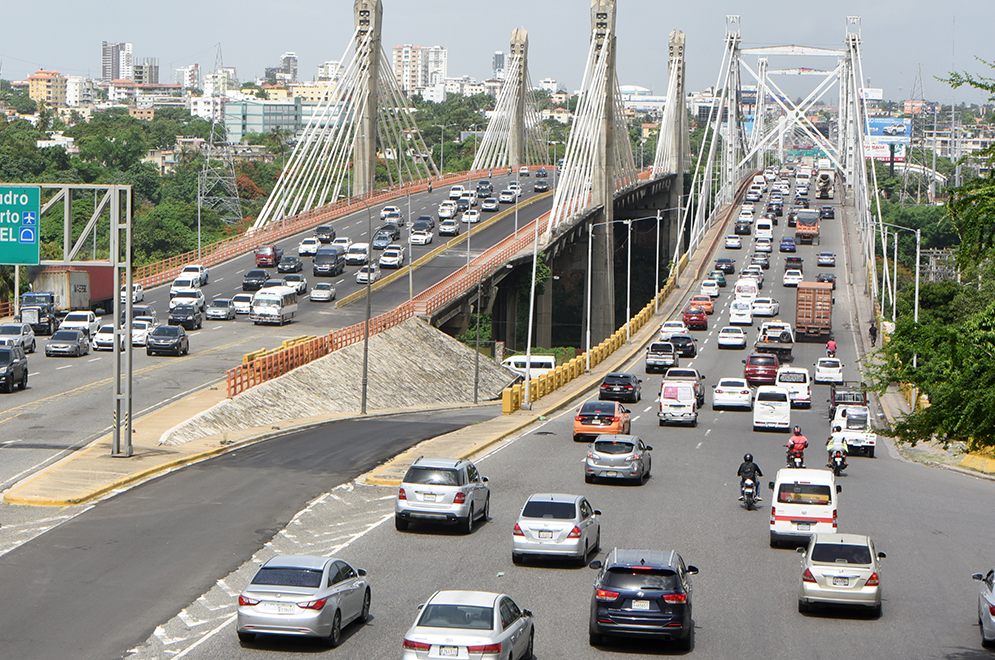
SANTO DOMINGO.-The Ministry of Public Works and Communications is moving towards transforming safety on bridges throughout the country, with the placement of sensors that will measure the resistance and quality of these structures, and to determine their useful life.
The information was released by the Deputy Minister of Planning and Technical Regulation of the MOPC, Ángel Tejeda, after recently receiving in his office Dr. Priyak Jaiswal, Professor of Geophysics and Director of the Professional Master of Geoscience at the Boom Pickings School of Geology, Oklahoma State University, United States.
During the visit, the official exchanged views with the renowned international professor regarding the possibility of placing sensors on bridge structures, with the aim of observing the behavior of these structures when vehicles pass over them.
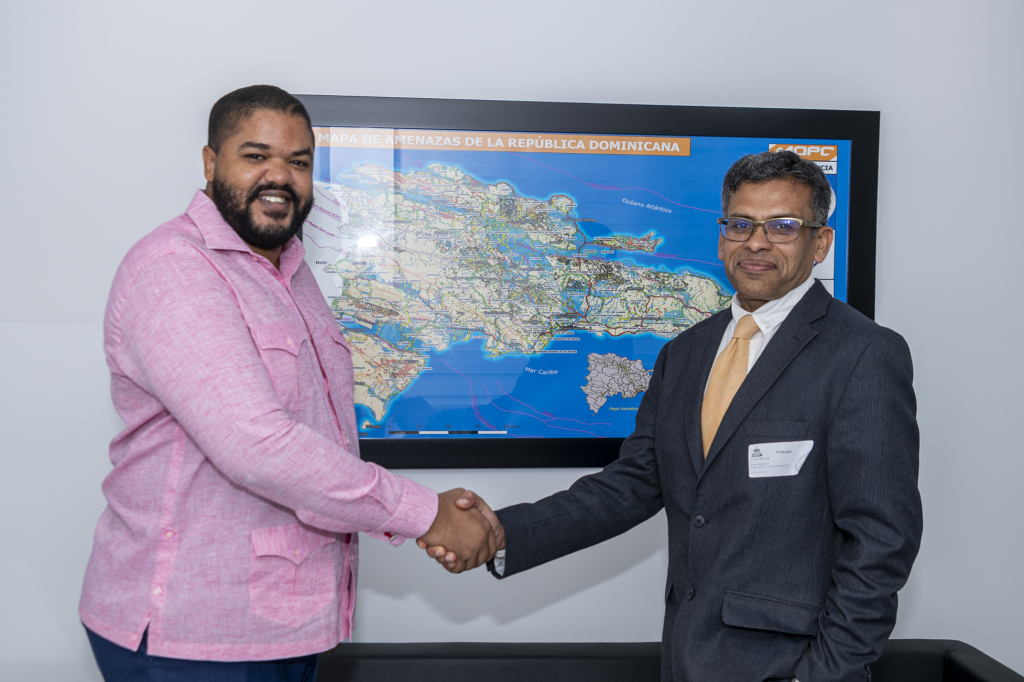
Dr. Priyak Jaiswal with Ángel Tejeda. (External source).
Tejeda said that they are trying to reach some kind of agreement to exchange knowledge about improving bridges nationwide, in order to extend the useful life of these infrastructures.
He mentioned that Jaiswal also has an agreement with the Ibero-American University (Unibe) to carry out specialized geophysical studies on the behavior of bridge structures, where a practical study of the dynamics and behavior of viaducts is carried out to determine the health or the state and condition of these in a general sense.
“Dr. Priyak Jaiswal just informed us that they will send a communication requesting the Ministry's collaboration, in which sensors would be placed on bridges for educational and study purposes, allowing us to observe and evaluate several of the country's main infrastructures,” he explained.
He said that this was in order to have an initial diagnosis that would then lead to more in-depth studies, in order to understand the behavior of the structures that are in use in Greater Santo Domingo.
He stated that these sensors would be placed on the structures themselves, and that they are motion devices that, when the structure begins to move as the vehicles travel, will record those movements, and if they exceed certain parameters, then they will issue behavior alerts that will warn of the possible danger that could be incurred.
He indicated that with the diagnoses offered by those sensors, deeper investigations would be initiated on those bridges, to determine the causes and correct them, in order to prolong the useful life of those bridges.
“The Ministry of Public Works and Communications (MOPC) welcomes this visit, because it is part of an agenda of studies and maintenance of bridges in which it is involved, to verify the resistance and extension of the useful life of these infrastructures, so that we can guarantee peace of mind to the citizens,” he said.
Public Works has conducted exchanges and signed agreements with various universities for educational purposes and to develop research that will improve and bring new cutting-edge technologies to the work it performs.







