


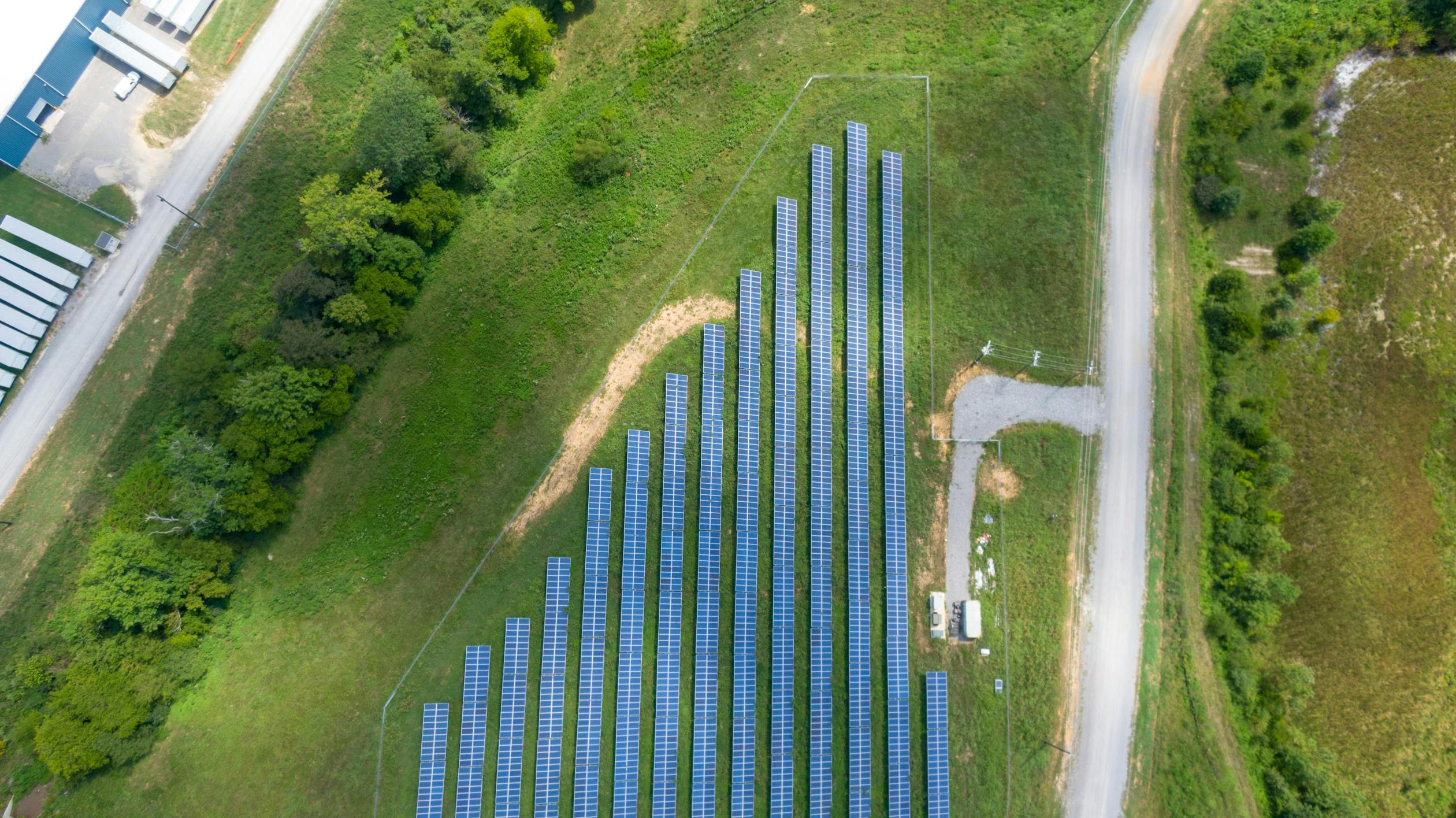
Parking lots with roofs covered in solar panels are becoming increasingly common, but what if an entire highway were covered with them to reduce both carbon emissions and traffic accidents? A recent study published by scientists, mostly from the Chinese Academy of Sciences, explains how this could be implemented.
Why on the road?
The research, published in the journal Earth's Future, focuses on how to leverage paved surfaces to address the need for more renewable energy production. The study centers on major roads and highways, and also evaluates extending this to secondary roads, with the aim of generating electricity and protecting vehicles from inclement weather.
Reduce traffic accidents
The authors explain that this project could improve road safety. They estimate that installing photovoltaic panels along the road could reduce traffic fatalities by 10.8%. The scientists believe the solar roof would act as a protective barrier in regions with high rainfall and snowfall.
The latest road safety report, published in 2023, highlights the importance of improving infrastructure and creating new designs that minimize risks for road users. It concludes that solar panels could improve visibility, vehicle traction, and therefore, road safety.
Cost and actual implementation
The study samples the global road network, approximately 3.2 million kilometers of roads, to determine how much energy installed with solar panels would generate. The data concludes that the construction would produce 17,578 TWh per year, representing an installed capacity of 13,087 GW, provided the panels are installed at a ten-degree angle.
One of the challenges it faces is economic in nature, such as the high costs due to the large support infrastructure, in addition to subsequent maintenance that would include cleaning and improvements in energy efficiency.
Other projects.
There is evidence of other projects, such as the collaborative effort between Germany, Austria, and Switzerland to install solar panels on highways. Starting with the A81 motorway in Baden-Württemberg, the goal is to determine the technical and economic feasibility of using road infrastructure to generate clean electricity.
A project by Swedish architect Mans Tham, Solar Serpents in Paradise, involved covering California freeways with solar panels. The architect's intention with this project was to generate renewable energy and, at the same time, protect cars from inclement weather. However, the project was never implemented.
Not directly on the road itself, but on the sides and on the asphalt, a pilot project took place in Normandy, France, in 2016. The plan aimed to leverage the road infrastructure with 2,800 square meters of solar panels to generate renewable electricity. However, the project ultimately faced criticism for its high cost and limited efficiency, and was decommissioned in 2019 because many solar modules were damaged or in poor condition.
On the other hand, there's The Ray project, which began in 2015 along a section of Interstate 85 in Georgia, USA. Its main objective was to integrate renewable technologies into road structures to improve their environmental impact, such as integrating solar panels into canopies and implementing a rainwater harvesting system. The Ray continues to implement new technologies and maintain its commitment to sustainability.
Source: https://www.xataka.com/







