


By Paola Solis
El Inmobiliario
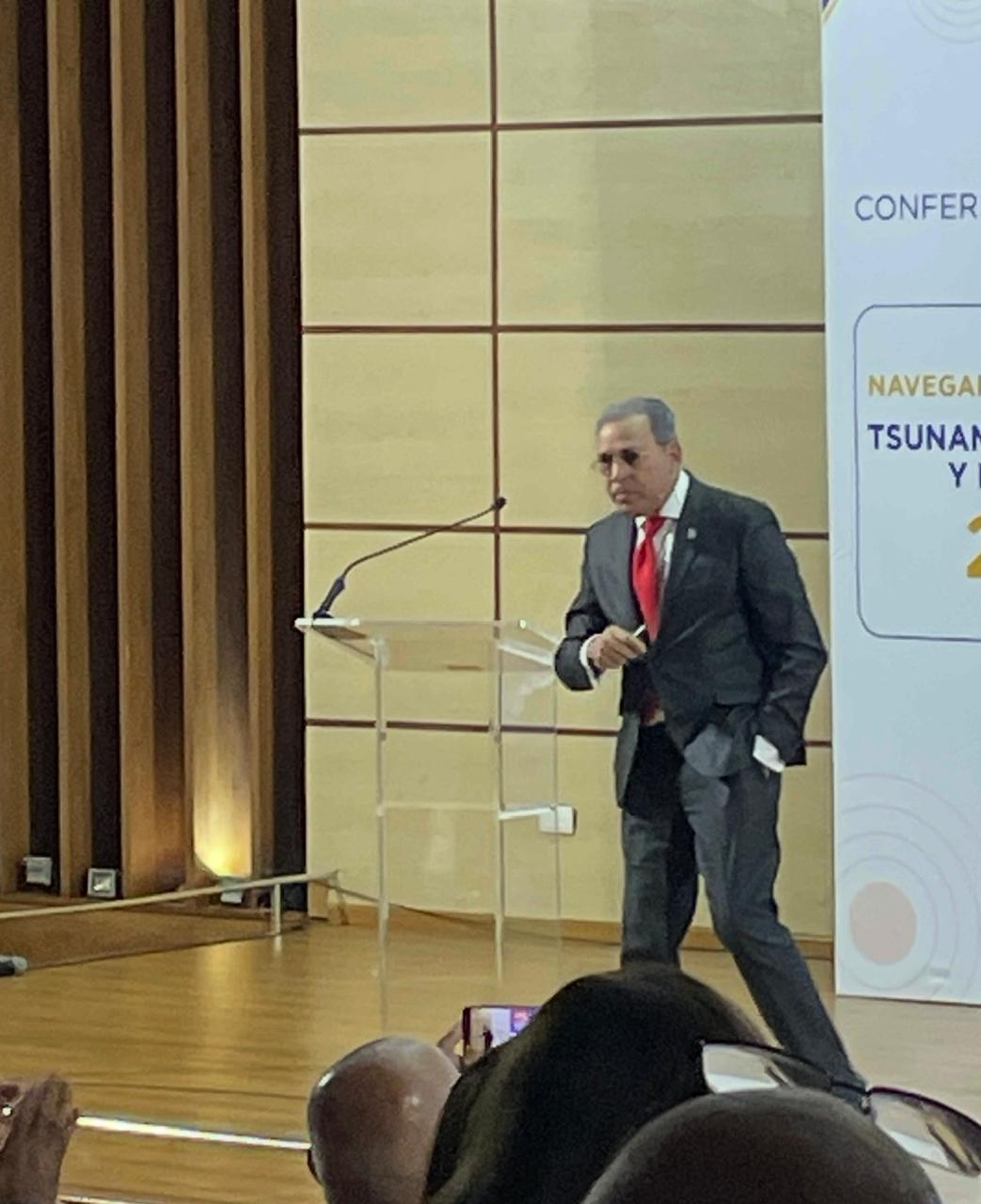
SANTO DOMINGO.– Engineer, mining geologist, and analyst of seismic and environmental issues, Osiris De León, yesterday urged the implementation of seismic studies nationwide, especially in densely populated urban areas, and the updating of building codes, prioritizing prevention against earthquakes and tsunamis.
Speaking yesterday at the conference “Navigating in Danger: Tsunamis, Earthquakes and Hurricanes”, held at the Pedro Henríquez Ureña National Library, the specialist elaborated on the structural vulnerability of buildings in the Dominican Republic to a possible earthquake, highlighting the urgent need to apply seismic microzonation criteria in urban design.
“We need to redesign our cities taking the terrain into account. We must conduct seismic microzonation, knowing what kind of soil we are standing on before building a school, a hospital, or a university,” the expert said, noting that it is not enough to apply structural design standards if the subsoil conditions are not considered.
De León explained how the lack of geotechnical planning and the lack of knowledge of soil composition have been key in past tragedies, such as the devastating earthquake that struck Haiti in 2010, causing more than 300,000 deaths.
“That earthquake wasn’t just in Haiti, it was on the island of Hispaniola, to which we also belong. The lesson should be for everyone,” he stated.
The professional showed images and graphics of the structural impact of the seismic event in Port-au-Prince, where formally designed and constructed buildings collapsed due to their location on clay soil, a type of terrain that amplifies seismic waves.
He compared these areas with others built on more rigid limestone and how this type of soil protected the buildings and allowed them to remain intact.
According to the expert, seismic waves behave differently depending on the type of soil. While in rigid soils like limestone the energy dissipates quickly, in soft soils, like clay, the energy accumulates in amplitude, which generates the most serious structural collapses.
Alert in formal constructions
Osiris de León also warned about the false sense of security offered by some “formal” buildings. He mentioned cases like the Hotel Montana, built to US standards in Haiti, which still collapsed because it was built on unstable ground during the earthquake. “It wasn’t the engineering, it was the soil that caused it to collapse,” he pointed out.
The geologist urged the implementation of nationwide seismic studies, especially in densely populated urban areas, and the updating of building codes, prioritizing prevention against earthquakes and tsunamis.
The activity is part of a series of lectures on natural disasters, aimed at strengthening preparedness for the 2025 hurricane season. Also participating were Marcelo Lagos, geographer and PhD in environmental sciences, and Jhon Morales, atmospheric and environmental scientist from ClimaData Corporation.
Photo: Paola Solis.







