


The need for advancements and improvements in the operations of an earthmoving and railroad construction company in 1835, coupled with the vision of a young American inventor, led to the mechanical excavator revolution. More than 180 years later, it has become an essential, indispensable tool for the modern construction industry.

Historically, as has happened countless times, the need to innovate in order to optimize and make large business operations profitable led to the development and creation of a work tool designed to increase productivity.
Until the mid-1830s, earthmoving was carried out mainly with rudimentary metal and wooden "scrapers" pulled by horses, and when the terrain did not allow it, it was done manually, with pick and shovel, by a huge number of workers (generally Chinese immigrants, who offered cheap labor).
A revolution in construction
During the construction of the railway between Springfield and Worcester (Massachusetts), by the contracting company Carmichael & Fairbanks, a young man of only 22 years recently appointed partner of the company, William Smith Otis (related to Elisha Graves Otis, inventor of the "safe" elevator), designed and created in 1835, what at that time would be known as a "Crane Excavator for digging and removing earth".
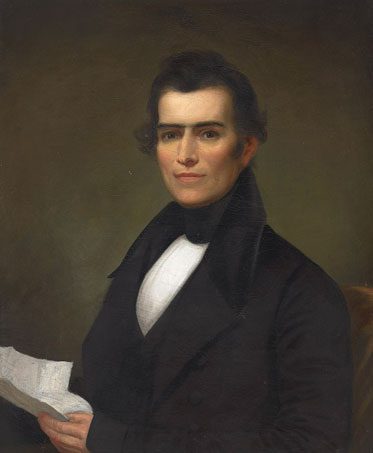
William Smith Otis (1813 – 1839)
Although the first patent registration was in 1836, the loss of the specifications during a fire delayed the final award of the patent until February 24, 1839.
The mechanical device created by the young Smith Otisbasically mimicked the same movements of a man throwing dirt into a bucket with a shovel, and then turning 90 degrees to deposit the contents of the bucket into a transport wagon.
The original engineering scheme specifies a crane supported by a railway wagon, which would be pulled by horses, so the first excavator would not yet be fully autonomous.
The operation of the tool would then have a metal scoop that would scrape a load of earth, to then lift it with the steam-powered crane and finally unload it into railway cars, using a pulley system operated by workers, to orient the boom built of wood.
Present and future of the mechanical excavator
The machine invented by William Smith was powered, in part, by a steam engine, animal traction and human maneuverability, which allowed the movement of volumes of between 380 and 400 cubic meters.
More than 180 years of technological advances have enabled innovation in incredibly powerful combustion engines, and more recently electric motors, the incorporation of countless hydraulic systems, almost infinite configurations of blade length and depth, as well as the emergence of terminals and accessories intended for countless tasks such as hydraulic hammers, multiprocessors, shears, sprayers, clamps, etc.

Buckets of up to 4.2 m³ per load or the incorporation of very diverse safety systems, cabins of maximum comfort equipped with the latest operating systems, among other enormous design advances, are the legacy and testimony of the vision of a young inventor that endures over time.
Currently there are excavators that exceed 225 meters in length and 96 meters in diameter, weighing more than 13,000 tons and capable of removing approximately 240,000 cubic meters of earth per day.
Fromsteam to engines
Although their basic configuration has changed relatively little, these machines replaced steam propulsion with diesel engines and then with electric motors, chains were replaced with cables, and the running gear that allowed movement became tracked.
Perhaps this is the definitive boost for an industry that has faced and overcome challenges throughout the last century, specializing construction tasks in parallel with the emergence of new types or subtypes of equipment (separating excavation from loading, for example), developments that have almost always been the result of evolution and rarely of sudden invention. Development engineers have essentially "limited" themselves to shaping the fundamental principles that have governed human construction: loading, excavating, lifting, transporting, compacting, leveling, and so on.
At the dawn of this marvel, the enormous development of the railway, especially in Europe and the United States, gave way to another great milestone with which the 20th century practically begins: the gasoline engine, which facilitated the mobility of machines outside of railway tracks and represented the great qualitative leap in their power, which would not cease to increase over time.
Thus began a path to great success, both in the development of construction equipment and in its application. The internal combustion engine, as a replacement for steam, ushered in a new era, which also marked the beginning of road construction. This development would benefit from a significant number of pieces of equipment specifically designed for this purpose. The invention of the internal combustion engine was the first in a series of remarkable milestones in the history of machinery in the 20th century. To this list we should add—more or less chronologically—tracked trains, pneumatic tires, the application of hydraulics, hydrostatic transmission, applied electronics, computer science, and ergonomics as a design concept.
All these technological innovations introduced over time have aimed to improve the fourfold objective required of machines: high productivity, low unit cost, ease of maintenance, and high availability. In other words, guaranteed high profitability.
Sources: Somaq, Secsa/Machinery







