



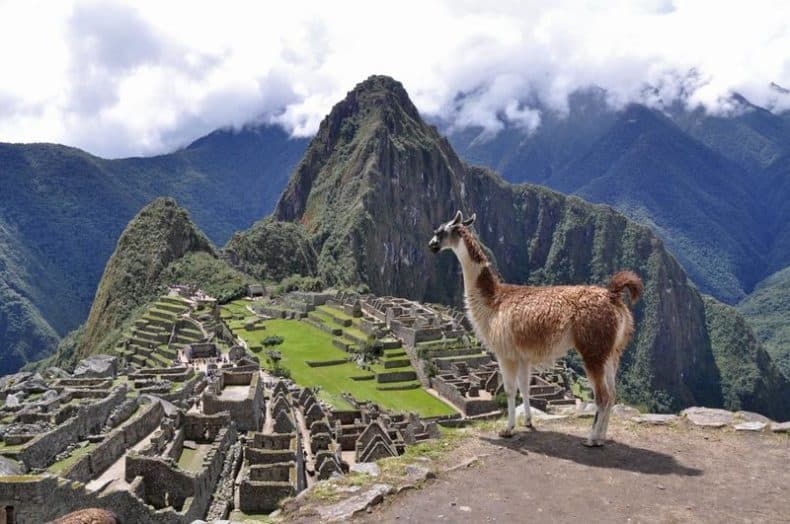
It comprises approximately 200 buildings, including temples, sanctuaries, baths, and houses. There are also 100 flights of stone staircases. The mountain on which it is located has an elevation of 2,700 meters
Most modern archaeologists and historians agree that Machu Picchu was built by the Inca Pachacutec, the greatest statesman of the Tahuantinsuyo, who ruled from 1438 to 1471.
Archaeologists assume that the construction of the citadel dates back to approximately the 15th century, based on a chronological date given by carbon-14 or radiocarbon dating.
The construction of Machu Picchu began as the Inca territory expanded. According to archaeologists, this area was the site of the final battle that secured the victory over the Chancas, marking prestigious victories and empowering Inca Pachacuti, who was the first to emerge beyond the Cusco Valley after his epic triumph over the Chancas. He led the expansion of the Tahuantinsuyo and is recognized as the "builder" of Cusco. This was one of his greatest achievements.
Built as a refuge for the elite of the Inca aristocracy, the fortress was located on the eastern slopes of the Vilcanota mountain range, about 80 kilometers from Cusco, the capital of the empire.
Its strategic location was chosen with admirable success. Surrounded by steep cliffs and hidden from the view of strangers in a dense forest, the citadel of Machu Picchu had the advantage of having only one narrow entrance, allowing it, in the event of a surprise attack, to be defended by very few warriors.
Occupied by at least three generations of Incas, Machu Picchu was abandoned in a sudden and mysterious decision. The strongest hypothesis explains its disappearance from historical memory because it was unknown to the lower classes and its routes were forbidden to anyone outside the Inca's inner circle.
Furthermore, according to their research, the site had a nearby quarry that could provide the best white granite stones.
Who discovered Machu Picchu?
July 24, 1911 is known as the date of the "discovery" of the famous Inca citadel of Machu Picchu, an architectural treasure that had been hidden for more than four centuries under the lush nature of the Urubamba Canyon.
This discovery was made by an anthropologist, historian, or simply by the American explorer, amateur archaeologist, Hiram Bingham a professor at Yale University.
Bingham immediately understood the enormous historical value of the discovered ruins and contacted Yale University, the National Geographic Society, and the Peruvian government, requesting sponsorship to begin studies at the Inca archaeological site.
The archaeological work was carried out between 1912 and 1915. During this period, the weeds growing out of the citadel were cleared and the Inca tombs located beyond the city walls were excavated.
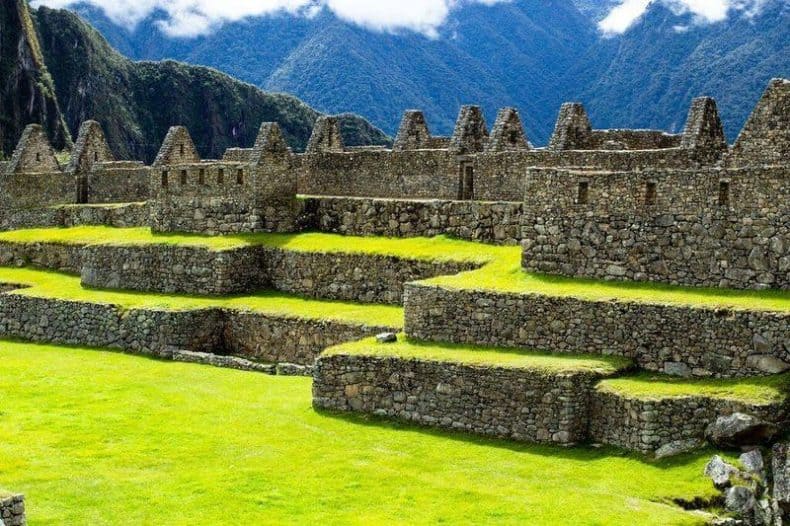
To prevent the structure from collapsing down the side of the mountain, the Incas built around 600 terraces. The structural engineering was incredible for the time.
Over the years, the importance of tourism in the citadel of Machu Picchu would grow, first nationally and then internationally, becoming a UNESCO World Heritage Site in 1983.
Design
The site is roughly divided into an urban sector and an agricultural sector, and into an upper city and a lower city. The temples are in the upper city, the warehouses in the lower one.
The architecture is adapted to the mountain. Approximately 200 buildings are arranged on wide, parallel terraces around a central east-west plaza. The various complexes, called kanchas , are long and narrow to make the most of the terrain. Sophisticated canal systems provided irrigation for the fields. Stone staircases set into the walls allowed access to the different levels throughout the site. The eastern section of the city was probably residential. The western section, separated by the plaza, served religious and ceremonial purposes. The Torreón , the enormous tower that may have been used as an observatory,
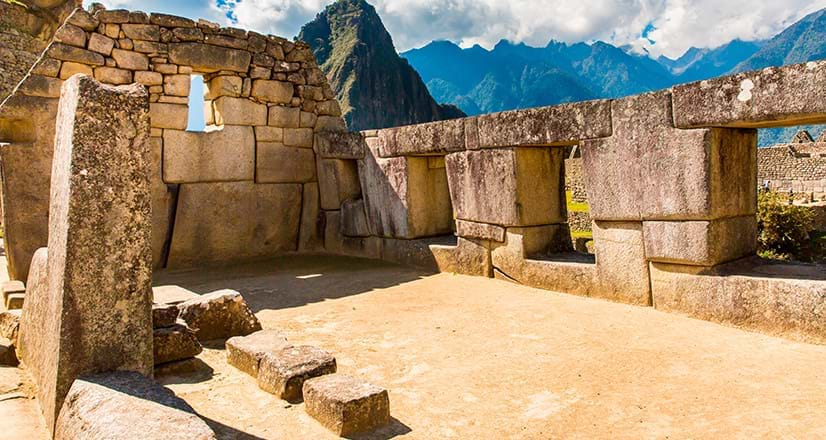
Located in the first zone are the main archaeological treasures: the Intihuatana , the Temple of the Sun , and the Hall of the Three Windows . The Popular Neighborhood, or Residential Neighborhood, is where the lower classes lived. It includes storage buildings and simple houses.
Construction
The central buildings utilize the classic Inca architectural style of dry-stone walls, polished to a regular shape. The Incas were masters of this technique, called sillar, in which blocks of stone are cut to fit together tightly. The site itself may have been intentionally built over fault lines to allow for better drainage and a readily available supply of fractured stone. “Machu Picchu clearly shows us that the Inca civilization was an empire of fractured rocks.”.

Machu Picchu currently
In 2007, Machu Picchu was named one of the New Seven Wonders of the World. It is the most visited attraction and the most famous ruins in South America.
On his first trip to the site, Hiram Bingham hiked for six days. Today, many choose to follow in his footsteps by walking to the ruins of the legendary Inca Trail. It's an experience like no other, but it's no longer necessary. Train journeys from Cusco take only a few hours.
More than 75,000 people make the trek each year and along the way experience some of the associated sites that were part of the Inca network in this area, according to a report published by National Geographic. It is no longer possible to hike independently. Due to heavy use (and the subsequent environmental impact), the trail has been heavily regulated. Visitors must register with an organized group to tackle the classic four-day route or a recently added two-day option, the publication states.
Sources: National Geographic
Peru Hop
Official website
Wikipedia







