


SANTO DOMINGO.-Representatives of business organizations participated in the closing of the national consultation on the National Territorial Planning Plan (PNOT) prepared by the Ministry of Economy, through the Vice Ministry of Territorial Planning and Regional Development.
The Deputy Minister of Territorial Planning and Regional Development, Domingo Matías, was in charge of opening the meeting held in the Hermanas Mirabal Hall of the National Palace and highlighted the need for the National Territorial Planning Plan (PNOT) as a fundamental initiative to organize and guide sustainable development, properly manage the effects of climate change and regulate the classification and qualification of soils with agricultural, mining, residential, tourism vocations and protected areas.
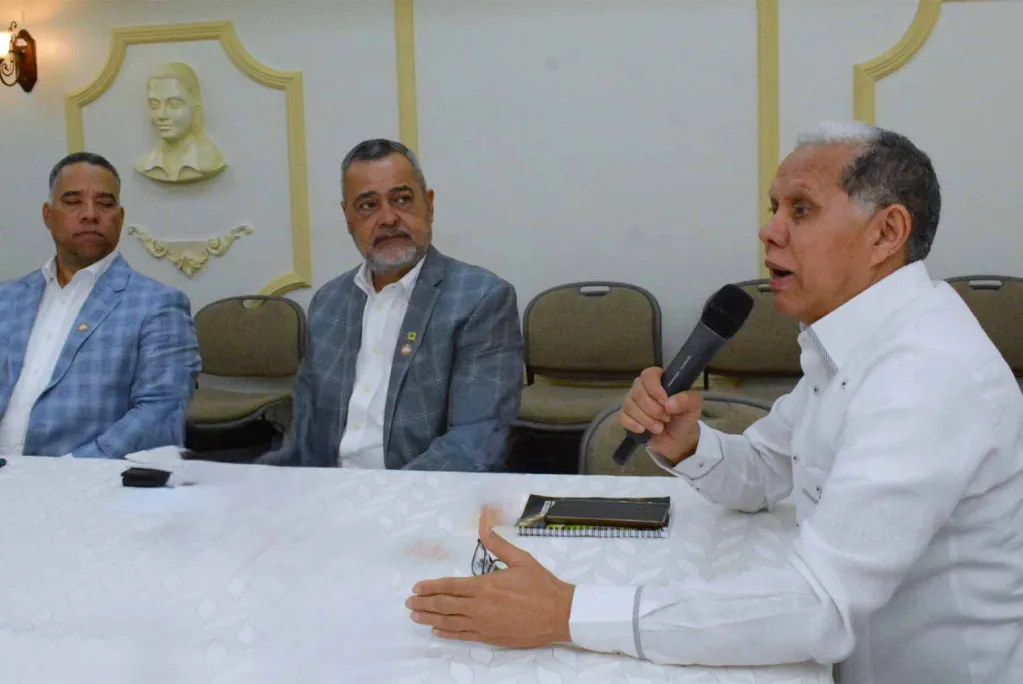
Domingo Matías with business representatives. (EXTERNAL SOURCE).
Deputy Minister Matías highlighted that the private sector plays a key role in the socio-economic dynamics of the territories, specifying that they are drivers of investment in urban infrastructure, tourism, and agricultural development that directly impact the different vocations of the land.
The National Territorial Planning Plan is based on the provisions of the Constitution of the Dominican Republic, as well as legislation 368-22 on Territorial Planning and Land Use and Human Settlements, 64-00 on Environment and Natural Resources and the provisions of Law No. 01-12 of the National Development Strategy.
This is a strategic instrument on which the territorial planning policy of the Dominican State will be structured, through the articulation of planning, evaluation, control and participatory management instruments of land occupation, based on the potential and limitations of the land and the dynamics and expectations of the population.
The future legal instrument will allow the country to move towards a shared vision for the medium and long term, as outlined in the Constitution of the Republic and the National Development Strategy. It will act as a catalyst for the priorities of the 2024-2028 Government Program and the RD-2036 Strategy, with the precise identification of the challenges and potential of each region of the country







