


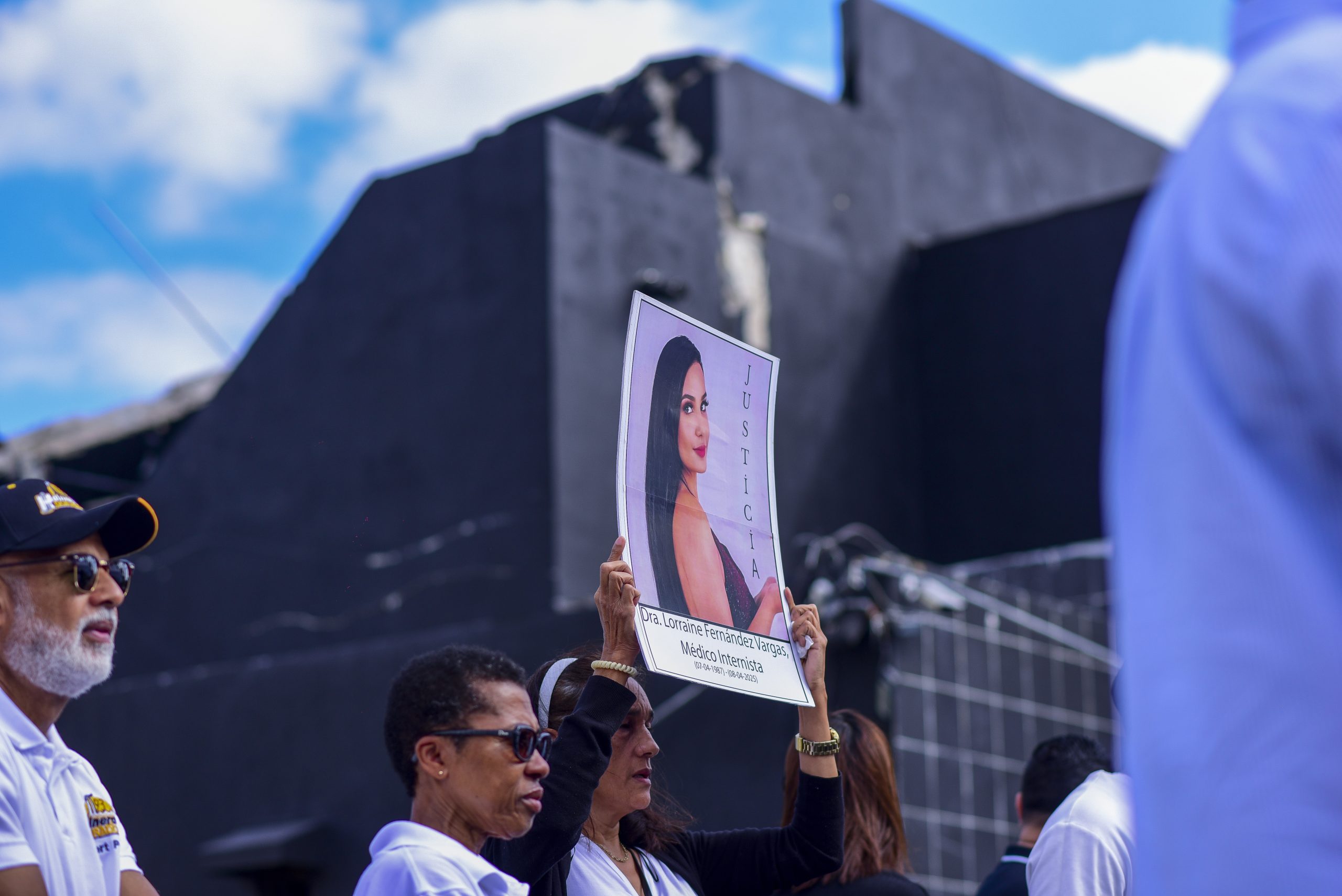
One year after the collapse that left 236 dead, justice is beginning to move as the country returns to the place, to the time when everything changed
SANTO DOMINGO. – On Monday, April 7, 2025, more than 500 people were having fun at the Jet Set nightclub, one of the icons of the city's nightlife since the 1970s, and merengue singer Rubby Pérez was entertaining the traditional Monday party.
Outside, the city slept. At 12:44 a.m. on Tuesday the 8th, the merengue singer was performing "Color de Rosa" with one of his daughters when a loud crash gave way to a thick silence and chaos of rubble, dust, cries for help and screams, which were recorded on cell phones.
Although there were signs, such as pieces of ceiling falling, untimely leaks, and a flurry of activity by the entertainment center staff that no one saw at the time, the roof of the venue had collapsed on the attendees.
There was no countdown, no time to react. No one read the signs either. Just a sharp, brutal blast that silenced the music and turned everything to dust, screams, and darkness. In seconds, Jet Set went from being a party venue to a field of rubble and death.
Five minutes later, at 12:49 a.m., a call finally made it through from beneath the concrete. The governor of Monte Cristi, Nelsy Cruz, trapped inside, managed to call President Luis Abinader. That desperate yet lucid gesture was one of the first signs that this was not a minor accident, but a tragedy of national proportions.
The first videos circulating on social media barely gave a sense of the scene, but it was certain that there were people trapped; some volunteers, desperate, tried to move rubble with their hands while repeating: "Is anyone there?"
The early morning hours dragged on. Sirens arrived quickly, but not quickly enough to quell the pain that had already taken root. Firefighters, Civil Defense, military personnel, ambulances, and volunteers. The entire country seemed to converge on a single point on Avenida Independencia. More than a hundred people were transported in just a few hours; hospitals and clinics received the injured nonstop.
The rescuers worked in silence at times, asking for all noise to stop so they could listen for signs of life under the pile of concrete, wood, and pieces of ceiling.
It was not yet dawn, and already enough deaths had been counted.
When the sun came out
With the light came the certainty: the roof of Jet Set had completely collapsed during the concert, leaving a final toll of 236 dead and more than 180 injured, according to official figures. Rubby Pérez himself died, and among the victims were public figures, athletes, and government employees. Above all, ordinary citizens died who that night simply wanted to dance.
One of the most devastating non-natural tragedies in Dominican history, which plunged the entire country into mourning that turned into anger when details about the possible causes of the collapse became known.
As the hours passed, the names of the fatalities were released, and the following days were filled with funerals, the agonizing wait for lists of the injured and their hospital locations. Photographs and videos circulated on social media, lines formed at hospitals, and silent embraces were exchanged.
The government declared national mourning, and Santo Domingo changed its rhythm: less traffic, less noise, many candles. A heavy silence descended upon the most boisterous country in the region; it was overwhelming and shrouded in tears.
But alongside the pain, something else began to grow: the collective question, "Why?"
A chain of oversights
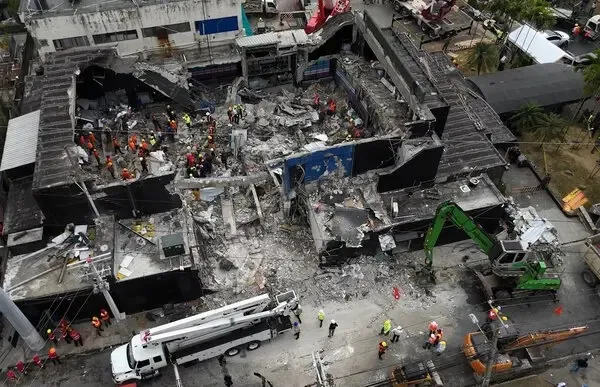
The first responses came quickly and were not reassuring. Investigations began to reveal a pattern: structural interventions without technical assessment, progressive overloading of the roof, lack of maintenance, and ignored warnings.
It was discovered that between 2011 and 2025, the roof went from having 7 to 17 installed elements, without any load-bearing capacity studies. These included heavy equipment, ducts, water tanks, and air conditioning systems.
An accumulated weight estimated at approximately 8 tons, according to experts who appeared on television, in addition to about six layers of "fine" material, according to preliminary reports. Accumulated weight. Accumulated risk evidenced in photographs.
Key testimonies also emerged, such as that of employee Gregory Adames, who had warned before the event about the conditions of the place and despite his request to stop the celebration, it did not stop.
The arrests took place in June, and two months later, the tragedy entered another phase as the owners of the establishment, Antonio and Maribel Espaillat, were charged with manslaughter and gross negligence.
The Public Prosecutor's Office spoke of "immense irresponsibility," although they were not remanded in custody. They were given a bail of RD$50 million, a travel ban, and were required to appear periodically in court, generating outrage among the victims' families.
November: the formal accusation
The file was deposited on November 7, 2025, and included engineering reports, survivor testimonies, documentation on renovations, and evidence of poor structural management.
The case was ready for its decisive phase, and it is exactly one year after the tragedy that justice is beginning to move.
Two days before the first anniversary, the legal process entered its crucial stage. Judge Raymundo Mejía began the preliminary hearing against the owners of Jet Set, with a clear objective: to determine if there is sufficient evidence to send them to trial.
The Public Prosecutor's Office did not hesitate to request the opening of the trial and asked to maintain the coercive measures, in addition to the seizure of assets to guarantee compensation to the victims.
Meanwhile, the judge rejected further postponements: "It is not fair to keep delaying," he warned, ordering that the reading of the indictment proceed.
The victims are still there, the collective pain is still there, and while the case progresses in the courts, outside the story is not over.
Families continue to demand justice, and society, which remembers the victims in memorial events on the eighth of each month, calls for justice. And they all do so with the same slogan from day one: “We want justice.”.
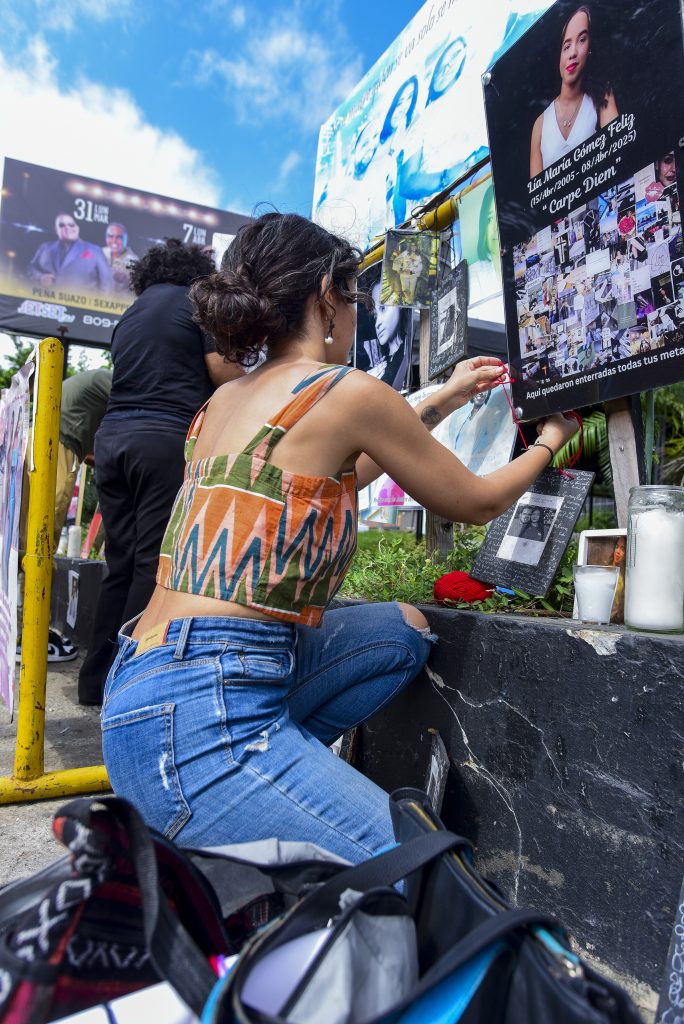
Because April 8, 2025, didn't end that day. Every 8th of the month, the country returns to that place with lit candles to pray, to sing, to weep. To recite the 236 names and, like last night, April 7, to extinguish the candles at the same hour when time stood still: 12:44.
Recommended readings:
- The roof withstood almost three times its capacity, says the company that inspected Jet Set in 2014
- Report on investigation of the Jet Set case recommends immediate demolition of the structure
- Jet Set case: preliminary hearing progresses and will continue on April 20







