


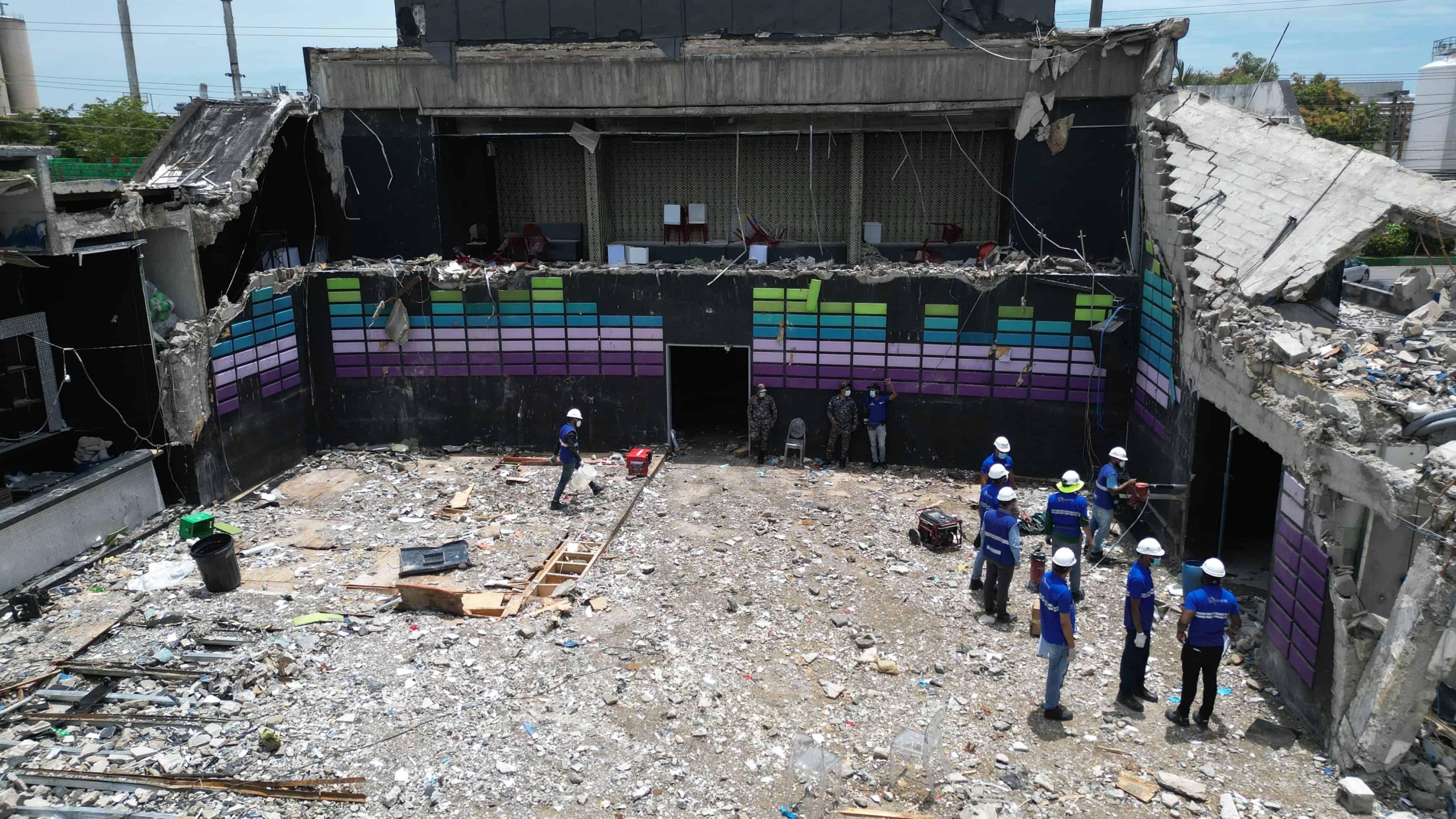
Decree 507-26 left Article 112 unchanged, whose Paragraph II sanctions owners of properties or facilities for failing to comply with safety regulations and causing multiple deaths, a provision that takes on a different meaning after the collapse of the roof of the Jet Set nightclub
SANTO DOMINGO. – On July 27, President Luis Abinader promulgated, through decree no. 507-26, the modifications approved by the National Congress to Law no. 74-25, the new Penal Code that will come into effect on August 3.
Of the 32 articles adjusted in the legislative process, Congress chose not to touch article 112, precisely the one that regulates the criminal liability of property and facility owners in the face of security failures.
Article 112 defines negligent attacks against life, deaths caused by clumsiness, recklessness, negligence or non-compliance with regulations, with a base penalty of two to three years of minor imprisonment.
Its Paragraph II, which remains unchanged, raises the responsibility when the death of several people is a consequence of a property or facility owner failing to comply with current safety regulations.
Firms like JURISALUD had requested adjustments to other paragraphs of the article, geared towards medical practice, but that request did not include Paragraph II, which remains intact when the regulation comes into effect.
The Jet Set case, as an essential reference
That provision is read today in light of the Jet Set case, the collapse of the roof of the nightclub in Santo Domingo on April 8, 2025, which left 236 people dead and more than 180 injured during a merengue concert.
The owners of the premises, Antonio and Maribel Espaillat, were charged with involuntary manslaughter and, on June 15, Judge Raymundo Mejía sent them to trial, following a technical report that attributed the collapse to unauthorized interventions, progressive overloading of the roof and poor maintenance.
The process continues under the classification of involuntary homicide and involuntary blows and injuries, contemplated in articles 319 and 320 of the Penal Code of 1884, in force at the time of the events.
It is precisely this figure, the involuntary homicide of the old Code, with penalties of months to a few years, that the new article 112 and its Paragraph II seek to reinforce for cases with multiple victims derived from breaches of security in buildings or facilities.
In other words: an episode with the characteristics of the Jet Set collapse, which occurred after August 3, would be prosecuted under this now reinforced article, and not under the lighter criminal type of 1884 that frames that trial today.
Other adjustments with repercussions in the sector
The same package of reforms did touch article 269, on violation of property, whose penalty was lowered from two-five years to one-two years of minor imprisonment, in addition to a fine; and article 303, on embezzlement of public funds, with penalties that rise from two-three to five-ten years, relevant for works financed with State resources.
Decree 507-26 also creates a Commission for Monitoring and Socialization of the Penal Code, chaired by former President of the Constitutional Court Milton Ray Guevara, to evaluate future adjustments to the regulations.
Recommended readings:
- The Jet Set case changes courts and enters the decisive stage of the legal process
- “Structural failure is due to technical factors and prior conditions,” say experts regarding the Jet Set counter-assessment
- Jet Set Case: Public Prosecutor's Office affirms it will seek maximum sentence for Espaillat brothers in trial







