



Fewer than 2 out of every 100 university students are training in the discipline that technically supports urban growth, public infrastructure, and housing and tourism development projects.
SANTO DOMINGO. – The most recent infographic on higher education, published yesterday by the National Statistics Office (ONE), reveals a reality that constitutes a structural challenge for the construction sector: Civil Engineering, the backbone of this sector, reports only 8,995 enrolled students, representing approximately 1.73% of the total of 520,524 students in higher education nationwide.
The figure is lower not only than other traditional careers, but also than Industrial Engineering, which registers 12,852 students, almost 43% more.
This contrast raises a critical question for the Dominican real estate sector: if the training base for future civil engineers is relatively small:
How will the country sustain its current rate of urban growth, public infrastructure, and housing and tourism development projects?
The implications of this data extend beyond construction as a specific economic activity and directly impact the real estate sector, tourism development, and housing policy. A limited pool of future civil engineers, architects, and professionals involved in design and planning could become a bottleneck for the expansion of residential projects, hotel complexes, and associated infrastructure.
In the real estate sector, this can translate into higher structural costs and slower execution; in tourism, into restrictions on developing new hubs with international standards; and in housing, into a reduced capacity to accelerate the production needed to reduce the housing deficit.
Human capital: a determining factor
If the country projects sustained urban growth in the next decade, the availability of technical human capital will be as crucial a factor as financing or demand.
University enrollment serves as a leading indicator of the future supply of human capital. It not only reflects student preferences but also trends that anticipate the availability of professional talent in the coming years. Civil Engineering trains those who design, plan, supervise, and ensure the structural safety of roads, bridges, drinking water networks, buildings, and countless other projects that form the core of the construction sector.
The lower number of students enrolled in this program, coupled with the absence of other design and planning-related disciplines (such as architecture, interior design, or landscape architecture) from this list, suggests that the Dominican educational ecosystem is not aligned with the country's long-term production needs. And construction is not just concrete and steel: it's design, functionality, technical management, and an integrated urban vision.
Warning voice from the sector
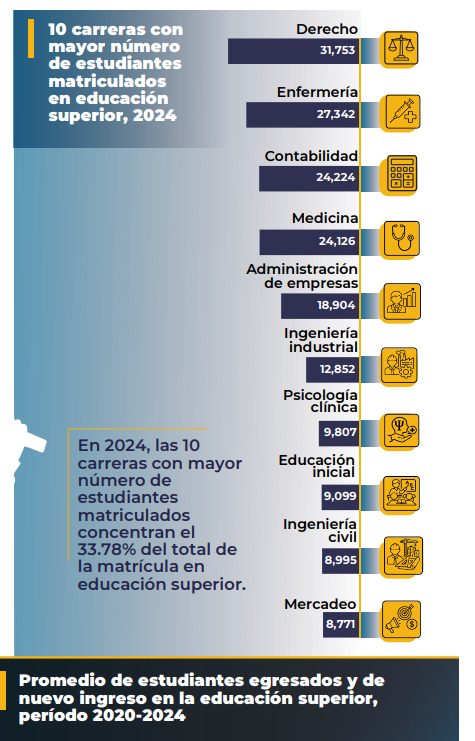
Source: ONE
Although there are no specific public statements directly linked to the enrollment of Civil Engineering, there are sectoral pronouncements that provide context to the deficit of supervision and quality in the works, which can be aggravated in a context where the base of technical training is limited.
The president of the Dominican College of Engineers, Architects and Surveyors (CODIA) of the northern region, Ramón Martínez, pointed out in October 2025 that in the Cibao region more than 60% of constructions are carried out irregularly, without the required documents and technical approvals, which has direct implications for structural safety and regulatory compliance.
Quality construction ultimately depends on professional labor with solid, up-to-date, and specific training.
Chained impacts
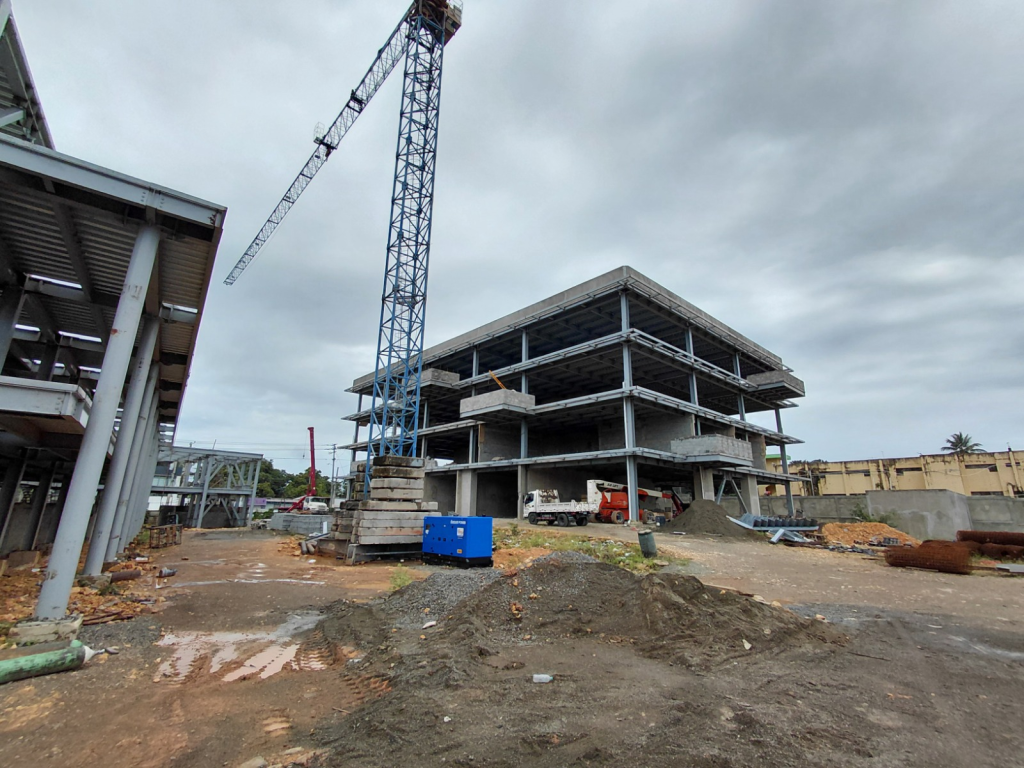
Quality construction ultimately depends on a professional workforce with solid, up-to-date, and specialized training. (Photo/Solangel Valdez).
1. Structural shortage of specialized talent.
With a moderate student base in Civil Engineering and the absence of other project-related areas in the dominant enrollment, the sector risks facing a relative contraction of engineers and specialized technicians in the next 5 to 10 years. This could translate into inter-company competition for qualified human resources; increased salaries for specialized technical profiles; and higher costs for supervision and construction management.
2. Quality and safety of construction projects.
The proliferation of construction projects without adequate technical supervision, as denounced by the president of CODIA, is related to companies' ability to hire and retain qualified talent. The lack of professionals can exacerbate these deficits and trigger defects in structures and finishes; legal problems due to non-compliance with regulations; and potential safety risks for end users of buildings and infrastructure.
3. Reduced innovation and sectoral productivity.
The Dominican construction industry faces challenges in productivity and modernization. According to industry associations, mechanization and the use of advanced technologies are not yet fully implemented across all production areas, which limits operational efficiency. Having more technical and specialized professionals in related disciplines, including design and engineering, is a key factor in accelerating the adoption of new technologies, best practices, and greater competitiveness in global markets.
Technical capacity?
STEM fields—science, technology, engineering, and mathematics—represent approximately 17% of all Dominican university students. Civil Engineering is part of this strategic sector, internationally recognized as the core of productive and technological training.
When student participation in these fields is low, the impact is not limited to academia; it translates into less technical capacity to sustain sectors intensive in infrastructure, innovation, and land-use planning.
In the Dominican Republic, a weak base in STEM careers means that the growth of construction and urban development could face, in the medium term, constraints stemming not from investment or demand, but from the availability of specialized human capital.
While construction is a driver of employment and urban development, its future sustainability depends on a robust educational ecosystem in technical, scientific, and project-based disciplines.
The enrollment trend in Dominican higher education suggests that the domestic demand for certain technical fields is not translating into a proportional supply of students.
For the construction sector, closely linked to real estate and tourism development, this could mean upward pressure on labor costs for technical profiles; less capacity for technical supervision and regulatory compliance; challenges for innovation and adoption of best construction practices; and risks associated with the quality of infrastructure under development.
If current trends persist, the country could face a significant structural gap between the demand for specialized talent and the supply of professionals in the disciplines that underpin construction, architecture, and integrated urban design.
The Dominican Republic's educational and productive agenda should consider this phenomenon as a central point of strategic discussion in the face of upcoming growth cycles, both in public infrastructure and in private housing and urban development projects.
If the country aspires to sustain its urban, tourism, and residential expansion in the next decade, the debate on the training of engineers and technical professionals is not merely academic: it is strategic.
Recommended readings:







