


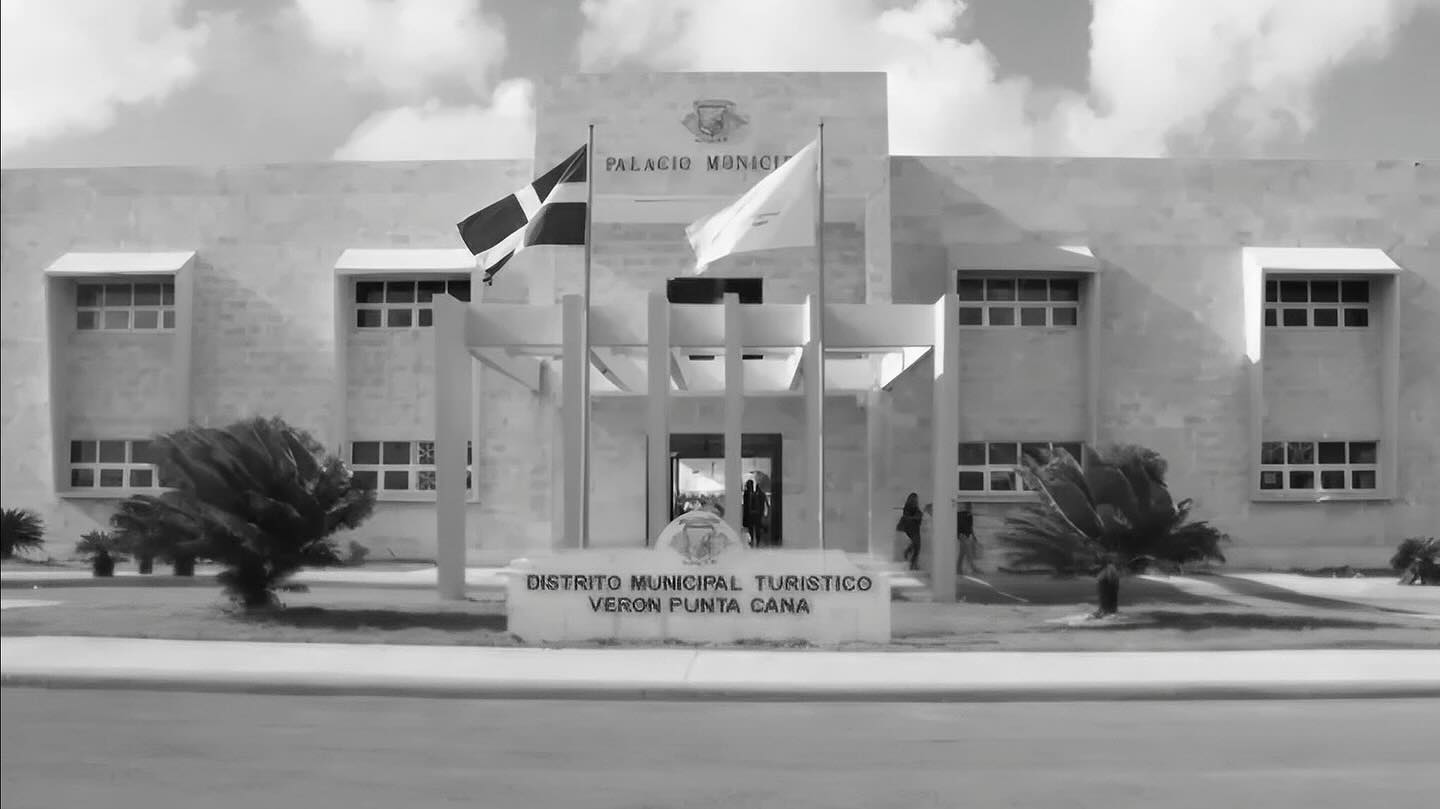
The Association of Hotels and Tourism Projects of the Eastern Zone has been demanding a territorial planning plan for 27 years, which, according to the announcement, will be ready in 60 days.
SANTO DOMINGO. – This Wednesday, September 10, during the opening ceremonies of the 2025 Trade Show of the National Association of Hotels and Restaurants -Asonahores- the Minister of Tourism, David Collado, announced that the territorial planning plan for the municipal district of Verón-Punta Cana will be ready in less than 60 days.
Tourism entrepreneur Frank Rainieri, a pioneer in the development of the destination, applauded the announcement: "Finally we are going to have a territorial planning plan," while reiterating that the demand from the Association of Hotels and Tourism Projects of the East Zone has gone unanswered for 27 years, which has led to uncontrolled and disorderly growth.
Rainieri has repeatedly denounced the irresponsible use of coastal areas: removal of dunes, sand extraction, damage to mangroves and wetlands, and in an interview with Diario Libre he spoke of complicity, tolerance and impunity.
Juan Bancalari, president of Asonahores, said on September 2 in an interview with Diario Libre that: “Land-use planning is the main point addressed in the sustainability strategy… so that tomorrow they don’t put an industry in a hotel zone, or a hotel in an industrial zone” and included Las Terrenas, in Samaná, as the second destination to be addressed, due to its high density and high traffic.
Land-use planning allows for the proper distribution and delimitation of land use, defining environmental protection zones, productive areas, and urban and rural spaces. Its main objective is to achieve sustainable and harmonious development, avoiding conflicts between economic, social, and ecological activities.
This need stems from rapid growth, which in turn puts immense pressure on natural resources and contributes to climate change. It involves a process of planning and managing space that aims to organize human activities in a balanced way, respecting the environment and ensuring the well-being of the population.
The National Territorial Planning Plan announced by the Minister of Tourism entails an investment of US$89 million, financed by the Dominican State and the World Bank, and will be implemented over four years.
Verón-Punta Cana: a mirror
The Verón-Punta Cana municipal district represents a large-scale laboratory of what can go wrong when growth outpaces institutional capacity. Law 368-22 offers solid tools: it grants powers, requires planning, creates legal institutions, and mandates accountability. But without practical implementation, without clear institutional will, and with regulations only partially applied or unknown, this legal framework remains on paper, while the “chaos” to which Rainieri refers is not merely an aesthetic complaint.
It is a development crisis: environmental, economic and social, which requires the functioning of a clear authority, that accepts accountability, respects the regulations and executes the territorial plans, otherwise Verón-Punta Cana runs the risk that its growth will cease to be an advantage and become a burden.
Radiography
• Verón-Punta Cana, although a tourist district with over 15,000 inhabitants, has claimed the authority to issue building permits, land use permits, and manage its own urban planning, as stipulated in Article 24 of Law 368-22 on Territorial Planning, Land Use, and Human Settlements. • However, many of these actions are not recognized by the Ministry of Housing, Habitat, and Buildings (MIVHED) or by the Higüey City Council, which maintains that certain permits can only be granted by that municipality. The mayor of Verón asserts that these authorities continue to act as if the law does not exist. • The Legal Counsel of the Executive Branch, in a communication dated July 3, 2025, confirmed that Law 368-22 has been fully in effect since December 24, 2022, the date of its publication in the Official Gazette. • Despite this validity, some government actors argue that certain aspects of the application (those related to local urban planning offices and land use certificates) require specific regulations to become effective. Verón says that this can no longer be an excuse to deny them authority. • In Verón-Punta Cana, real estate and tourism projects are stalled due to the lack of legal recognition of permits issued by the District Board or the competent local office. The companies say there is no technical or legal justification for blocking these permits. • Furthermore, in May 2025, Verón decided to break municipal agreements with Higüey regarding the distribution of fees and taxes, based on the new law, arguing that these collections no longer legally fall under Higüey's jurisdiction for projects within Verón's boundaries.
During the workshop, part of the Expo Asonahores 2025 program entitled “Territorial Planning: towards a planned and sustainable tourism development”, the speakers insisted that it is key to prevent Dominican tourism from continuing its expansion without clear rules.
The activity highlighted the importance of effectively applying Law 368-22 on Territorial Planning and Land Use, along with its regulation Decree 396-25, as indispensable legal instruments to coordinate municipalities, tourist districts and ministries, entities that maintain a power struggle.
The business leaders and authorities in attendance agreed that the only way to address the new challenges of sustainability and diversification in the sector is through a multi-sectoral working group that includes the government, the private sector, and local communities. They also raised the need to reform the 1969 Organic Tourism Law, which is considered outdated.
And although it is not the only Municipal District affected by disputes over land use, urban planning and powers, it is one of the most visible and conflictive situations, due to its high tourist exposure, large number of investments, pressure on land, infrastructure, services and the relevance of the legal powers that Law 368-22 assigns to municipal districts with more than 15,000 inhabitants and collection capacity.







