



By: Sanja Bojanic
Deputy Resident Representative, UNDP Dominican Republic
Since 1980, the UNWTO has designated September 27 as World Tourism Day. This year’s theme, “Tourism and Peace,” highlights the power of tourism to foster harmony and reconciliation among peoples.
Peace, in its broadest sense, not only implies the absence of conflict and violence, but also reflects justice, equity, and well-being within a society. To achieve this kind of peace, development must be inclusive and balanced, ensuring that the entire population of the country benefits, regardless of where they live. However, achieving this goal can be quite challenging, and economic development alone is not enough.
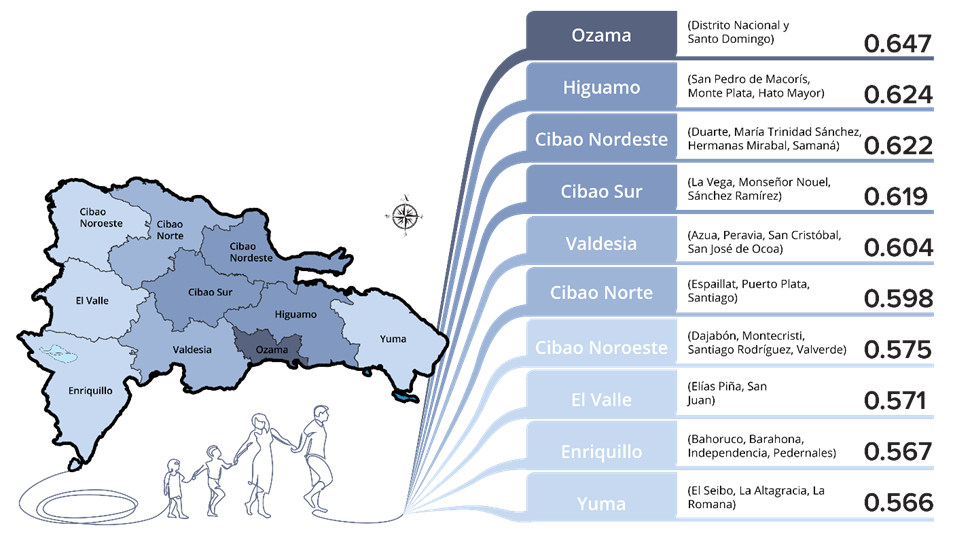
For example, the Yuma region of the Dominican Republic, home to one of the most internationally renowned tourist destinations, Punta Cana (located in the province of La Altagracia), has the lowest Human Development Index (HDI) in the country, with a score of 0.566 in 2022 (according to data from the UNDP Territorial Platform for Human Development), compared to the national average of 0.609, despite the economic boom driven by tourism. Therefore, we must consider what we can do to facilitate shared prosperity and its importance for the sector's expansion.
What does low human development really mean?
A low Human Development Index indicates that people living in this region face difficulties in key areas of their well-being. These challenges include low life expectancy, possibly due to limited access to health services; restricted educational opportunities, which limit personal development and progress, as well as access to decent jobs; and low incomes, which perpetuate poverty.
While economic growth is a critical condition for increasing the HDI, it does not automatically translate into overall well-being for all residents of the region. For that to happen, economic development, including the expansion of tourism, must be accompanied by conscious and intentional government strategies (at both the national and local levels) that promote sustainable human development: the improvement of social, educational, and health conditions for the entire population.
This means eliminating geographical disparities in access to social services and protecting natural and human capital, which in turn becomes the main source of competitiveness. Specifically, in the case of tourism, for it to truly be a tool for peace, it must generate opportunities for local communities, contribute to reducing inequality gaps, and ensure that the benefits are distributed more equitably.
So, how can we support tourism in contributing to peace, justice, equity, and well-being? At UNDP, we believe a key action is strengthening local empowerment mechanisms, both for communities and governments. Empowering people in their territories not only allows them to actively participate in decisions that affect their future, but also fosters stability and social cohesion—essential factors for lasting peace.
In this context, visitors and tourism can play a key role by directly contributing to local well-being, reducing forced migration, social deprivation, and poverty-related violence. To promote equity and inclusion, it is necessary to support and facilitate citizen participation and engagement so that they can play a more active role and contribute locally to the process of prioritizing needs, formulating sectoral and territorial plans, and determining the local development agenda.
Another essential strategy is to foster productive links between large tourism companies and small local businesses, and to integrate these small local businesses into the tourism value chain. Promoting the competitiveness of micro, small, and medium-sized enterprises (MSMEs) through innovation, digitalization, and the creation of business incubation spaces can generate a direct economic impact on communities. This type of economic integration has the potential to benefit both tourism companies and local entrepreneurs, thereby contributing to local development and a more equitable distribution of benefits.
Finally, it is essential that all these initiatives be developed with a global vision and within the framework of a territorial public policy dedicated to improving access to basic services, such as healthcare and quality education. These services are the foundation for a healthy and skilled workforce that will support the expansion of tourism and other sectors driving the country's sustainable development.
This World Tourism Day is an opportunity to look at the bigger picture and recognize that it is essential to ensure that tourism development not only promotes economic growth but also contributes to creating an environment conducive to peace, understood as justice, equity, and well-being. Only in this way can we ensure that sustainable human development progresses in all regions and that “no one is left behind.”.
The author is the Deputy Resident Representative of the UNDP for the Dominican Republic. She holds an MBA from the School of International Economics and Finance at Brandeis University in Boston, USA, a Master's degree in Business Economics, and a Bachelor's degree in Economics from the Faculty of Economics at the University of Montenegro. She speaks English and Macedonian, and her native language is Montenegrin (Serbian, Bosnian, Croatian).







