


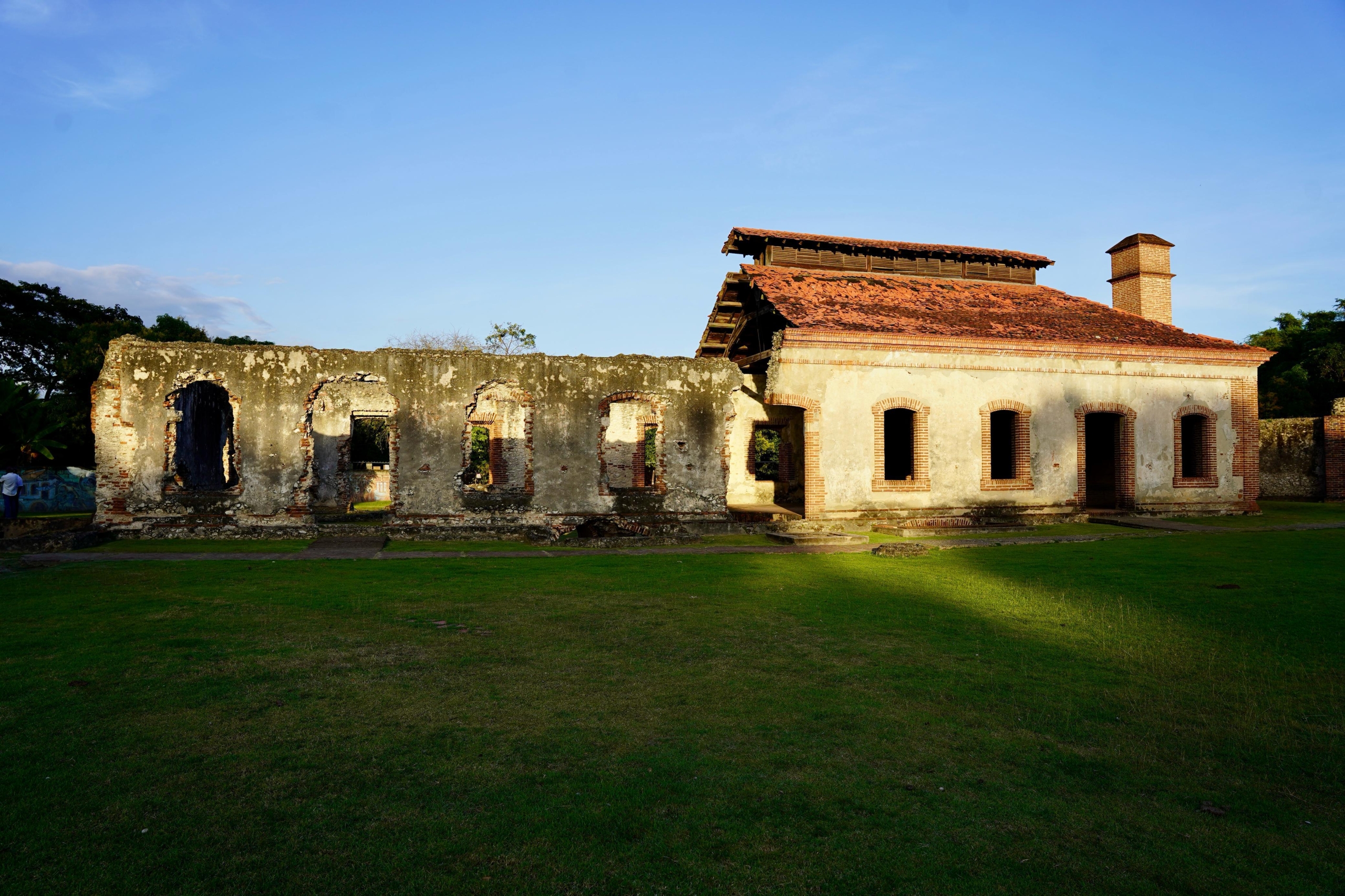
In the low hills of San Cristóbal, hidden among sugarcane fields and moss-covered stones, the ruins of the Boca de Nigua sugar mill still stand. Further east, near the river, amidst the dust of urban sprawl, the skeleton of the Ozama sugar mill survives.
SANTO DOMINGO. – The sugar industry in the Dominican Republic was not only the backbone of the economy, but it is also full of stories, from its days of greatest prosperity, when it was the "little golden cup," to the final decline that has relegated it to an anecdote or a topic for theses and seminars on economics or anthropology.
In the low hills of San Cristóbal, hidden among sugarcane fields and moss-covered stones, the ruins of the Boca de Nigua sugar mill, one of the oldest sites in the sugar industry in the Caribbean. Towards the rising sun, near the Ozama River, amidst the dust of urban expansion, the remains of the Ozama sugar mill, whose operation was a symbol of power and modernity in its time.
Both places were, in different centuries, the beating heart of an economy based on slavery and sugarcane, and today they are the silent ruins of a country that rose up between whips and sugar.
The walls still tell their stories
Walking through the Boca de Nigua site is like stepping into an echo. The walls, built with coral stone and brick, retain enough moisture and heat to attract the patina of time. The broken arches, the grass-covered hearths, and the chimney that still stands against the sky hold stories of labor and resilience.
It was in that place where, in 1796, the slaves rebelled against their masters in one of the first anti-slavery revolts on the continent, inspired by the revolutionary winds that came from Haiti.
According to historian Carlos Esteban Deive, the Nigua insurrection was "a spark of freedom in the heart of the Spanish slave system."
Although violently suppressed, it sowed a seed of dignity that foreshadowed the independence movements of the 19th century.
The sugar mills of Boca de Nigua ceased extracting the lifeblood from the sugarcane around the mid-19th century, after decades marked by revolts, neglect, and economic crisis. Following the 1796 insurrection and the political changes brought about by the Haitian occupation, the machinery gradually began to shut down, until it became completely inactive between 1840 and 1860.
By the end of the 19th century, it was a dead mill, overgrown with weeds and reduced to silent walls. Its cold furnaces and broken arches now serve as a reminder of the end of a system that collapsed with the abolition of sugar production and the shift of sugar production to other regions of the country.
Ozama changed everything
During the 17th and 18th centuries, Dominican sugar mills were the cornerstone of the colonial economy. The Boca de Nigua mill belonged to the powerful Caro y Montoro family and featured water-powered mills, a grinding house, a purging facility, and the steward's residence.
The Ozama Sugar Mill, on the other hand, marked the transition to modern industrialization. Founded in the 19th century, it benefited from the sugar boom during the American occupation and the Trujillo regime. Its enormous boilers, red brick chimney, and iron sheds were the pride of the eastern region.
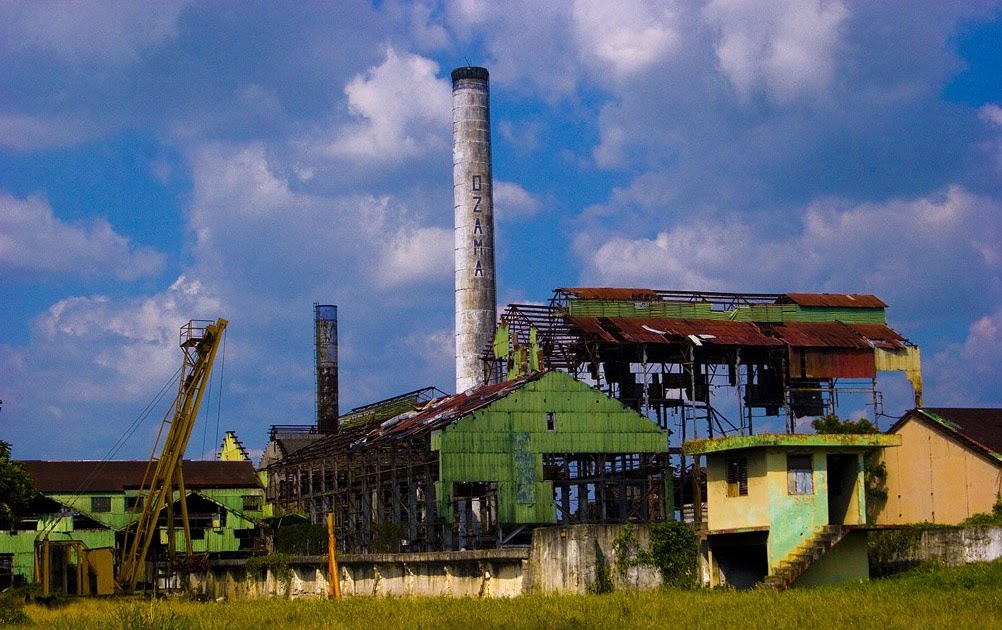
The Ozama sugar mill marked the transition to modern industrialization. (External source).
The Ozama River was then both artery and mirror: the harvests traveled along it, the ships loaded with molasses, and it also reflected the dreams of progress of an agricultural country.
The Ozama sugar mill survived longer: it kept turning until the first decades of the 20th century, when industrial modernity reached the East, and this time left it behind. Today only the stoic chimney remains, defying time and oblivion.
Between 1910 and 1920, its operations gradually died down, displaced by the large sugar mills of La Romana, San Pedro and Consuelo, which brought industrial competition and a change of ownership, sealing its fate.
The former giant of the Ozama River was left as a brick and iron skeleton, its warehouses empty and its chimney facing a city that was beginning to expand without it. What was once a symbol of industrial progress ended up as a memory, its chimney standing alone like a solitary obelisk, a silent witness to an era when sugar defined the country's economic life.
Life in the sugar mill
The slaves' day began before dawn. Men, women, and children cut sugarcane under the sun, accompanied by the metallic sound of machetes and the cloying smell of sugarcane juice.
They slept in thatched huts, received rations of flour and dried meat, and were punished with whips or stocks if they dared to rest. The women, in addition to working in the fields, cooked, raised children, and cared for the sick.
Among them were born songs, prayers, and small, silent rebellions. The nights were short, but full of hope. As the poet Tomás Hernández Franco wrote, “the black man was the seed and blood of sugar.”
With the abolition of slavery in the 19th century and the shift of sugar production to other regions, the sugar mills in the southern area went into decline.
Both sites are National Cultural Heritage, protected by Law 318-98 on Culture, but their conservation is minimal. The wind passes between the broken arches and rusted towers, as if carrying the breath of those who lost their lives there.
The soul of the stone
Visitors arriving at Boca de Nigua feel an ancient peace. Shadows fall upon the colonial arches, and birdsong replaces the foreman's shout. The air smells of damp earth and dried sugarcane.
Time has transformed the ingenuity into a temple of silence: each brick seems to pray for those who had no grave.
In Ozama, on the other hand, modernity advances relentlessly. Just a few meters away, there are no longer bateyes or sheds; apartment buildings and mechanical workshops abound, and the smokestack seems to gaze in astonishment at the passing trucks.
In both places there is a single lesson: history can be forgotten, but it cannot disappear. Beneath the grass, beneath the cement, the memory of sugar and resistance still beats.
Visit Boca de Nigua
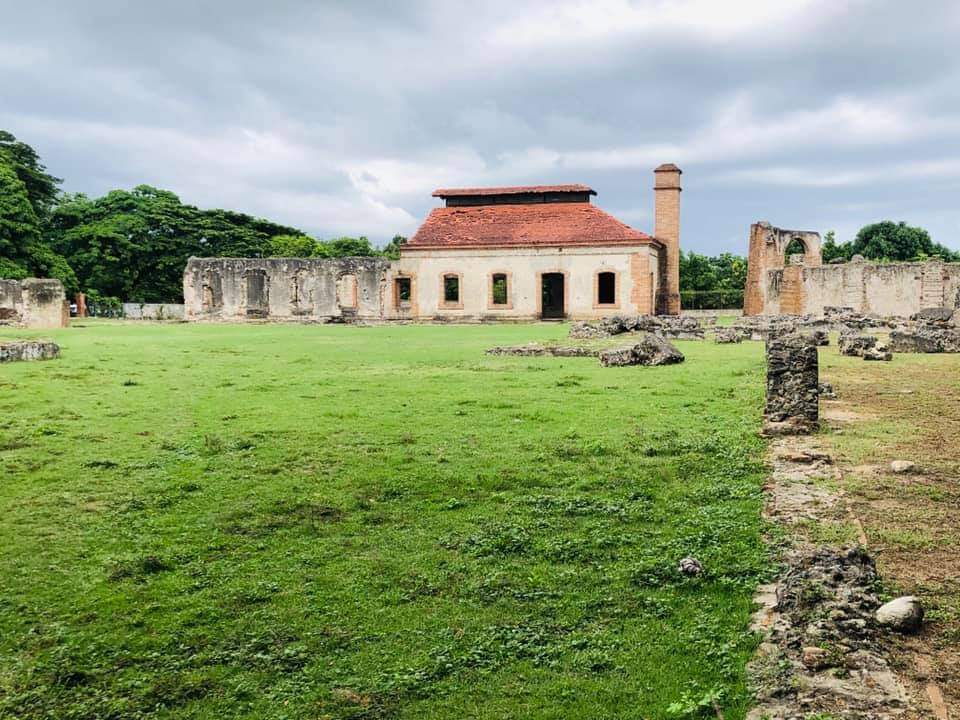
The architecture of the Boca de Nigua sugar mill was not created solely to produce sugar, but to impose order. (Photo/City Hall).
The Boca de Nigua sugar mill site is one of the most powerful and historically significant colonial sites in the Dominican Republic. Today, its ruins can be visited through authorized guided tours, which helps protect its history and structure: access is not unrestricted but regulated to ensure the preservation of this heritage.
In recent years progress has been made: 3D scanning technology is being used to document the walls and old boilers, and the Ministry of Culture, together with local authorities, plans to rebuild its roof to prevent further damage.
The walk among the colonial ruins is not only a journey into the sugar past, but also offers an intimate encounter with nature: the vegetation, streams and nearby wetlands make the place ideal for reflection and reconnecting with memory.
If you're interested, contact the San Cristóbal City Hall or the Monumental Heritage Department to arrange a guided tour. It's an essential experience for anyone who wants to understand our history of slavery and sugar production with respect and depth.
A design to control
The architecture of the Boca de Nigua sugar mill was not created solely to produce sugar, but to impose order. Its walls, as thick as ramparts, supported scorching roofs beneath which the mills, powered by the river's water, vibrated.
The brick arches, now broken, once gave way to the bustle of carts laden with sugarcane; the blackened stoves still echo with the fire that boiled the sugarcane juice night and day. The great chimney, rising like an accusing finger, guided the smoke from the cane fields and simultaneously watched over the plains.
The channels of the old aqueduct and the bases where the waterwheel that powered the mill once turned are still visible. Every stone speaks: not only of technique and craftsmanship, but of control, forced effort, and memory.
Sources consulted:
-General Archive of the Nation (AGN). Heritage Collection on Colonial Sugar Mills, 1780–1900.
-Deive, Carlos Esteban. The slavery of the black man in Santo Domingo. Taller Publishing House, 1980.
-National Commission of Monumental Heritage. Inventory of Immovable Cultural Assets of the Dominican Republic, 2002.
-Hernández Franco, Tomás. Yelidá. Santo Domingo: Editora Cultural, 1942.
-Interviews with community guides from San Gregorio de Nigua (conducted in 2022 by the National Heritage Directorate).







