


By Gissele Taveras
Elinmobiliariodo@gmail.com
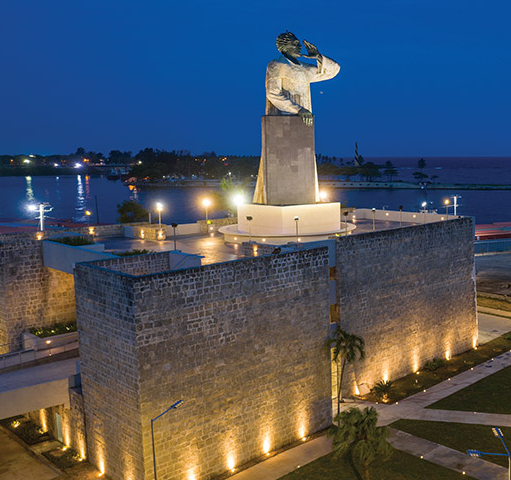
SANTO DOMINGO- Facing the outskirts of the Colonial City of Santo Domingo, the Fray Antonio de Montesino Monument welcomes travelers and tourists entering the country through the south sidewalk of Paseo Presidente Billini, at the entrance to the port avenue.
A majestic fifteen-meter-high bronze and limestone sculpture stands out from the building, representing the Spanish friar Montesinos standing and delivering his courageous Advent Sermon in 1511 in defense of the Taino Indians.
At night it is illuminated with the colors of the Dominican flag, blue, white and red, to give it a touch of true splendor.
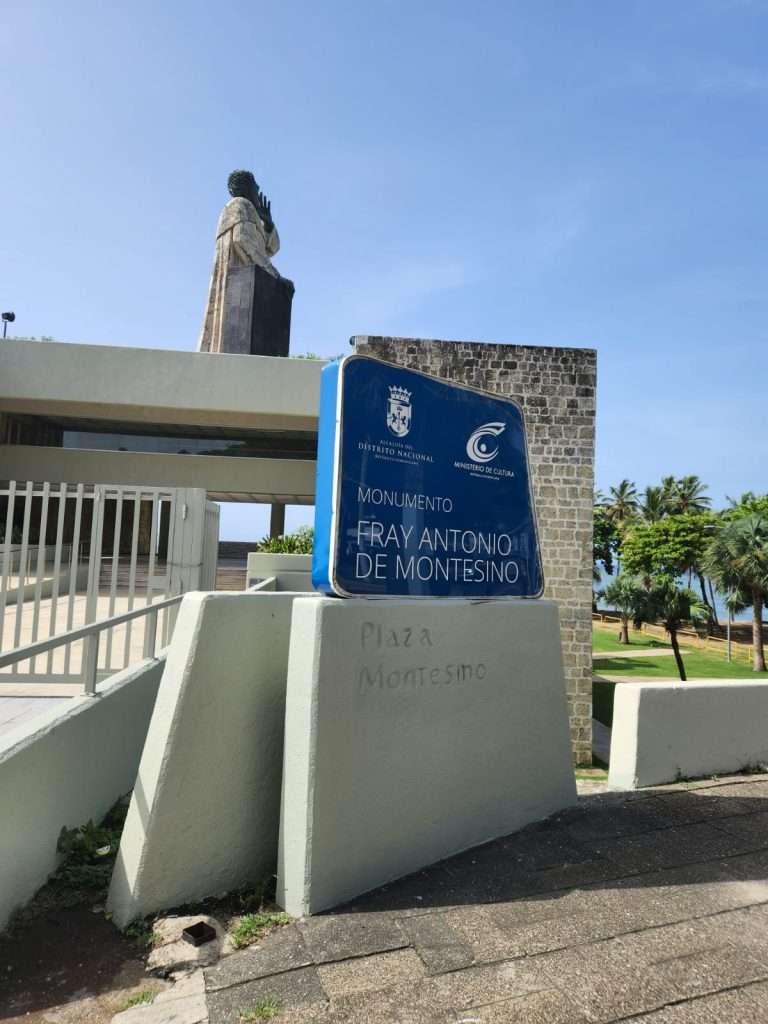
The artwork was restored in 2019. (Photo by Gissel Taveras).
It is hard to imagine that this important work was abandoned for 20 years, before being rebuilt in 2019, during the administration of the then Mayor of the National District, David Collado.
El Inmobiliario visited its facilities and spoke with Dimitra Polanco, the monument's administrative coordinator, to learn a little more about the history of this cultural center.
“In June 2019, the rehabilitation of this monument to Montesino, which had been abandoned for more than 20 years, was inaugurated. The National District City Hall (ADN) took it on as a complement to the restoration work in the Colonial City and the Malecón that has been carried out in recent years,” he explains.
He adds that the monument is a donation from the Mexican government to the city in 1983 to honor the memory of Fray Antonio de Montesinos, a Spanish friar of the Dominican order who denounced the mistreatment and abuses committed by the conquerors against the natives of the American continent.
“It was created by the Mexican sculptor Antonio Castellano Basich and rests on the upper terrace of an architectural complex built with reinforced concrete and limestone cladding, designed by the Mexican architect Pedro Ramírez Vázquez.”.
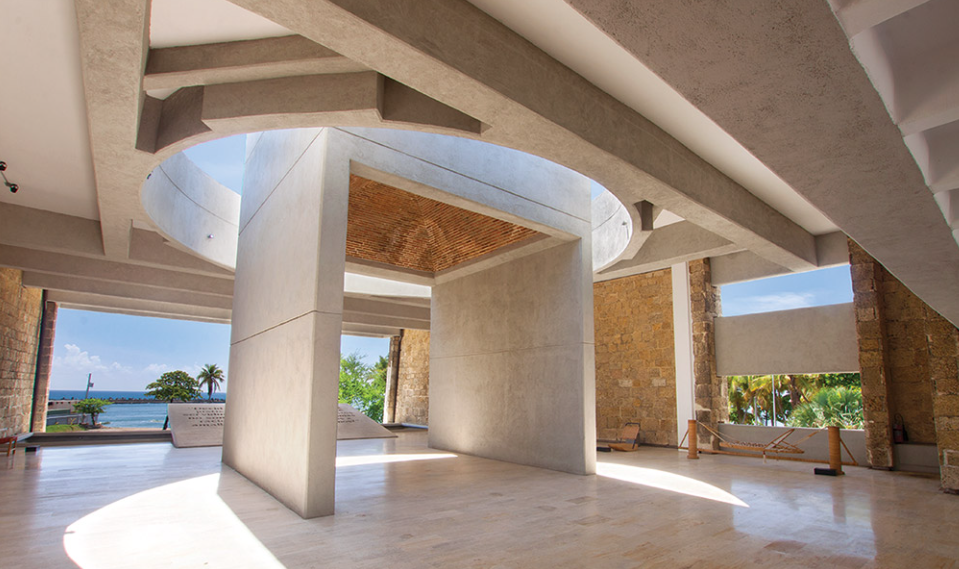
The monument honors the Dominican friar, defender of the Taíno people. (Photo by Gissel Taveras).
He also said that the reconstruction of the work was carried out by the Infrastructure, Urban Planning and Cultural Heritage departments of the National District Mayor's Office, with the advice of the architect Juan Mubarak and also had the collaboration of the Ministry of Culture and the Embassy of Mexico.
What did this rehabilitation include?
Polanco explains that the work included the repair of the sculpture, the paving of the terrace area, the interior spaces and the stairs; the repair of walls, the implementation of access ramps for people with disabilities at the entrances and the renovation of the entire electrical and sanitary installation system.
In addition, the sidewalks and perimeter wall were renovated in the exterior areas, parking lots were built, and the beach areas were restored and given appropriate landscaping.
"And what was new was the implementation of an internal and external lighting design for the project that highlights the presence of the monument, especially the statue at night.".
"Visitors are truly amazed by the splendor of the colors that illuminate the monument at night.".
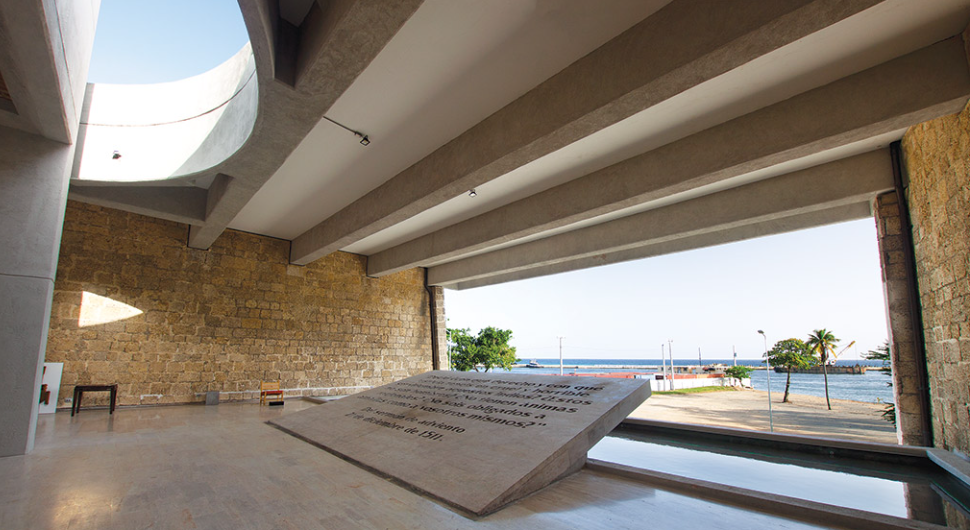
The venue is ideal for cultural activities. (Photo by Gissel Taveras).
Cultural Activities
Regarding the spaces intended to promote culture, the coordinator explains that the monument has various spaces available to the public for cultural activities and social events, which can be requested in advance from the administration, with a quoted cost.
For events, they reported that they have the following rooms:
1-Room 1511, air-conditioned and with capacity for approximately 150/175 people.
2-Caribbean Terrace, outdoors, with sea view and capacity for approximately 40/50 people.
3- Green area, outdoors with capacity for approximately 300/500 people.
4- Advent Sermon, located on the second level, solemn outdoor space (in this area only cultural, religious activities and cocktails with instrumental music are allowed), capacity for approximately 200/300 people.
4- Beach area, outdoor space, for social or fashion events.
5- Mezzanine Room, located on the third level, air-conditioned and with capacity for 40 people.
Usually very crowded, this monument represents an architectural work of high cultural value, offering a beautiful panoramic view of the sea and the colonial city from its summit.
Opening Hours
The center is open every day from 9:00 a.m. to 6:00 p.m., except on Mondays, when it remains closed for organizational purposes.
The maintenance and management of the monument is the responsibility of a bipartite committee in which the National District City Council and the Ministry of Culture participate.







