


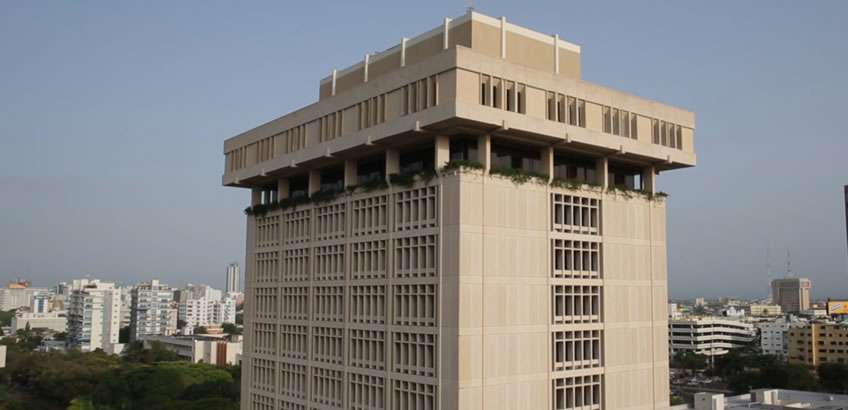
SANTO DOMINGO- The Central Bank of the Dominican Republic (BCRD) reduced its monetary policy interest rate (TPM) by 25 basis points yesterday, Thursday, August 29, decreasing from 7.00% to 6.75% annually.
Likewise, the rate of the permanent liquidity expansion facility (1-day Repos) is reduced from 7.50% to 7.25% per annum, while the rate of remunerated deposits (Overnight) is reduced from 5.50% to 5.25% per annum.
At its monetary policy meeting in August 2024, the recent developments in the environment, particularly expectations of easing international financial conditions, were taken into consideration, according to a press release.
Additionally, the "good performance of the Dominican economy and the gradual moderation of the pace of private credit expansion" were considered, in a context in which inflation has remained at the lower end of the target range of 4.0% ‡ 1.0% this year.
"Year-on-year inflation in the Dominican Republic has decreased significantly, reaching 3.54% in July 2024. Similarly, core inflation, which excludes the prices of the most volatile components of the basket and is more directly associated with monetary conditions, remains around the center of the target, at 3.90% in July 2024," the agency highlights.
The BCRD's forecasting models indicate that both headline and core inflation would remain within the target range of 4.0% ± 1.0% over the monetary policy horizon, in an active monetary policy scenario.
Cumulative decrease since May 2023
With this decision to reduce the monetary policy rate, the benchmark interest rate has decreased by 175 basis points since May 2023. During this period, the Central Bank of the Dominican Republic (BCRD) implemented a liquidity provision program, through which financial intermediaries have channeled loans of over 199 billion pesos to the private sector at interest rates of up to 9.0% per annum. Additionally, the BCRD has been promoting the use of permanent liquidity facilities by financial institutions, extending the terms of BCRD repurchase agreements (repos).
International context
In the international environment, the United States economy remains resilient, with projected growth of 2.5% for 2024, according to Consensus Forecasts. Meanwhile, labor market indicators have continued to moderate, and year-over-year inflation slowed to 2.9% in July 2024.
Given this scenario, the Federal Reserve is expected to begin a process of cutting its benchmark interest rate at its next meeting in September, the country's top monetary authority noted.
In the Eurozone, economic activity is expected to grow by 0.8% in 2024, according to Consensus Forecasts, though this growth is impacted by geopolitical conflicts. Meanwhile, year-on-year inflation reached 2.6% in July, approaching its 2.0% target. Against this backdrop, market analysts anticipate that the European Central Bank will resume its interest rate reduction program at its September meeting.
In Latin America, inflation has remained within the target range in almost all countries, although a rebound has been observed in some of the larger economies.
In that sense, central banks have lowered their monetary policy rates from levels that reached double digits in most countries of the region.
International reference rates
The reductions in reference rates since 2023 are:
- Chile (550 accumulated basis points)
- Costa Rica (425)
- Brazil (325)
- Uruguay (300)
- Colombia (250)
- Paraguay (250)
- Peru (225)
- Dominican Republic (175)
- Mexico (50)
As for raw materials, volatility persists in the price of West Texas Intermediate (WTI) oil, although it moderated to approximately $76 per barrel at the end of August.
Meanwhile, freight transport costs remain high, given the geopolitical conflicts in the Middle East and the climatic factors that continue to affect important routes for global trade in goods.
Dominican Republic leads economic growth
At the national level, economic activity reached an average growth of 5.0% during January-July 2024, close to its potential, following a 4.8% year-on-year expansion in July. In this context, the Dominican economy is expected to sustain growth of around 5% in 2024, one of the highest rates of expansion in the region, according to international organizations such as the International Monetary Fund (IMF), the World Bank, and the Economic Commission for Latin America and the Caribbean (ECLAC).
On the other hand, the growth rate of private credit in local currency has continued to moderate gradually, settling at around 15% year-on-year. In this respect, the growth rates of private loans and broader monetary aggregates have maintained a gradual convergence with nominal GDP growth, as projected in the Central Bank's Monetary Program.
Meanwhile, foreign exchange generating activities continue to show favorable performance, with tourism, free zone exports, remittances, and foreign direct investment standing out.
In that context, the relative stability of the exchange rate has been maintained, while international reserves stood at $15.3 billion in July, equivalent to about 12% of gross domestic product (GDP) and about six months of imports, exceeding the metrics recommended by the IMF.
"It is important to highlight that the Dominican economy has strong macroeconomic fundamentals and a resilient productive sector, which are reflected in a better perception of country risk in international markets," the Central Bank emphasized.
The Central Bank of the Dominican Republic will continue to monitor the evolution of the economy with the aim of continuing to adopt timely measures necessary to preserve macroeconomic stability and contribute to keeping inflation within the target range, the statement notes.







