


Annerys Meléndez emphasized that the scams that have been occurring do not represent the sector, stating that investing in the Dominican Republic is a safe activity as long as it is done through reputable and recognized companies.
By Escarlin Pozo
El Inmobiliario
The situation behind a real estate scam is deplorable from any perspective. Having saved for years through hard work and dedication is what makes this scenario so painful and heartbreaking.
In response to the fraud case that occurred in La Romana and Bávaro, dubbed "Operation Cheetah" by the Public Prosecutor's Office, Annerys Meléndez, president of the Dominican Association of Housing Builders and Promoters (Acoprovi), shared a series of preventative measures to avoid falling into one of these networks.
“We know that scams are very unfortunate. And we also understand that they have been a source of pain for many Dominicans and foreigners because it really hurts to have saved money, invested it, trusted people, and then been scammed,” he expressed with great sorrow.
The first measure announced is that people interested in investing should choose a developer or builder with a track record and reputation in the market.
“The builder or developer is not just like the seller, but is the one who will execute the project, the one who will make the project a success, the one who will deliver your project,” he explained.
But how can you verify that someone is trustworthy? In an interview on the program "El Día," she highlighted several ways to do so. First, check that the individual or company has successfully completed other projects.
On the other hand, confirm that he is affiliated with an institution, which could be Acoprovi, which, according to the engineer, has not had any cases of fraud in its history to date.
The second preventive measure is to verify the legal aspects of the project, specifically, that the contract includes the name of the person who has legal jurisdiction over the project or the construction company.
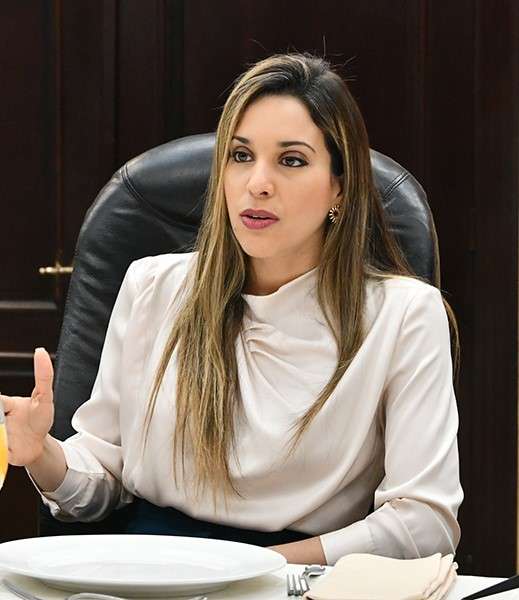
Annerys Meléndez. (EXTERNAL SOURCE).
“When you are going to make an investment of many millions of pesos, it is preferable to invest in a good lawyer who can advise you on that path and assure you,” he advised.
He also specified that it must be verified that the land where the work will be carried out has a title in the name of the company that will execute the project.
In that regard, Meléndez indicated that the company's legal status must be verified. This involves investigating whether they have an office.
He added another precaution to keep in mind: be wary of offers that seem too good to be true, mentioning how this "real estate project" was offered to the public with a 50% discount, having a value below market prices.
“Imagine there’s a project very close to yours, which you can investigate in any way you like, and you find that there was an irresistible offer of a 50% discount. Logically and with common sense, given the profit margins that exist in the market, it’s not going to work for that project developer to offer a 50% discount,” he pointed out.
He added that it must be verified that the project has made some progress in its permitting process.
“These are factors that you legally have to verify, as well as the project's financial solvency. For example, if there is a bank behind it or if there is a trust,” he mentioned.
Annerys: “Scams do not represent the sector”
During her speech, Annerys Meléndez stressed that the scams that have been occurring do not represent the sector, specifying that investing in the Dominican Republic is a safe activity as long as it is done through reputable and recognized companies.
“The reality is that the number of people scammed, while very painful, is not representative of the sector. And the last myth is whether they can be prevented. Of course they can be prevented,” he stated.
He clarified that scammers are opportunistic individuals—criminals—who infiltrate any sector of a country. In this case, the real estate sector, affecting both Dominicans and foreigners.
From that perspective, he refuted the idea that more scams are occurring now than in the past. He indicated that the difference lies in the greater visibility and notoriety these cases have received.
As support, he cited recent data from 2024, which reflects more than 40,000 homes in the process of being marketed in Greater Santo Domingo alone, which is equivalent to approximately 70% of the market.







