


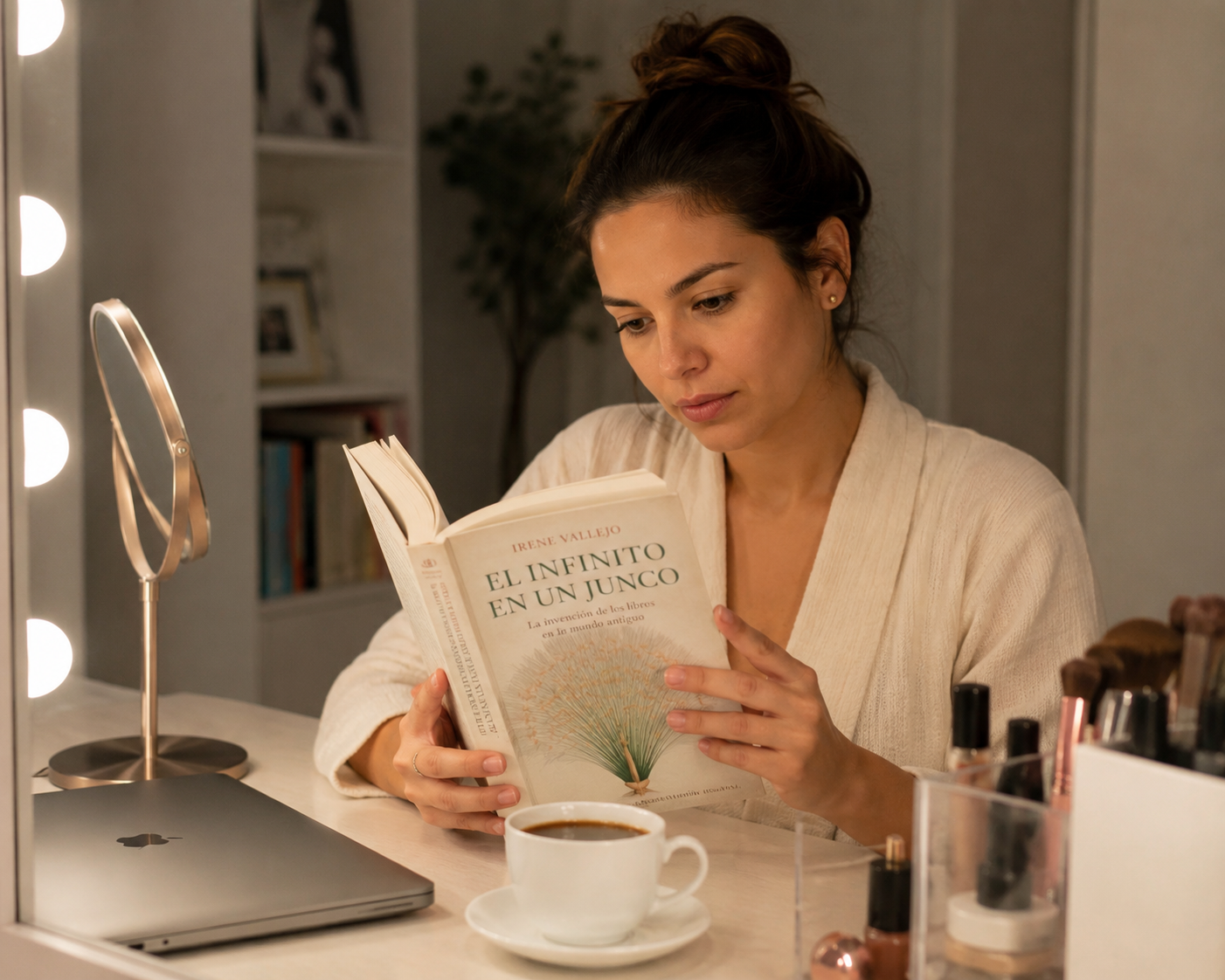
Reading is relaxing, promotes empathy, helps you reflect, and overall contributes to your well-being
SANTO DOMINGO. – Reading is one of the simplest and most accessible tools for taking care of personal well-being, even more so in a context where time is scarce and responsibilities multiply.
It's not just about acquiring knowledge. Science has found that reading can also help reduce stress and offer a mental break amidst the daily grind.
One of the most cited studies on the subject was conducted by researchers at the University of Sussex in the UK, who found that just six minutes of continuous reading can reduce stress levels by up to 68%. The effect was greater than that of listening to music, drinking a cup of coffee, or going for a walk.
According to researchers, reading helps reduce muscle tension and heart rate by focusing attention on a story or text, temporarily taking the mind off everyday worries.
The findings align with more recent research linking recreational reading to improved emotional health. A scientific review published in the PubMed medical database concluded that reading for pleasure promotes relaxation, strengthens empathy, stimulates personal reflection, and contributes to an overall sense of well-being.
How to incorporate reading when time seems to be running out?
Writer and habit specialist James Clear, author of the successful book "Atomic Habits", proposes a formula as simple as it is effective: read 20 pages every morning.
His approach is based on the idea that lasting habits are not built on occasional bursts of effort, but rather on small, consistently repeated actions. At that pace, Clear argues, a person can complete between 30 and 36 books a year without needing to completely reorganize their schedule.
The recommendation is especially relevant for professionals in sectors such as construction, tourism or el inmobiliario, where responsibilities often extend beyond working hours.
Taking 20 to 30 minutes to read before checking emails, answering calls, or starting meetings can become a space of calm before the fast pace of the day begins.
Those who wish to develop the habit don't need to resort to specialized texts or productivity manuals. Scientific evidence shows that many of the benefits come precisely from recreational reading.
Some recommended options are:
- “Man’s Search for Meaning” by Viktor Frankl, a reflection on resilience and the search for purpose.
- “The infinite in a reed”, by Irene Vallejo, a celebration of books and the history of reading.
- “Invisible Cities” by Italo Calvino, a short work that invites us to contemplate everyday spaces from new perspectives.
- “The Truce”, by Mario Benedetti, an intimate novel about routine, hope and second chances.
- “Before the Coffee Gets Cold,” by Toshikazu Kawaguchi, a sensitive story about time, memories, and life-changing decisions.
Reading, in the end, doesn't require a huge investment or special skills. A few minutes a day and a book that sparks your curiosity are all it takes. In an age of overstimulation, marked by constant notifications and fragmented attention, opening a book can be one of the simplest ways to reclaim silence, focus, and well-being.
Recommended readings:







