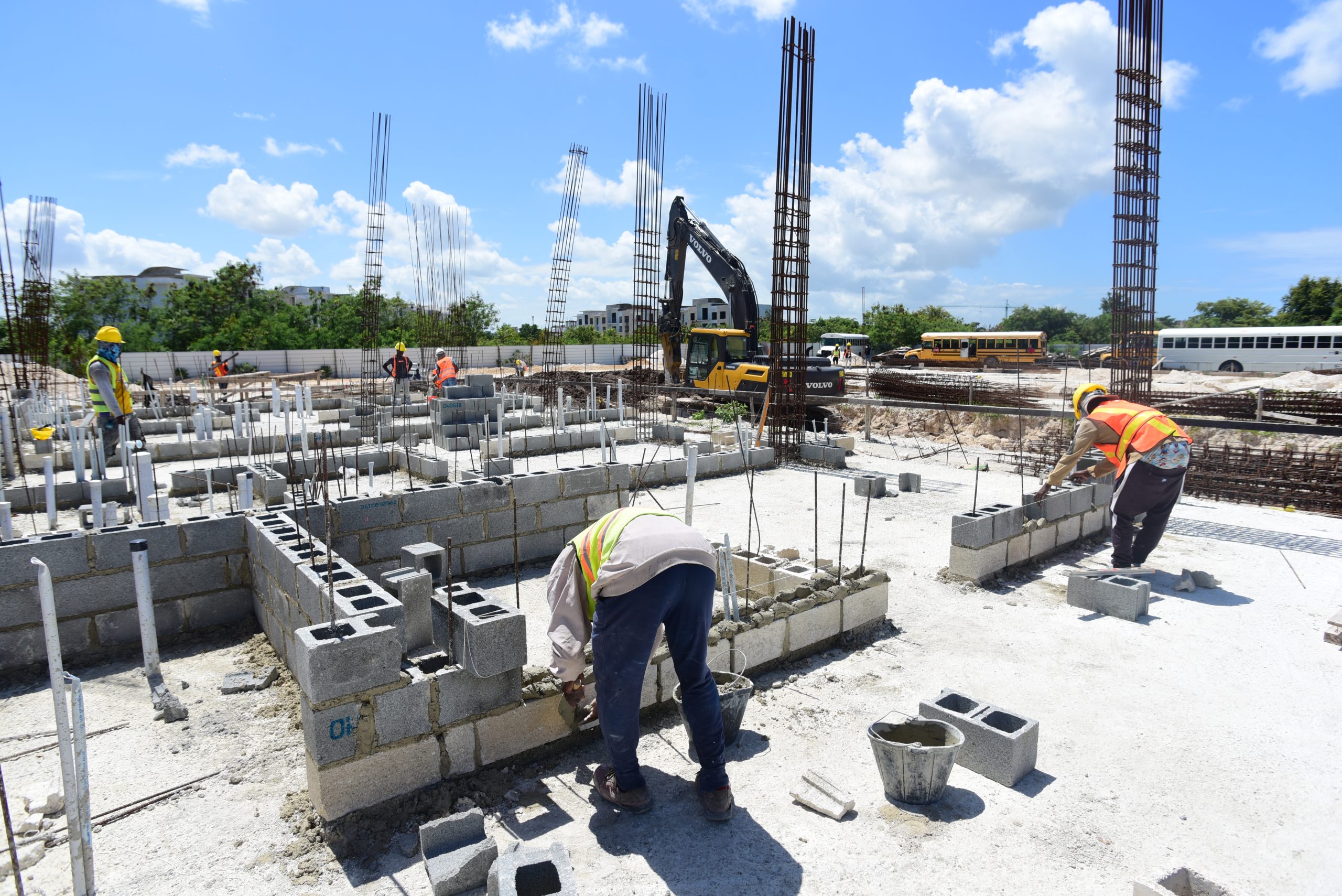
One of the main challenges of the current system remains institutional fragmentation and a lack of interoperability between public entities, Rafael Durán stated
SANTO DOMINGO. – Representatives linked to the construction industry praised the modernization initiatives promoted by the Ministry of Housing, Habitat and Buildings (MIVHED), although they warned that the main delays in permitting continue to be concentrated in other public entities involved in the approval of projects.
The statements come after announcements made by Housing Minister Ito Bisonó regarding new processes aimed at streamlining permitting and strengthening construction and maintenance codes in the Dominican Republic.
According to Melchor Alcántara, general coordinator of the National Observatory of the Construction Industry (ONIC), MIVHED has shown "a real intention" to transform the system towards a more transparent, organized and predictable model, especially through the digitization of processes and the strengthening of the Single Window for Construction (VUC).
“Yes, there is a greater institutional openness and a clear intention to modernize on the part of MIVHED,” Alcántara stated when consulted by El Inmobiliario.
However, he argued that in practice the processes continue to be lengthy because approvals depend not only on the ministry, but also on multiple agencies with different timelines and requirements.
Among them he mentioned municipalities, the Ministry of Environment, CAASD, INAPA, electricity distributors, Public Works and transit agencies.
The problem “goes beyond” Housing
Rafael Durán expressed similar sentiments, considering the new technological system recently presented by Minister Ito Bisonó to members of ACOPROVI, the Association of Housing Builders and Promoters, to be positive.
As he explained, the platform would allow online monitoring of the status of files and approvals, in a two-way scheme similar to tracking bank transactions.
“That will be an extraordinary leap forward for the institution,” he said.
However, he insisted that the main problem with Dominican permitting would not be within that Ministry, but in the other institutions involved in the process.
“The problem lies in the Environment Ministry, the Tourism Department, the CAASD (Santo Domingo Water and Sewerage Corporation), and INAPA (National Institute of Drinking Water and Sewerage),” he stated.
Durán explained that, although MIVHED can approve technical plans in weeks, the final issuance of licenses depends on external authorizations that can take months or even years.
As an example, he indicated that simple environmental permits can take between five and ten months, while medium-sized tourism projects could face waits of between 12 and 24 months between approvals from the Environment Ministry and the Ministry of Tourism.
Fragmentation and lack of integration
Alcántara pointed out that one of the main challenges of the current system continues to be institutional fragmentation and the lack of interoperability between public entities.
Among the obstacles identified were duplication of technical requirements, absence of mandatory regulatory deadlines, differences in criteria between evaluators, and delays resulting from successive observations.
“The sector continues to depend on parallel and sequential approvals issued by entities with different platforms, requirements, and criteria,” he explained.
Given this scenario, he proposed as a priority the integration of all institutions into a single interoperable digital platform that allows for centralized monitoring of each stage of the process.
He also suggested establishing maximum institutional response times, standardizing technical criteria, and strengthening review areas to reduce unnecessary returns.
They are calling for a complete transformation of the system
Both Alcántara and Durán agreed that the initiatives promoted by MIVHED represent an important step forward, but warned that the modernization of permitting will only be effective if there is mandatory coordination between all the institutions involved in the development of projects.
“The construction sector represents one of the country’s main economic drivers,” Alcántara said, arguing that streamlining permits would directly impact investment, competitiveness, and access to formal housing.
Meanwhile, Durán insisted that the challenge remains structural.
“The process remains complicated and is far beyond the wishes of the Minister of Housing,” concluded the ONIC coordinator.
Recommended readings: