


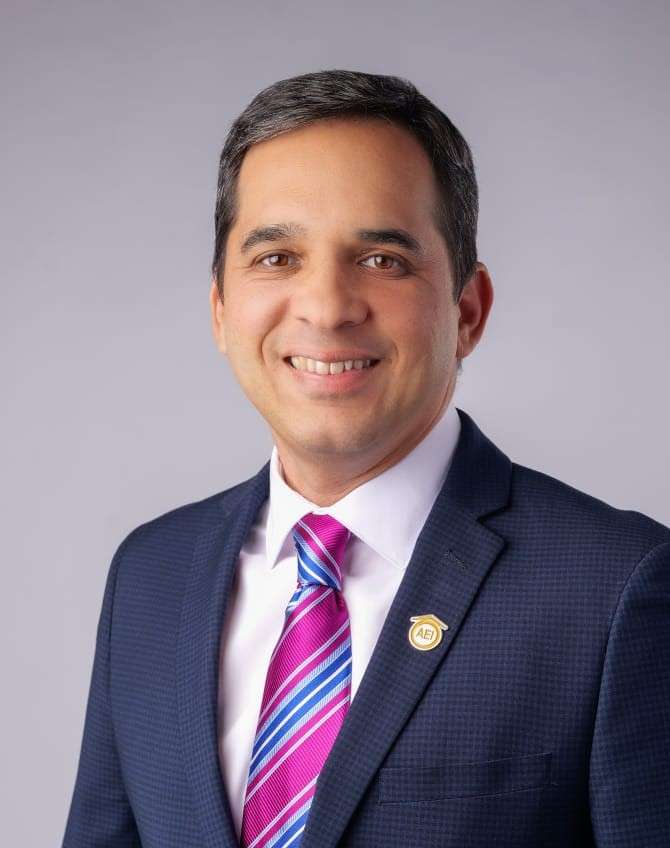
SANTO DOMINGO– The president of the Association of Real Estate Companies and Agencies (AEI), Alberto Bogaert, said he hopes that the proposed Tax Modernization Law, presented last Monday by the government, will be analyzed in the National Congress, so that it does not affect housing prices or investments in tourism.
The president of the AEI said that “we must be careful with the sectors that generate wealth, foreign exchange, jobs and that bring foreign investment to our economy.”.
He stated that the Association that represents real estate agents in the country agrees with the need for tax reform, but that it should not affect housing prices.
“At AEI, we agree with the need for tax reform. But with a reform that doesn't affect housing prices,” Bogaert emphasized to El Inmobiliario.
The Fiscal Modernization Bill, announced to the country last Monday by the Government and introduced to the Chamber of Deputies on Tuesday of this week, proposes that all properties whose amount exceeds the equivalent value of a low-cost home (RD$5,025,380.75) will pay 1% Real Estate Property Tax (IPI).
“We hope that this proposal will be analyzed in Congress and that they will ensure that investments in tourism are not affected,” he commented.
He emphasized that the organization he represents is analyzing the modernization proposal in detail together with allied unions.
The new amount
“The Property Tax (IPI) is being restructured so that from now on the minimum exemption will be set at the equivalent value of a low-cost home (RD$5,025,380.75) and a 1% tax will be levied on the excess when the value of the properties is above that amount. The combined value of improvements and land is included in the taxable property,” explained Jochy Vicente, Minister of Finance, while presenting the details of the bill on La Semanal con la Prensa.
He said that the Dominican Republic is one of the countries in the region with the highest exempt amount (USD 175,557.9), citing cases of various countries where the exempt price is much lower.
“Real estate properties are visible and publicly registered, which makes tax evasion more difficult compared to other types of income or wealth,” the proposal argues.
Other reactions
Economist Francisco Taveras argued that the ability to purchase a home above that price point will be affected, given the increased annual taxes. New construction projects are also expected to slow due to decreased demand.
“The fact that a large part of Dominicans have to pay taxes when the exemption for homes in the country is US$175,557.9, a figure that according to regional parameters is high, must be taken into consideration when compared with the levels of labor income, which are low,” Taveras said.
For his part, Teodoro Tejada, former president of the Dominican College of Engineers, Architects and Surveyors, expressed that the IPI measure represents a hard blow for the Dominican middle class and for the construction sector.
He explained that since its creation in 2012, "this abusive tax" has been extremely harmful and that the amount set in the proposal will also affect those people with lower incomes who have acquired a home without having the resources, but through, for example, an inheritance.







