


SANTO DOMINGO, RD – “If you behave, we’ll take you to Manresa.” How many of our readers will remember that phrase, uttered so many times by parents, so long ago. So long ago, in fact, that a scoop of ice cream cost less than five pesos, and on special occasions, like Children’s Day in December, there were promotions, raffles, and drawings that brought the Christmas spirit forward.
“Wow! Some Sundays, up to 10 of us friends would get together on bicycles and head off to Manresa, from Villa Duarte! That was just an adventure, but getting there and buying a pound of ice cream for 50 cents was pure bliss,” recalls Augusto Olivieri, a DJ and entertainer who lives in Punta Cana, and says that was in the mid or late 70s.
Like Olivieri, Manresa Park is etched in the memory of an entire generation and their parents, whether through personal experience or by hearsay. It possessed a magic that endures in the collective memory of several hundred thousand people across the country.
Because back then, going to Manresa for ice cream was the most exciting activity for boys and girls, regardless of their social class or the province they lived in. That promise from parents, uncles, or godmothers was more powerful than the offer of any toy or even money, because in that park, facing the Caribbean Sea, they experienced moments that time has not been able to erase.
The Manresa Ice Cream Park, at kilometer 11 of the 30 de Mayo highway, was the brainchild of the Subero family, who acquired the brand in the 80s, and it was a place for family, friendship, and first loves. There, the smell of salt air and the southern breeze mingled with the scent of vanilla and coconut, and the mingled of sweat from children and teenagers who ran around uncontrollably after getting off the buses that arrived from Santiago, San Cristóbal, Baní, Azua, or La Vega.
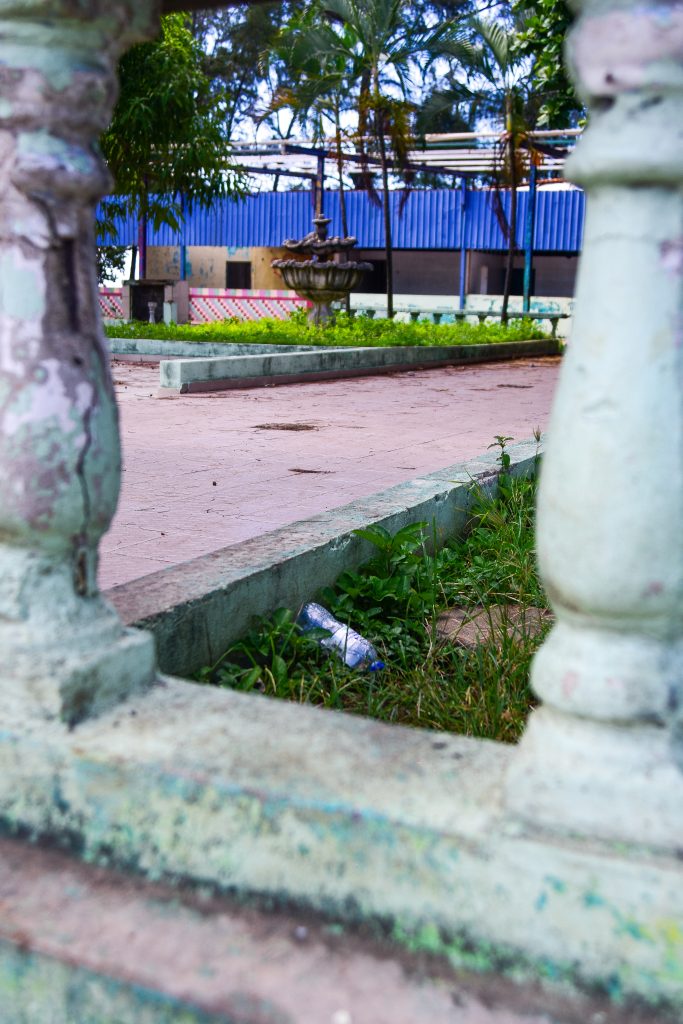
In a city like Santo Domingo, where public spaces for families are scarce, losing Manresa is an unforgivable luxury. (Fidel Pérez/El Inmobiliario).
There, a kind of "emotional capital" for Dominican children in the 80s and 90s. A symbol of wholesome, accessible, and bright recreation. With its swings, seesaws, and other play equipment in primary colors. Where birthdays and children's contests were celebrated amidst ice cream cones or half-book boxes of chocolate and strawberry, into which everyone dipped their little wooden spoons.
This spot in the city was where many children took their first walk, schools organized field trips, and grandparents sat under the almond trees, watching the joyful children run by.
Upon arrival, you were greeted by a metal archway, sometimes covered in vines, with side columns featuring iron latticework and Y-shaped columns supporting an awning that formed a passageway to the hall. Inside, you found benches for communal use, and at the far end, a round sign displayed the logo: a smiling little boat.
The interior of the Manresa ice cream parlor was spacious, bright, and simple, filled with the soft echo of children's laughter. The smooth floor, sometimes bearing traces of sweet drops, seemed to extend into the very memory of childhood. The tables with benches joined in a quadrilateral shape invited sharing and sitting down without formality. There, the experience began and also ended, with sticky hands and happy hearts.
Today, in the ruined silence, only the photographs in the archives and the echoes of the collective joy experienced facing the sea remain of the arch, where innocence had a address and a name: Manresa.
Where the heart beat
Besides the attractions for children, Manresa was also a haven for budding lovers. The shaded benches, the constant breeze, and the murmur of the sea created the perfect atmosphere for first dates, as Dr. José González recalls: “We used to meet up secretly with our girlfriends, sometimes we'd meet them there, and holding their hands was a dream. When we grew up, we'd meet there and cross the avenue,” he says with a wry laugh.
It was common to see teenagers sharing a strawberry ice cream cone, their fingers brushing against each other, their hearts pounding as if the entire park belonged to love. They shared not just a sweet chill, but also the warmth of a new and profound emotion. In that corner of the world, young love floated in the salty air, while the sun bid farewell on a pink and lilac horizon, like a living painting embracing their hearts.
Beyond the ice cream and the ocean view lay the true temples of childhood: the playground. There, the swing wasn't just a seat hanging from a chain; it was the first free flight for many Dominican children, who launched themselves into the air with their legs like wings, and the sea breeze seemed to push higher those who dared to let go with a hand or close their eyes.
The seesaw, as journalist Nodalia Arias, “always with worn-out paint, was my favorite. They would put my hair up in a bun and dress me in a pink or lemon-colored dress, and the stockings were the kind with little balls on them.”
The gently sloping slide felt a bit hot in the 3 o'clock sun, but no one stopped: it was a direct path to happiness. They weren't spectacular rides, but they had something more valuable: the power to bring families together, to inspire courage, to bring unhurried laughter. Today, many remember it as their first experience of pure adrenaline, that moment when their heart beat faster than the swing's momentum.
The taste in memory
In the golden days of Parque Manresa, the ritual was to go to the counter and order the most coveted flavors: coconut, with its creamy texture and tropical aroma, was the undisputed favorite on hot afternoons. The sweet and refreshing sea grape was a close second (leaving a purple stain on tender lips), followed by the noble, simple, and comforting vanilla flavor, a safe bet for many parents, while the more adventurous ventured into roasted peanut, a sweet and salty flavor that gradually won over curious palates.
Of all the flavors, the one that truly inspired devotion was the sponge cake ice cream. Spongy, with small pieces that added texture and a sweetness reminiscent of happy birthdays, it was for a long time a hallmark of the Manresa experience. These five flavors not only defined the menu but were also etched into the country's collective memory as emblems of a simpler time, when a single cone was enough to feel fulfilled. Every spoonful was a celebration, every combination a story.
From flavor to dream: a story of an era
The story of Manresa began in the 1970s, when the Jesuit fathers established a small ice cream parlor at kilometer 13 of the Sánchez highway, with the idea of offering a family recreation space that integrated the sea, play and community, which soon became a point of reference for fun.
The brand was later acquired and relaunched by businessman Julio Subero, who had the vision to transform the ice cream experience into a complete adventure. He relocated the park to kilometer 11 on 30 de Mayo Avenue, to a large wooded area that became one of Santo Domingo's most beloved spaces. Subero transformed that corner into a place where childhood could feel fulfilled, safe, and celebrated—the quintessential dream of colors, smells, and flavors for every child. He added playground equipment, swings, seesaws, and an open-air amphitheater where every weekend there were puppet shows, clown performances, folk dances, or school recitals. The prizes, of course, were almost always ice cream.
Litigation, neglect, and silence devour everything.
But as is all too often the case, the charm was not eternal. In the early 2000s, the park went into decline, and in 2012 a legal dispute began over the ownership of the land between the Activo 20-30 Foundation, which claims to have held the title since the 1960s, and the Subero family, who had operated the park for decades.
The Superior Land Court declared the case in litigation, and since then, all management of the space has been frozen, and the place has been destroyed, because time, salt air, and neglect take their toll.
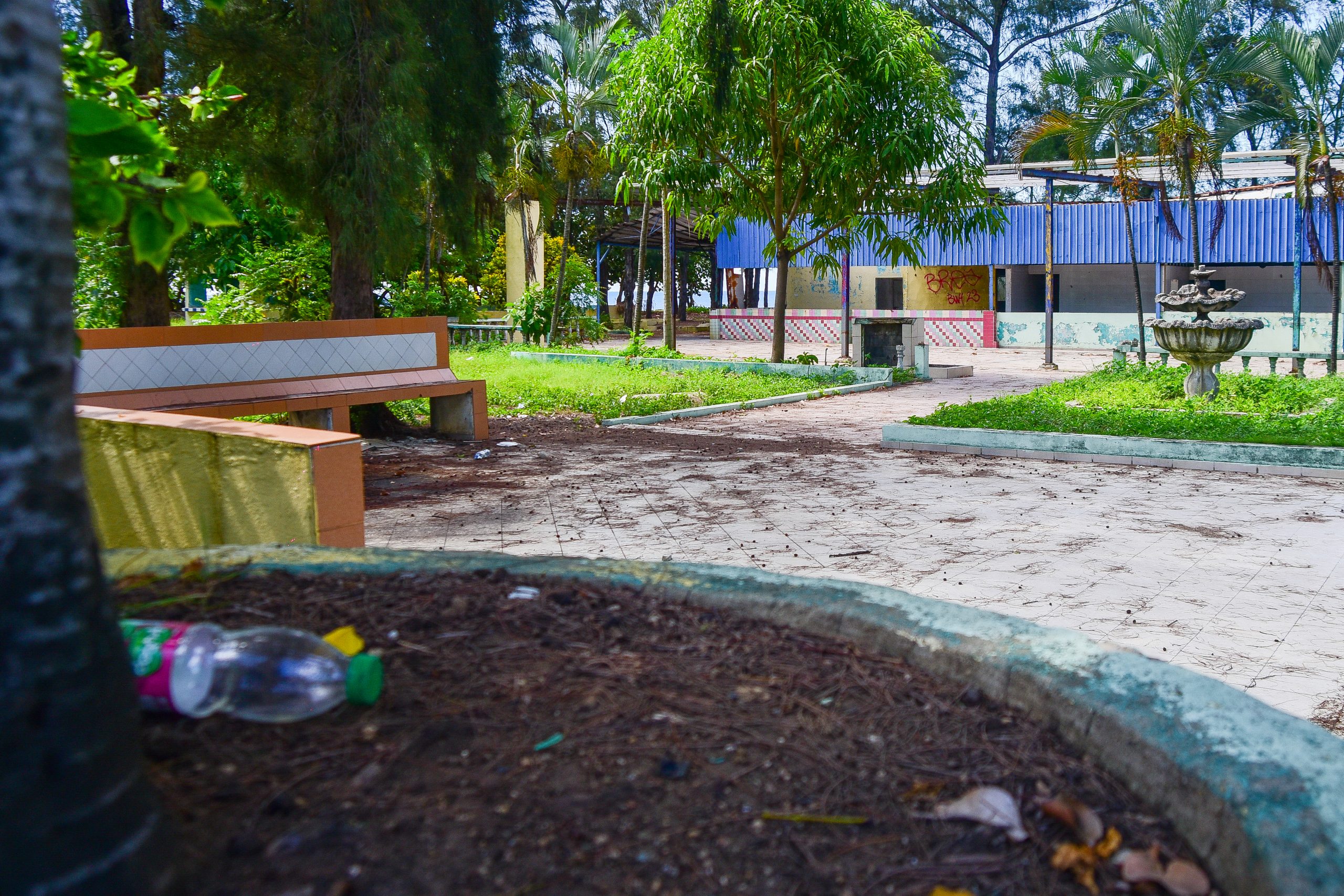
While the paperwork piles up in court offices, the park is devoid of playground equipment, ice cream shops, and children's entertainment. The structures have been overtaken by vegetation, covered in rust and trash. The place is used as a nighttime shelter by homeless people, truck drivers, street vendors, and, according to local media reports, as a scene of prostitution and drug use.
What was once a symbol of life is now a dangerous place. The amphitheater is in ruins, the entrance unrecognizable, and the surrounding area has become a slum, as the neighbors have denounced.
"So many times I came here with my children... now I walk by and I feel like crying, I don't even want to see so much destruction and neglect," says Margarita Valdez, while Rosaura López reminisces about peaceful afternoons with her daughter, sharing dreams and games.
May oblivion not be the end.
In a city like Santo Domingo, where public spaces for families are scarce, losing Manresa is an unforgivable luxury. Even though the land is privately owned, the State has legal tools to intervene, negotiate, or expropriate it if it is deemed to be in the public interest.
Even more so when it's a space that, for decades, was part of the country's collective soul. Because Manresa isn't just a disputed plot of land: it's a symbol built when the well-being of children and families was a priority. The park still lives on in the memories of those who grew up there, in photos with melted ice cream boats, in clown songs, in hugs by the sea.
May the legal process come to an end. May the parties find a solution. May the State intervene. And may, one day, where there are now ruins, there be games again, ice cream, and hope flourishing once more. Because Manresa deserves to be reborn.
If you have one, find your photo in Manresa Park, share it telling your favorite anecdote, and tag us.







