


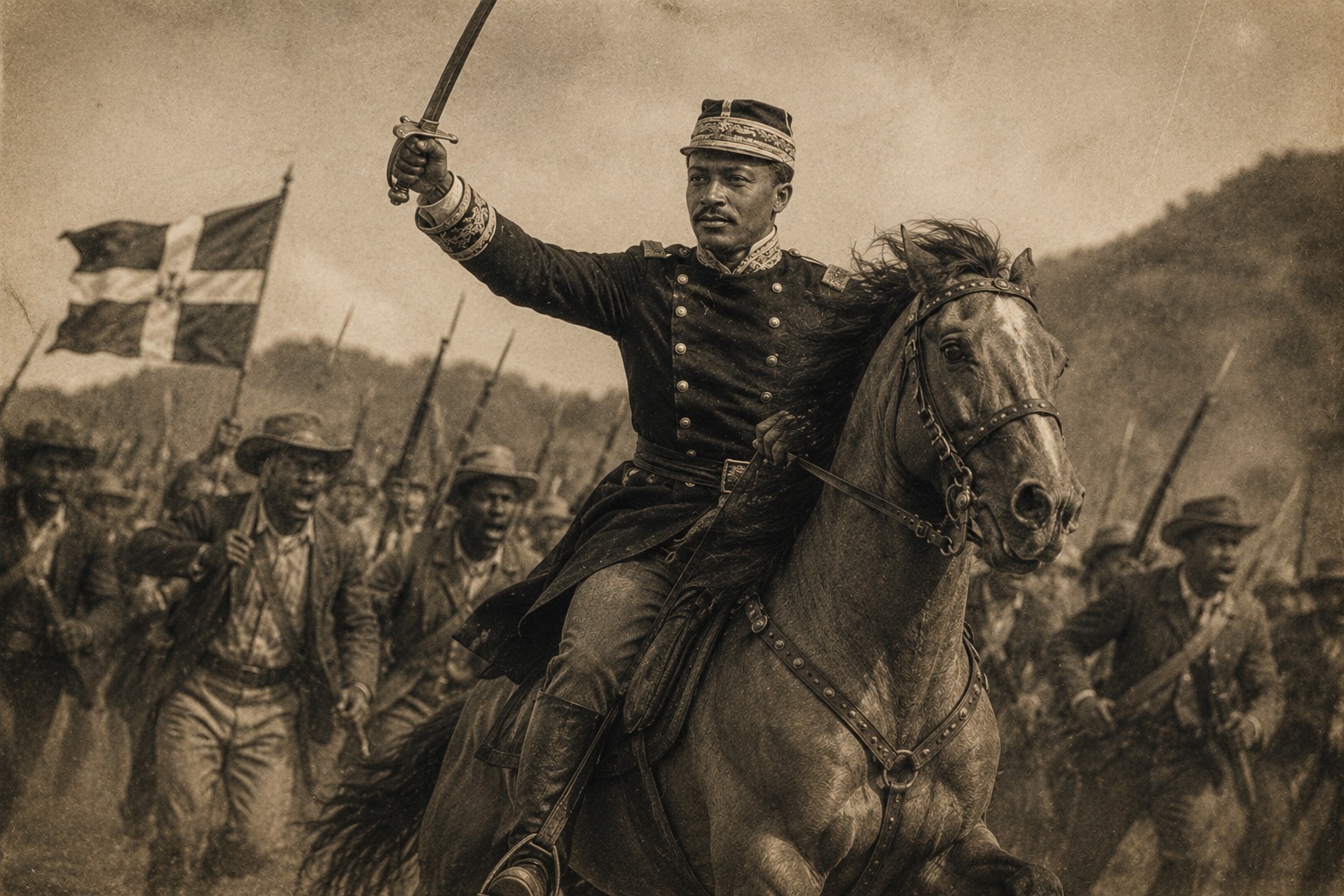
Although historians have not yet reached a consensus, his legacy occupies a central place in the social and political history of the Dominican Republic in the nineteenth century, and the debate over designating him as the fourth father of the nation remains open
SANTO DOMINGO. – August 16, 1863 was not the end, but the beginning of one of the historical feats that make the Dominican Republic a unique country in Latin America: that day marked the beginning of the Restoration War, which was the third independence in 44 years.
On that day, a group of patriots led by Santiago Rodríguez crossed the border from Haiti and took the hill of Capotillo, in Dajabón, to raise the Dominican flag again, as documented by the Ecured Encyclopedia and confirmed by the records of the time collected by the historian Emilio Rodríguez Demorizi.
The Cry of Capotillo ignited a war that would last almost two years, until Spain, by Royal Decree of March 3, 1865, annulled the annexation, and the last Spanish troops evacuated the country in July of that same year. Between those two dates, one figure would become the most remembered of the conflict: Gregorio Luperón.
The Dominican Republic's independence from Haiti in 1844 and the Restoration War from 1863 to 1865 against Spain are separated by a mere nineteen years. Cuban historian Sergio Guerra Vilaboy, in a text published by ADHILAC, argues that the Dominican Republic is the only Latin American country to have declared its emancipation three times, including the short-lived independence from Spain in 1821, before the Haitian occupation. Threeindependences in less than 50 years.
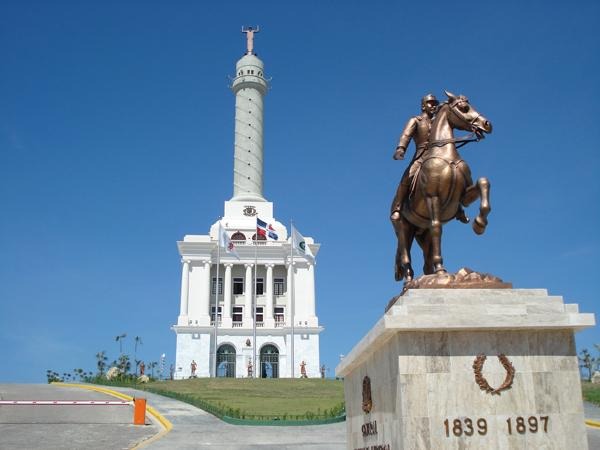
Luperón was born in Puerto Plata on September 8, 1839, the son of Pedro Castellanos and Nicolasa Duperón, an English immigrant who supported the family with a small roadside stand. As a child, Gregorio sold piñonate (a type of nougat) on the streets of his hometown, a detail mentioned by both Ecured and various school biographies, and one that contrasts sharply with his later destiny.
His own surname holds a curiosity: Luperón is the Castilianization of Duperón or Dupeiron, his maternal surname, of French origin, with which he ended up identifying himself for posterity.
Under the tutelage of the French merchant Pedro Dubocq, the young Gregorio learned trade and discipline, training that the biographer Hugo Tolentino Dipp, National History Prize winner in 1976, considers key to understanding the temperament with which he would later lead troops.
Before the Restoration, Luperón had already been arrested for conspiring against the Annexation and was imprisoned in the San Felipe fortress in Puerto Plata, according to the website Historiología Puerto Plata. This background explains why, as soon as he heard the news from Capotillo, he immediately joined the uprising and rose rapidly through the military ranks.
His participation on the battlefield was intense. On September 15, 1863, barely a month after Capotillo, he faced the troops of General Pedro Santana in La Vega, as recounted by political scientist Luis González in a profile published by the newspaper Hoy.
That action was followed by battles in places as different and distant as Sabana del Vigía, Guanuma, Monte Plata, Bayaguana, Bermejo, Yerba Buena, Paso del Muerto and Río Yabacao, a list documented by Ecured that shows a man who barely had any rest during the two years that the war lasted.
There is one episode, however, that reveals the hero's character better than any battle. At one point during the conflict, he was on the verge of becoming the youngest president in Dominican history, an honor he declined so as not to be separated from the troops.
According to González, Luperón made this decision known in a letter to the Provisional Government in which he explained that his only motive in launching the revolution was to see the Republic, its laws and its freedoms restored, not to occupy a desk.
After the war ended, Luperón did not abandon the writing of his own history, because according to the Funglode Biographical Dictionary, he himself commissioned Manuel Rodríguez Objío to write both his biography and a historical essay on the Restoration, and over the years he also dedicated himself to compiling documents and writing his own memoirs, published in three volumes under the title Autobiographical Notes and Historical Notes.
From his pen and that of his biographers, including Juan Bosch, author of The War of Restoration, and Tolentino Dipp himself, much of what is known today about those years has been reconstructed.
After the war, Luperón served as president between 1879 and 1880, promoted liberal reforms, and then served as envoy extraordinary and minister plenipotentiary in Europe, during which time he promoted, among other initiatives, the installation of the first transatlantic cable that connected the country, according to the educational portal Educando.
He died in his native Puerto Plata on May 21, 1897, and for historians such as Roberto Cassá and Frank Moya Pons, his legacy occupies a central place in the Dominican social and political history of the nineteenth century, to the point that some scholars have proposed calling him the fourth father of the nation, a debate that is not yet closed but that no serious historian disputes.
Today, August 16, 2023, in the museum that bears his name in Puerto Plata, his boots, his cap, his sword and part of his personal library are preserved, modest objects for the magnitude of the history they sustained: that of a street vendor of sweets who ended up being, for several generations of Dominicans, the first sword of the Restoration.
Recommended readings:
- With a cardboard suitcase, he arrived in a country that welcomed him and created an empire
- The Silent Chronicler: Gustavo Olivo Peña Wins the José Ramón López National Short Story Prize Again
- The most famous symbol of the Colonial City is not colonial







