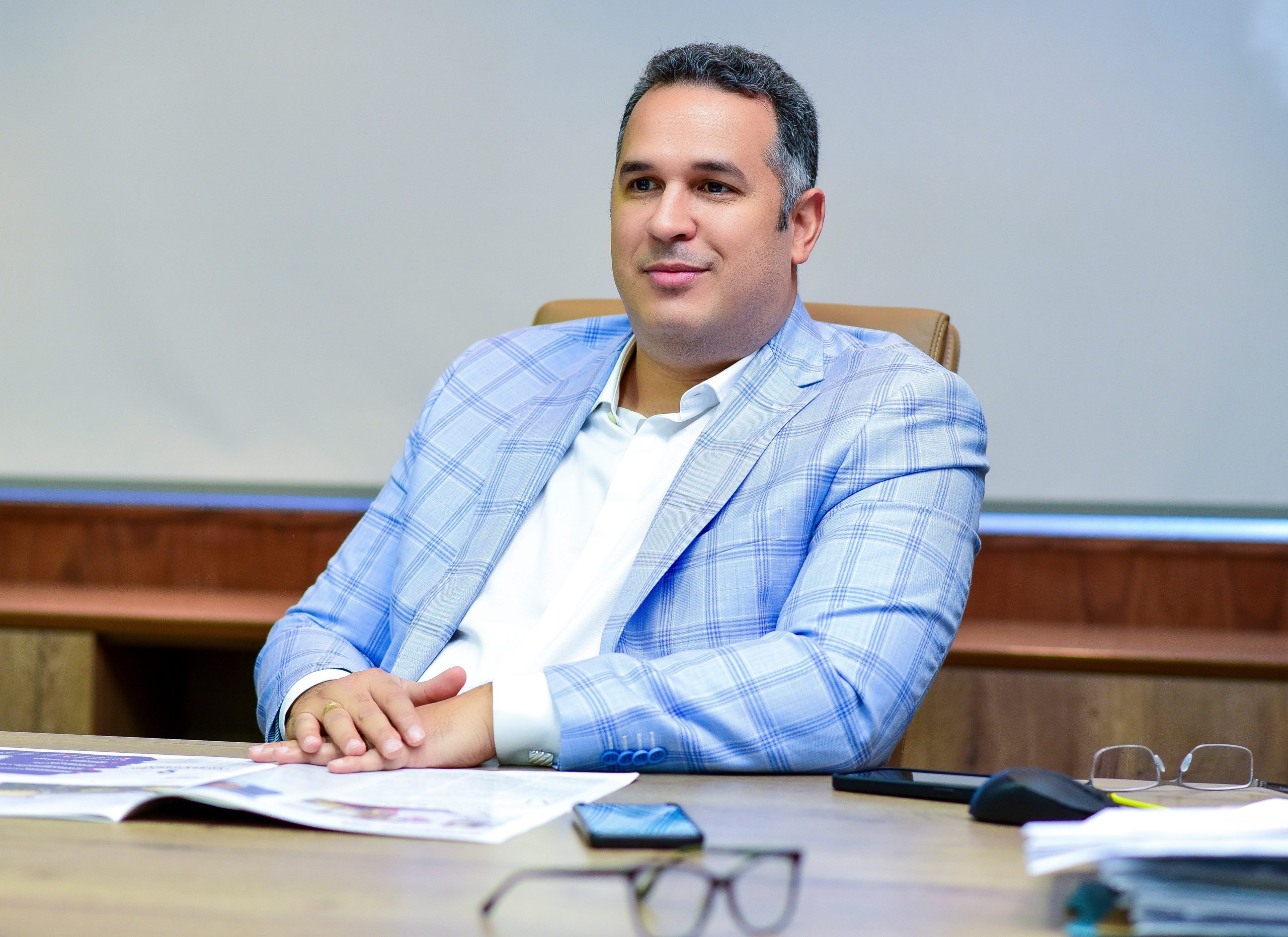
SANTO DOMINGO.- Luis Wolfgang Castillo is a Dominican of Cibao origin who learned from a very young age that work, responsibility and a good reputation are foundations as solid as any architectural work.
Born and raised in Bonao, he recalls that his education began in a home where discipline had the face of two career teachers: his parents, respected in their community and owners of a school built with effort since the late sixties.
Heritage, vocation, and destiny intertwined early on. His father was an aspiring architect who couldn't pursue his studies due to the financial limitations of the time. Wolfgang naturally gravitated toward the same career; so much so that before he turned five, he was already drawing children's plans, unaware that this game would set the course for a prolific career.
After graduating from high school, he moved to Santo Domingo to begin his studies at the Pedro Henríquez Ureña National University (UNPHU), supported by a scholarship he earned thanks to his high academic performance. However, university life in an unfamiliar city tested that advantage: a 7:00 am class cost him the scholarship. It was then that he decided to start his own business to generate income and pay for his studies. He began by drawing blueprints, then digitizing them, and finally becoming a small provider of architectural services from his own home.
During his career, he worked for three months at an architecture firm, though he quickly realized that his best path was to be independent. He bought his first plotter, set up a makeshift studio, began hiring staff, and later formalized an office that grew to become a go-to resource for engineers and architects requiring design, copying, and printing services.
For the current CEO of the development company Cruise On Land, growth revealed a limit. Wolfgang felt that, despite his success, his potential was trapped by a ceiling he himself had built. Inspired by Camilo Cruz's book, La Vaca (The Cow), he decided to "kill his own cow": he gradually dismantled the business that provided him with stability to force himself to seek new opportunities. He says it was a long, five-year process in which he intentionally shut down operations until he was left alone, designing from a small office without a clear direction for what was to come.
The sign came on the least expected day. Samuel Lozada, a former client, appeared in his office after several years of no contact. That visit, initially casual and then recurring, opened spaces for conversation, shared ideas, and visions. Without seeking it, Wolfgang found in Samuel the partner who complemented his potential, and vice versa.
Hand in hand, they embarked on a new chapter: small projects, initial setbacks, stalled plans, hard lessons, and also their first big break: a 300-apartment development that marked the beginning of their true career in the real estate sector. That project—Balcones del Norte—allowed them to raise the residential standard of the area and prove that they could transform entire communities.
That experience sparked the question that years later would give birth to Cruise On Land: how to offer more, how to think differently, how to design developments that break the mold? That question, combined with the vision that has accompanied him since he drew plans in Bonao, is what defines Luis Wolfgang Castillo today, a CEO who became an architect before becoming an entrepreneur, and a dreamer before becoming a leader, and who, together with Samuel Lozada, is currently building a macro-project that will redefine urban development in the eastern region of the country, securing its place in the history of the Dominican Republic.
Originally published in the print edition of El Inmobiliario .