


Capital expenditure assumes an increase of almost 20% compared to the initial 2026 budget
SANTO DOMINGO.- The Government presented yesterday, Thursday, the Draft General State Budget Law corresponding to the year 2027, for an amount of 2,036,844.2 million pesos.
The project contemplates revenues amounting to RD 1,510,574.5 million, equivalent to 15.7% of GDP, as well as an expenditure ceiling of RD 1,837,856.0 million (19.2% of GDP), supported by a macroeconomic framework that anticipates real GDP growth of 4.75% and contained inflation of around 4.5% on average.
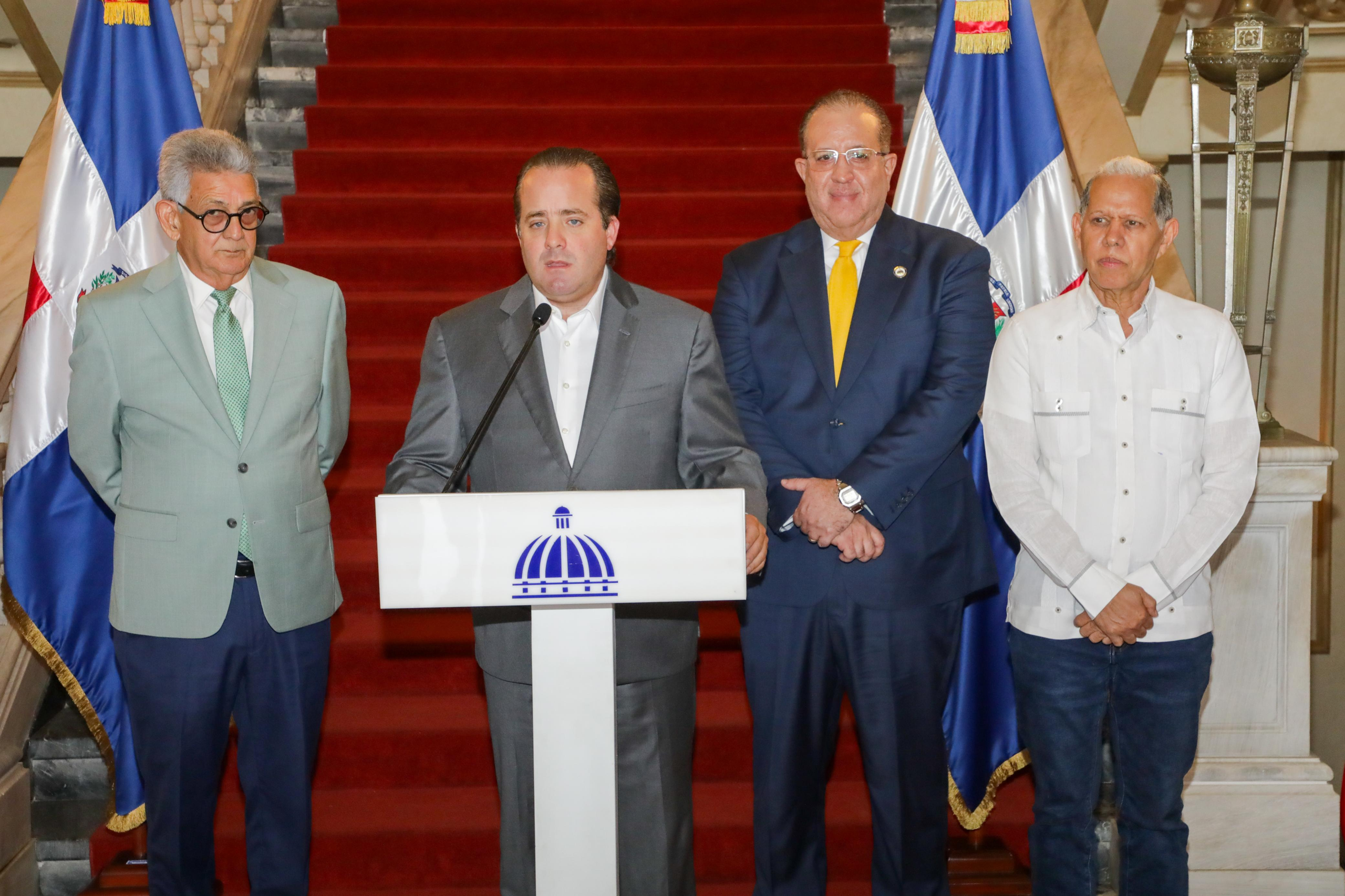
President Luis Abinader, along with Vice President Raquel Peña, led the Council of Ministers meeting, where the bill was approved. Information about the bill was provided to the press by the Minister of the Presidency, José Ignacio Paliza, in his capacity as technical secretary of the Council of Ministers; the Minister of Finance and Economy, Magín Díaz; the Vice Minister of Territorial Planning and Regional Development, Domingo Matías; and the Director General of the Budget, José Rijo Presbot.
“Today we held another meeting of the Council of Ministers where the Draft General State Budget Law for the fiscal year 2027 was approved, whose total expenditures amount to approximately RD$2.037 trillion, reaffirming the Government's decision to prioritize investments that contribute to development and generate better living conditions for our people,” Paliza stated.
The Minister of Finance and Economy, Magín Díaz, highlighted that the budget proposal is presented in a context in which the Dominican economy maintains its resilience, with a growth of 4.5%, a reduction in inflation and international reserves exceeding USD 15 billion.
“Despite the current situation, the country is moving forward; the economy, as it has always shown, is resilient,” Díaz stated, explaining that the 2027 Budget seeks to “maintain capital spending, a reasonable fiscal deficit, higher growth in capital spending than in current spending, and maintain the Government’s priorities in education, health, and social protection programs.”.
According to the figures presented, capital spending will experience a jump of 19.7% compared to the initial budget formulated in 2026. At the same time, current spending will show a more moderate increase of 12.3%, reflecting the efficiency and control in the operation of the public sector to prioritize long-term investment,” Rijo Presbot noted.
In line with the RD 2036 Goal
The Presidency emphasizes that the budget proposal continues the guidelines established in the 2027 Budget Policy, approved by the Council of Ministers at its fifty-ninth meeting, held last July, and organizes public spending around the strategic objectives of Meta RD 2036 and the 10 prioritized goals of the government.
It explains that its main pillars include strengthening human capital, developing physical capital, increasing productivity and strengthening institutions, while maintaining public investment and addressing social needs as priorities.
Officials noted that in the area of health and social protection, the budget includes resources for the continuation and completion of strategic hospitals, the strengthening of Primary Care Units, the expansion of the National Emergency Network, and the continuation of social programs aimed at the population.
Infrastructure investment
Investment in infrastructure is another key aspect of the 2027 budget planning, with an emphasis on highways and integrated transport systems, as well as drinking water, sanitation and housing improvement projects, according to the information provided.
He emphasizes that the proposal includes strengthening legal and institutional security through increased resources for the Judiciary, as well as investments in citizen and border security, and the prison system.
He's going to Congress
The project will be submitted to the National Congress before October 1st for its information, in accordance with the established process for the approval of the General State Budget.
The Government emphasized that the formulation of the General State Budget for 2027 seeks to maintain a balance between addressing social priorities, the investment needed to boost economic growth, and the sustainability of public finances.
fundamental axes
The spending policies for 2027 are based on guaranteeing access to fundamental rights and raising the population's quality of life. For the education sector, the commitment to allocate 4% of GDP remains, focused on bolstering the Ten-Year Education Plan Horizon 2034, strengthening technical and vocational training, and expanding the school transportation system. In the areas of health and housing, the funds will boost hospital infrastructure and ensure the continued high impact of the "Mi Vivienda" housing program, the press release details.
He adds that the funds will be allocated to projects that generate productive development and territorial resilience. Among the main projects are the construction of the Santiago de los Caballeros monorail, a tax on universal sanitation projects in tourist and coastal areas, and the expansion of the transport capacity of Line 2 of the Santo Domingo Metro.
Draft Bill for the National Territorial Planning Plan
As the second item on the agenda, the Council of Ministers reviewed the draft bill for the National Territorial Planning Plan, which will be sent to the National Congress to complete the corresponding legislative process.
The proposal is framed within Law No. 368-22, on Territorial Planning, Land Use and Human Settlements, seeking to give normative force to the National Territorial Planning Plan, establishing the framework for its implementation and articulation with regional and municipal instruments.
This instrument will allow the country to have a common vision to organize the territory, guide land use and promote a more rational and sustainable occupation, taking advantage of the opportunities and potential of each area and contributing to the protection of natural resources.
It also incorporates criteria of environmental sustainability, risk management and adaptation to climate change as fundamental elements of the planning and territorial organization processes.






