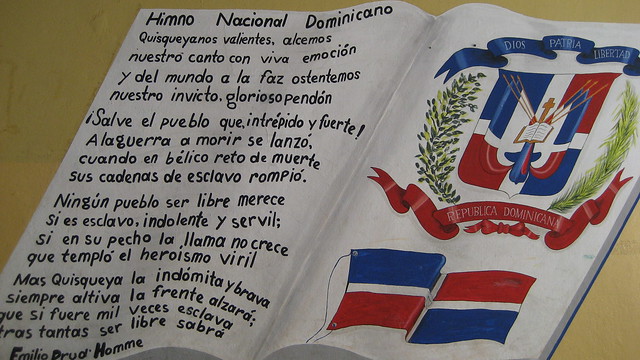
SANTO DOMINGO.- The Dominican Republic celebrates today the 179th anniversary of its National Independence; on this date but in 1844, a group of brave Dominicans, led by Juan Pablo Duarte, proclaimed the separation from Haiti, which had governed the Island of Hispaniola since 1822.
Today's Independence Park was the main site of the Dominican War of Independence in 1844. This iconic structure includes the Puerta del Conde (Gate of the Count), the place from which Matías Ramón Mella fired the historic shot that announced the nation's liberation from Haitian rule. It was from there that Francisco del Rosario Sánchez raised the first Dominican flag.
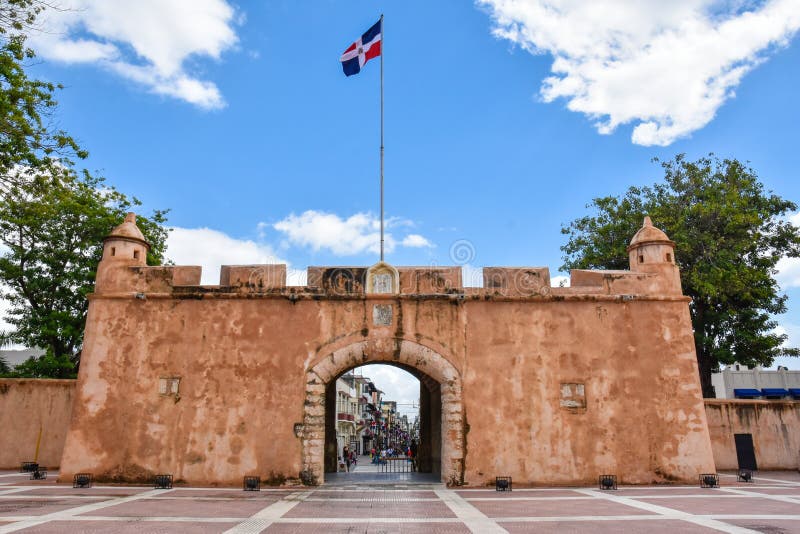
It became a park in 1912 when the architect Antonin Nechodoma Hiboo redesigned it.
Just a few meters from the Puerta del Conde begins the "Paseo de los Próceres de la Independencia Dominicana" (Walk of the Heroes of Dominican Independence), a tribute to the men and women who gave their lives for the dignity of the people and their independence. It is lined with numerous busts of national heroes, made of bronze-reinforced fiberglass, which stand 90 centimeters tall and rest on a pyramid-shaped base covered in coral stone.

These busts depict the women and men who helped bring about the independence and restoration of the Dominican Republic. They include the Trinitarios: Juan Isidro Pérez, Pedro Alejandrino Pina, Félix María Ruiz, José María Serra de Castro, Juan Nepomuceno Ravelo, Benito González, Jacinto de la Concha, and Felipe Alfau. The independence fighters include: General Antonio Duvergé, Vicente Celestino Duarte, General José Joaquín Puello, Admiral Juan Alejandro Acosta, María Trinidad Sánchez, Chepita Pérez de la Paz, María Baltasara de los Reyes, Manuela Díez, Rosa Duarte, Juana Saltitopa, Concepción Bona, and Francisco Antonio Salcedo. The Restorers: Generals Gregorio Luperón and Gaspar Polanco, Pepillo Salcedo, Pedro Antonio Pimentel, Santiago Rodríguez, José María Cabral, Benito Monción, José Cabrera and Timoteo Ogando. There are also busts of José Contreras, Manuel Rodríguez Objío, Benigno Filomeno de Rojas, Ulises Francisco Espaillat and Pedro Francisco Bonó, Cayetano Germosén and Rosa Montás de Duvergé.
There are also two pyramid-shaped pillars that depict the plaza and the history of the country's Independence and Restoration. A plaque honors the heroism of General Luperón during the Restoration War, fought from 1863 to 1865 between the Dominican Republic and Spain.
Closer to the wall is a bust of Pedro Alejandrino Pina, a writer and one of the nine members of La Trinitaria, the Dominican religious organization that fought for the freedom of the Dominican people. When the group began public protests against Haitian rule in 1843, he was exiled to Curaçao along with Duarte and Pérez. He returned with Duarte in 1844 when the Declaration of Independence was amended, but both were sent into exile again in Venezuela the following year when Santana seized power.
Today, the walls surrounding Independence Park serve as a venue for temporary exhibitions set up by the Ministry of Culture, showcasing a variety of literary, artistic, and historical events.
Altar of the Fatherland

Altar of the Fatherland/El Inmobiliario.
In 1943, Trujillo moved the remains of Juan Pablo Duarte, Francisco del Rosario Sánchez, and Matías Ramón Mella, the founding fathers of the Dominican Republic, from the Chapel of the Immortals in the Cathedral of Santo Domingo to the Altar of the Fatherland in Independence Park, whose design was led by architect Cristian Martínez Villanueva in 1976. Architect Martínez was commissioned to restore the Puerta del Conde that same year.
The structure of the Altar of the Fatherland is made entirely of sculpted and carved stones. The tomb of the founding fathers is covered by a thick, polished marble slab.
It was officially named the Altar of the Fatherland by Law 1185 of October 19, 1936. It is constructed of white marble with the gleaming National Coat of Arms above its entrance. Large and captivating statues of these patriots, carved by the Italian sculptor Nicholas Arrighini, stand at the head of their tombs.

It is one of the monuments visited daily by students and young people in Dominican history classes, in addition to the frequent visit of tourists who go to see where the founders of the Republic rest.
Sources: site visit, Yosper blog, Conéctate.com.do and the Dominican Republic Colonial Zone Guide.