


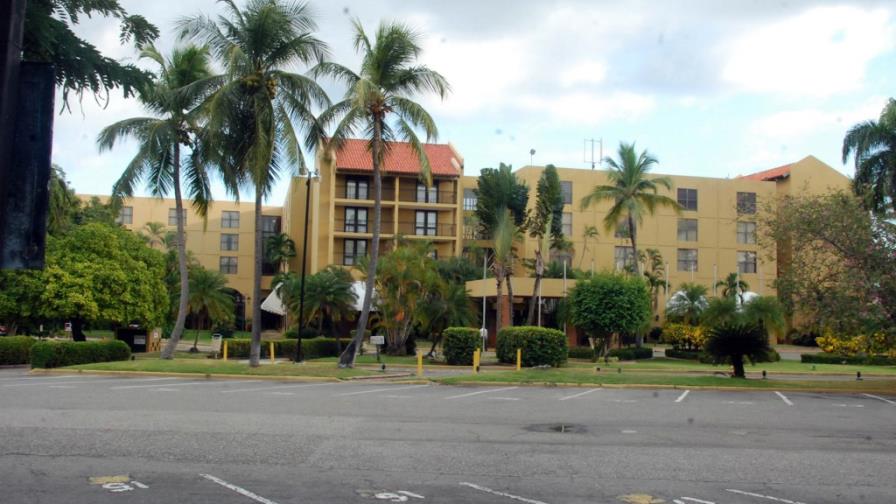
Santo Domingo, Dominican Republic. – There are places that, upon closing, leave behind a long collective sigh, and one of those spaces is the Hotel Santo Domingo, a jewel of concrete and mahogany that for more than four decades was synonymous with elegance, diplomacy, and social life in the heart of the Caribbean, that same sea upon which its modern silhouette rests, a silhouette that will soon disappear, although it will remain in the memory of the city.
Located at the corner of Avenida Independencia and Abraham Lincoln, it was inaugurated on February 27, 1975, on the occasion of the Inter-American Development Bank Assembly, marking a turning point in the history of Dominican hospitality. It began as a government project to provide the capital city with a world-class hotel, in a context where tourist infrastructure was still limited.
The middle class aspired, and the upper class landed
Stepping inside was like entering another dimension, leaving behind the noise of traffic and the hustle and bustle of city life. A discreet and sophisticated aura enveloped everything; the floor shone like a mirror, the space smelled of gardenias, and the receptionists smiled spontaneously and naturally. Just like in the TV commercials.
Through that elegant lobby, with its plush sofas, Moorish details, and palm trees, paraded diplomats, artists, presidents, beauty queens, ministers, and frequent travelers who knew that true luxury wasn't ostentatious: it was quiet, comfortable, and predictable. A room with a garden view, perfectly chilled pineapple juice, a waiter who remembered your name.
According to records from that time, at its peak operation in the late 1990s, the hotel had 215 rooms , including 4 executive suites and a presidential suite. It employed over 200 people, enjoyed an average occupancy rate of 70% during peak season, and boasted highly sought-after event spaces .
Similarly, at its helipad and in a discreet manner, businessmen, artists, and officials went up and down from the clouds.
Bar Las Palmas: drink and dance in style
If the hotel was the body, the Las Palmas bar was the soul. Located next to the pool, with wicker chairs and wrought iron lanterns, it was an oasis where listening and dancing to live music, especially with orchestras like Los Paymasí or Los Diplomáticos de Haití, accompanied the clinking of glasses and the nighttime laughter.
How many of our readers have celebrated birthdays, promotions, or farewells there? It's also rumored that infidelity was detected there, and that reconciliations were later celebrated there.
Happy hours, with two drinks for one, live merengue on Fridays, and jazz on Wednesdays. And although they say the drinks were expensive, they tasted different because they were the right drinks in the right place, at the right time. In the 90s, Las Palmas averaged more than 200 visitors per night, many of them not guests, but city residents looking for a stylish corner to watch the world go by.
One of the most popular cocktails among women was the Silk Stockings, characterized by its sweet and creamy flavor, with a fruity touch from the grenadine. It's perfect for those who enjoy smooth and elegant drinks, and here's a shot of nostalgia:
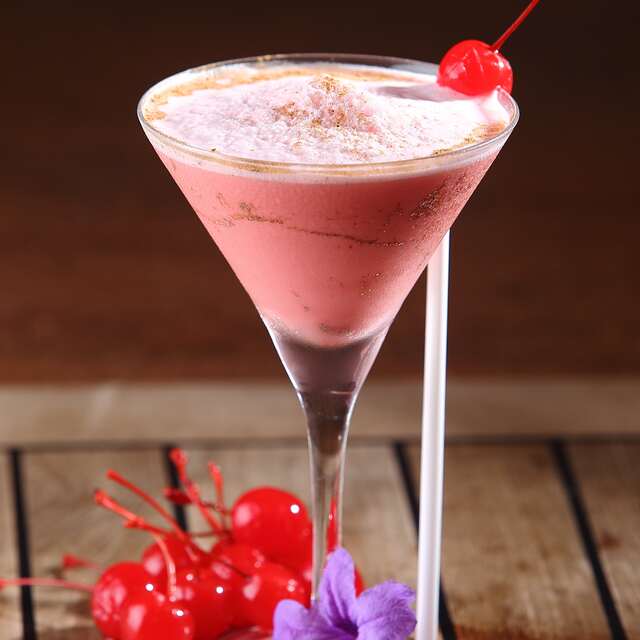
In its heyday, Las Palmas bar averaged 200 people per night. (Photo/Kiwilimón).
Ingredients:
2 oz (60 ml) white rum,
1 oz (30 ml) grenadine,
2 oz (60 ml) evaporated milk,
crushed ice
, maraschino cherries (for garnish),
ground cinnamon (optional, for sprinkling)
Preparation:
In a blender, combine the white rum, grenadine, evaporated milk, and crushed ice.
Blend until smooth.
Serve in chilled cocktail glasses.
Garnish with a maraschino cherry and, if desired, sprinkle with cinnamon.
The place for the greats
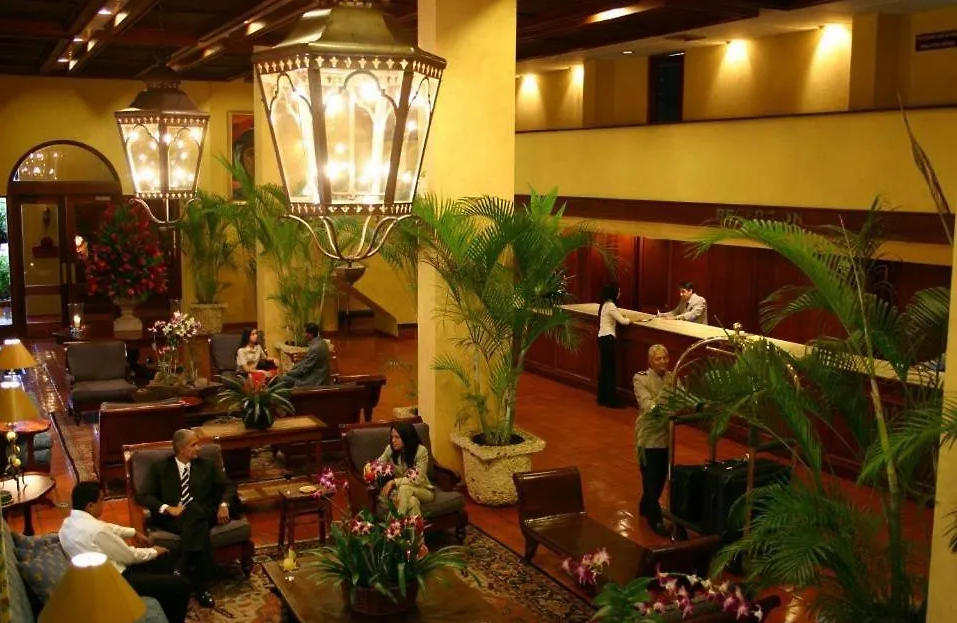
At the end of the 1990s, the hotel had215 rooms. (Photo/Official Website).
For more than three decades, the halls, rooms, corridors, and interior gardens of the Hotel Santo Domingo were graced by a diverse array of distinguished personalities of high standing and international renown. Numerous medical congresses, assemblies, gala dinners, and high-society weddings were held there, and toasts were also raised to democracy. Political agreements were signed, and even presidential birthdays were celebrated.
A 1992 chronicle in El Caribe mentions that “more state decisions have been made in the gardens of the Hotel Santo Domingo than in many ministries.”
Decline, abandonment… and now transformation
This property, with its understated, characteristic mustard-colored facade, which was once a city icon, was acquired and became part of the Costasur Dominicana conglomerate, linked to the Central Romana Corporation group (Fanjul Group), since the 1990s and operated as a private hotel until its closure in 2013. Now, in 2025, the Dominican State (via expropriation) has declared the land to be of public utility and will make way for a new Convention Center.
The story goes that, as with any business, if the competition gets serious and capital finds a niche, everything changes. The tastes of the global clientele changed as they began to see new neon signs on both new and old tourist properties in the city—perhaps more modern—and the public began to migrate to other venues. The Santo Domingo's facilities, although well-maintained, began to show their age, and although its spirit remained intact, its structure was asking for rest.
It was in 2013 that the company understood the message and the Hotel Santo Domingo closed its doors for good, and today only the silent and dusty ruins can be seen, condemned by abandonment.
Final point or new beginning
On May 17, 2025, the Dominican Government officially announced the closing of this chapter: through Decree 214-24, the land was declared of public utility and transferred to the State to make way for the Santo Domingo Convention Center.
- The site —approximately 67,000 m², of which 34,000 m² will be used in the first phase— will be demolished in the coming weeks.
- Costasur Dominicana, a subsidiary of Central Romana Corporation, was the original owner. The transaction was carried out through expropriation, with compensation in accordance with the law.
- The new project, with support from IFEMA (Spain), will transform this corner into the heart of the region's event, congress and business tourism.
Thus, the place where toasts were previously made for anniversaries and treaties will now have rooms for plenary sessions, international forums, and trade fairs.
It wasn't a hotel, it was an era
One of these days the cranes will appear and the blueprints for the new architecture will displace the memories. For those who lived through its splendor, the Hotel Santo Domingo was not just a place to stay: it was a statement of the city, of tropical modernity, of the unpretentious good taste "of that era."
And it won't return, at least not as it was. But some places—like certain loves—remain where it matters most: in the memory of those who knew how to love them.







