



Taken from BBC Mundo News
When the world began to take notice of Evergrande's $300 billion debt crisis earlier this year, some wondered if it would become China's "Lehman Brothers moment".
Since then, it has become clear that Beijing is handling the situation very differently than Washington dealt with the collapse of investment banking giant Lehman Brothers at the start of the global financial crisis in 2008.
After Evergrande announced that it may not be able to meet all of its financial obligations, the crisis-hit company stopped paying some of its overseas bonds.
It has reportedly now entered into a debt restructuring process with the Chinese authorities that may include the sale of some of its founder's personal assets.
"It's opaque, but when we talk to our industry contacts in China, no one is surprised," said Vinesh Motwani of Silk Road Research, a market research firm specializing in Asia.
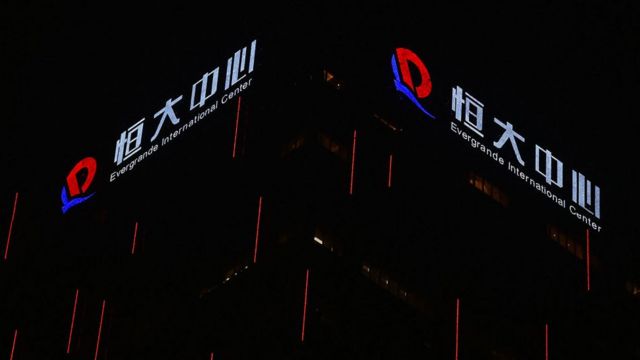
Evergrande vs Lehman
"The biggest difference between the two is that Evergrande was a train wreck that everyone saw coming," said Motwani, who was working in the United States as an analyst at Credit Suisse when Lehman Brothers collapsed.
"When the 'three red lines' policy was announced more than a year ago, it was clear that Evergrande was one of the biggest violators, so the reaction in China was: 'This was bound to happen.'".
The "three red lines" are a set of debt thresholds that severely limit the ability of certain real estate developers to obtain loans. For decades, the sector had seen unchecked lending, something the central bank (People's Bank of China) described as "reckless.".
The Evergrande crisis is a "grey rhino" event, a term used to describe an obvious, slow-moving threat rather than a surprise "black swan" event, according to Rory Green, director of China and Asia research at investment advisory firm TS Lombard.
"The warning about Evergrande has been circulating for a long time, so none of the bondholders should be surprised that they are defaulting," he said.
Why is this crisis so different?
Another major difference between the collapse of Lehman Brothers and the Evergrande crisis is that when the US government needed to act, it had to pass legislation to have the power to intervene, something that is not a problem for the Chinese government.
By controlling the country's real estate market through state-owned banks, Beijing also knows which developers are likely to default, something that could not have been said about Washington during the subprime mortgage crisis.
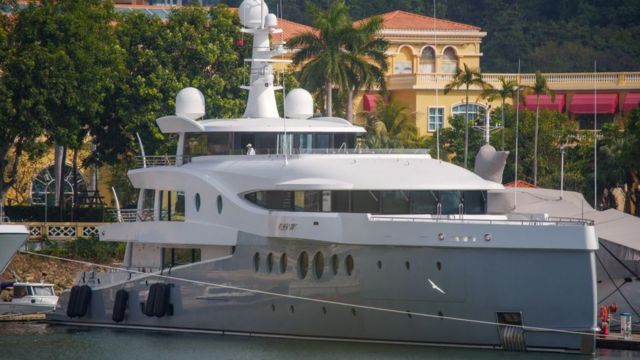
At the same time, China is being far more selective in its actions than the United States was during the global financial crisis. Unlike Washington, which bailed out some of the world's largest banks, the Chinese Communist Party is taking a more piecemeal approach.
"Beijing is like a surgeon operating on a tumor and thinking, 'What do I need to save?'" said Alicia Garcia Herrero, chief economist for Asia-Pacific at investment bank Natixis.
For the Chinese government, it is crucial that Evergrande's day-to-day operations remain uninterrupted. Their goal is to ensure the company can complete the homes it is building so that ordinary property buyers are not affected and confidence in the real estate market is not seriously damaged.
"Beijing also needs to look at the heart, to see if it's still beating. That's people's perception of the real estate sector," García Herrero added.
So far, this approach appears to have limited the impact on the housing market, according to Motwani: “Real property prices continue to rise year over year. Even when they have fallen month over month, they haven’t dropped by double-digit percentages.”.
There is also concern that if prices continue to fall, potential buyers may postpone purchasing new homes, further slowing the market.
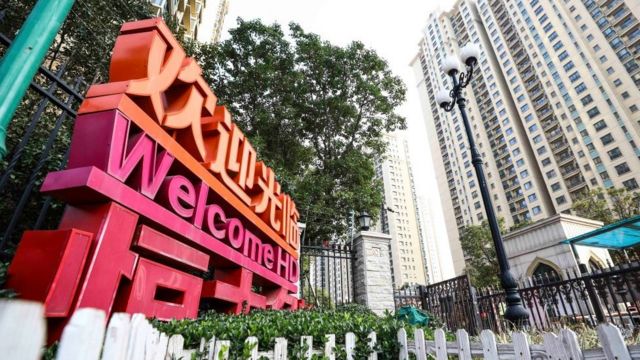
What will happen to Evergrande?
Experts predict that Evergrande's restructuring could take months or even years, so there will be few headline-grabbing announcements as authorities try to avoid shocking the global financial system after the collapse of Lehman Brothers.
Green points to the past failures of large Chinese companies. Using the implosion of financial and insurance giant Anbang as an example, he expects Evergrande's restructuring to be a long process: “Anbang went into restructuring two years ago and it’s still ongoing. Evergrande is much larger, so it could take years. But, in my opinion, the worst is over.”.
"The most likely scenario is that Evergrande will be broken up into separate units. It will be the death of the gray rhino, and the regional banks will be tasked with dealing with those separate units to ensure the stability of the sector and the economy," he opined.
Will international investors get scared?
Although Evergrande's default on interest payments on overseas bonds has not triggered a financial collapse, as they are mostly held by powerful global investors, some analysts are concerned about the impact on the reputation of the Chinese real estate sector.
"It definitely damages the faith of international investors in overseas Chinese real estate bonds," said Jackson Chan of the financial market research platform Bondsupermart.
Essentially, this made it much more expensive for Chinese real estate developers to borrow money from international investors.
What remains to be seen is how Beijing strikes a balance between continuing its strict real estate market policies and the risk of the country's massive property industry losing access to affordable foreign investment.







