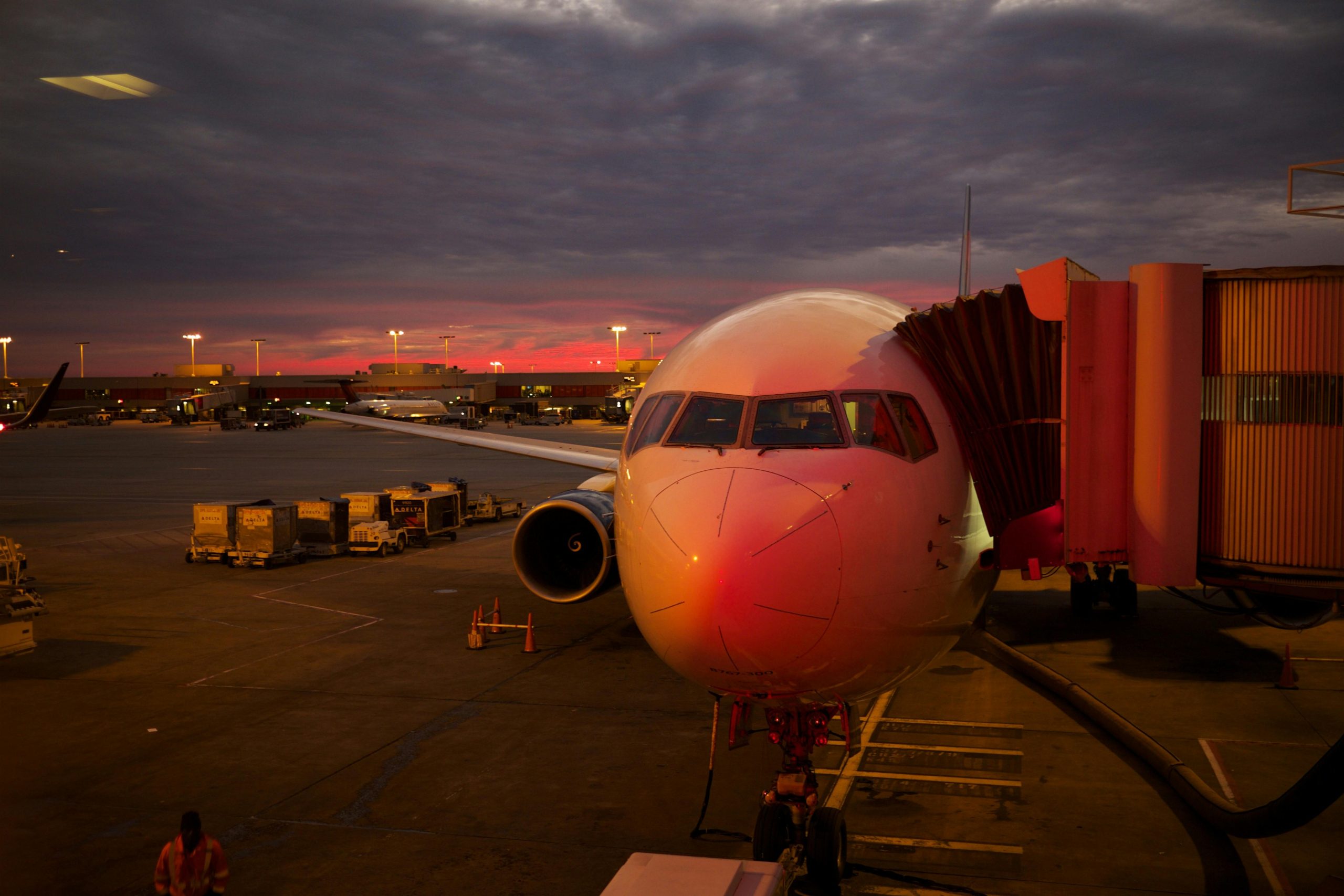
Two days after the reduction in flights in the United States, the country remains on alert but not in crisis. Arrivals and departures remain stable, air connectivity is operating with reasonable punctuality, and authorities are maintaining constant monitoring.
SANTO DOMINGO. – The Dominican Republic is under cautious observation following the Federal Aviation Administration's (FAA) decision to partially reduce air operations at 40 US airports, a measure initiated on November 6 and motivated by the partial shutdown of the federal government and the shortage of air traffic control personnel.
The announcement generated concern among tour operators and local authorities, and reports indicate that the first two daysof implementation showed a limited impact on international operations to and from the Dominican Republic, according to airport sources and the Ministry of Tourism itself.
Vulnerability and resilience:
Experts agree that the short-term impact will be manageable, but warn that a prolonged air travel crisis in the United States could have more tangible consequences.
Economist Pavel Isa Contreras explained to local media that “if airlines begin to reassign fleet and personnel from international routes, destinations like the Dominican Republic could experience sustained cancellationsand a reduction in available seats, especially during peak season.”
The episode exposes the country's structural dependence on the US market, which provides between 38% and 46% of its annual visitors
In the short term, he added, “the strength of demand and the diversification of markets will mitigate the blow.”.
In contrast, hotelier Andrés Marranzini, vice president of Asonahores, pointed out that “the key lies in the duration of the measure: if it's resolved in a week, the effect will be merely an operational setback; if it extends for a month, packages and promotional campaigns will have to be rescheduled.”
Normal operations
Despite the international situation, the direct impact on the country has been minimal so far. Aeropuertos Dominicanos Siglo XXI (Aerodom), the company that manages Las Américas International Airport (AILA) and other terminals, reported that “operations are proceeding normally and no formal notifications of cancellations have been received from U.S. airlines. All scheduled flights to and from the United States remain confirmed; no airline has canceled any of its flights.”.
Aerodom added that it maintains constant monitoring in coordination with airlines and airport authorities, stressing that, so far, “no significant delays or changes in the regular operating schedule have been reported.”.
According to Aerodom, during those two days there were around 100 to 118 flights to originate from or be destined for the United States, all of them confirmed and underway, except for some minor delays attributed to logistical adjustments.
The Ministry of Tourism maintained the same stance, stating on Friday that “international arrivals are continuing according tothe usual schedule” and that they were still monitoring the potential cumulative effect if the restrictions in the United States were to last more than a week.
Operational Comparison
: According to data compiled by the Air Traffic Control Department of AILA and Punta Cana Airport (PUJ)—whose weekly statistics are published in the bulletins of the Civil Aviation Board (JAC) —1,052 international operations between the two airports during the week of October 30 to November 5, with a daily average of 150 flights (arrivals and departures combined).
This situation highlights the need to strengthen the diversification of source markets, a goal reiterated by Minister David Collado in recent official statements.
During November 6 and 7, preliminary reports indicated 143 and 147 daily operations respectively, representing a decrease of 2% to 4% compared to the previous week, within the normal range of seasonal variation.
None of the terminals reported cancellations directly attributable to the FAA order, according to monitoring by Aerodom and airport authorities.
According
to reports from Reuters and Associated Press, the FAA measure initially reduced operations by 4% at the busiest airports, with the possibility of reaching 10% if the shortage of specialized personnel persisted.
In practical terms, this translated into more than 790 canceled flights on the first day and more than 1,000 cancellations on the second, according to data from FlightAware, a company that monitors global air traffic.
The affected airlines included major carriers such as American Airlines, Delta, United and JetBlue, all with frequent routes to the Caribbean, including several direct connections to Santo Domingo, Punta Cana and Santiago.
An industry at a historic high:
Dominican tourism reaches this point in one of its strongest periods. Between January and September 2025, the country received 8.59 million visitors, 4.6% more than in the same period of 2024, according to figures from the Ministry of Tourism.
In the first half of the year, 6.15 million arrivals were already recorded, with projections to close 2025 above 12 million tourists - a goal that, if met, would consolidate the country as the main destination in the Caribbean.
The World Travel & Tourism Council (WTTC) also estimated that tourism will contribute around US$21 billion to the national GDP this year, equivalent to 15.8% of the Dominican economy and supporting more than 893,000 jobs.
Controlled Alert:
To date, the reduction in flights in the United States has not triggered a crisis for the Dominican Republic. Arrival and departure figures remain stable, air connectivity is operating with reasonable punctuality, and authorities are maintaining constant monitoring.
However, the episode exposes the country's structural dependence on the US market, which provides between 38% and 46% of its annual visitors, and reiterates the need to strengthen the diversification of source markets, a goal reiterated by Minister David Collado in recent official statements.