


The CES warns that the key is to guarantee sovereignty and migratory order, without neglecting the productive capacity of sectors that sustain employment, investment and national food security.
SANTO DOMINGO. – It is no secret that the agricultural and construction industries share a common vulnerability: their high dependence on Haitian labor . According to figures from the General Directorate of Migration, 250,741 Haitians in an irregular situation have been deported so far in 2025, absences that have reduced part of the workforce that these sectors urgently require.
The Economic and Social Council (CES), in its report on the Dialogue for the Haitian Crisis, was emphatic in suggesting that the country should focus on designing a regulatory framework that combines security and migratory order while also guaranteeing productive continuity.
“The country must regulate the participation of foreign workers in construction and agribusiness, while ensuring compliance with the law and respect for human rights,” the document states.
Construction decline
The warning comes at a complex time, as the Central Bank reported that construction grew by only 2.2% in 2024, and that in the first quarter of 2025 it fell by -3.1%, reflecting the slowdown, attributed in part to the migratory pressure that deportations imply.
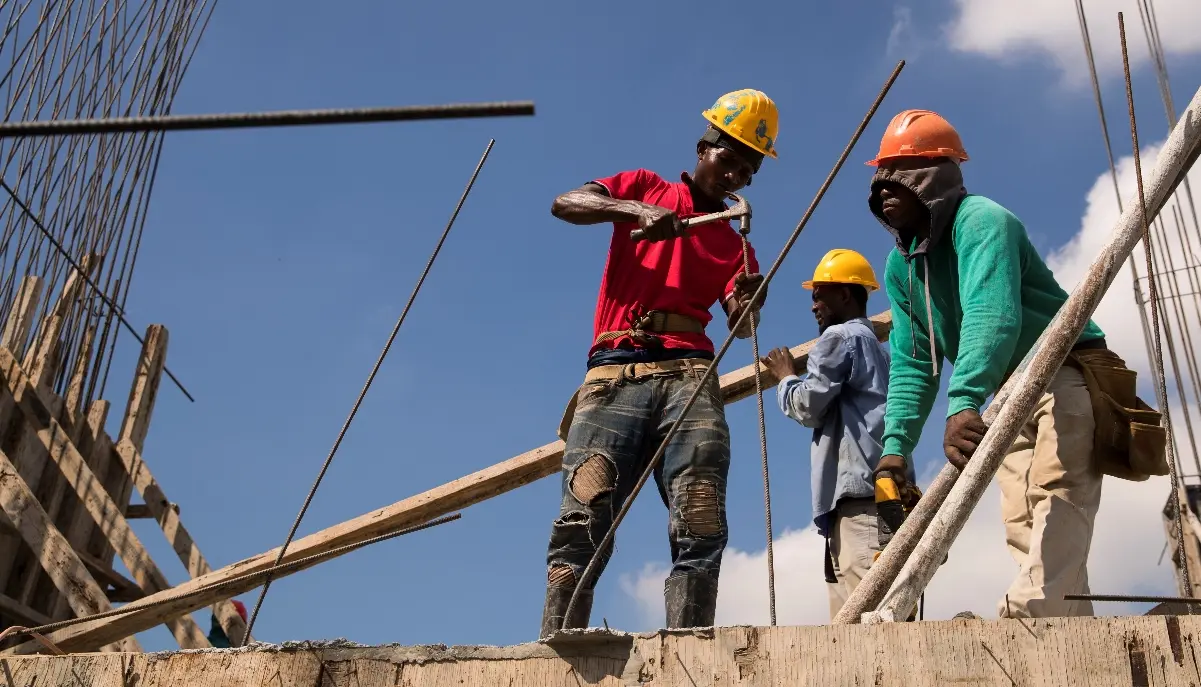
This volume of expulsions directly affects the availability of labor in construction, where Haitian workers have a decisive role.
For the CES, the challenge is twofold: to guarantee sovereignty and migratory order without neglecting the economic engine represented by construction and el inmobiliario, the basis of productive investment and tourism expansion.
The CES report dedicates a special section to the situation of construction, a sector that depends significantly on Haitian labor, without invalidating the need, the right and the duty of the country to reject illegal migration, but warns that it must be accompanied by a clear policy of regulating foreign labor in strategic sectors.
“The country must regulate the participation of foreign workers in construction and agribusiness, while ensuring compliance with the law and respect for human rights,” the CES states.
Food security at risk
In the case of the agribusiness sector, the CES warns that a policy of mass deportations without clear rules could affect food production and exports. In 2024, the agricultural sector registered 3.3% growth, according to data from the Central Bank, and maintains a strategic role for both domestic consumption and foreign trade.
Central Bank data shows that in the first half of 2025, agriculture grew more than in 2024 (4.9% vs. 4.3%), despite the magnitude of the Haitian deportations. This suggests that the impact on agricultural and agro-industrial production has not been immediate, which is probably because the deportations have not directly affected rural areas so far, or because labor was quickly replaced in certain crops, or because the sector absorbed the blow thanks to good harvest and export conditions.
So far, agriculture has held up, but the CES warns that it is not sustainable in the long term without clear rules for foreign labor . Although the figures show dynamism in 2025, the risk of a production shock is latent, with prospects of slowing agricultural growth in the coming quarters, especially if the migration policy remains just as intense and the workforce is not regulated in an orderly manner.
The challenge, the CES concludes, is to achieve a balance: “Guaranteeing sovereignty and migratory order, without neglecting the productive capacity of sectors that sustain employment, investment and national food security.”.
Context
The Dialogue for the Haitian Crisis was a multi-sectoral process convened by the Economic and Social Council (CES) at the request of President Luis Abinader, which brought together for several months representatives of political parties, businessmen, unions, social organizations, academics and civil society entities.
Its central objective was to build national consensus in the face of the impact of the Haitian crisis in the Dominican Republic, addressing issues such as migration, border security, foreign policy, economy and human rights, and culminated in a set of proposals and agreements delivered to the Executive Branch in September 2025.







