


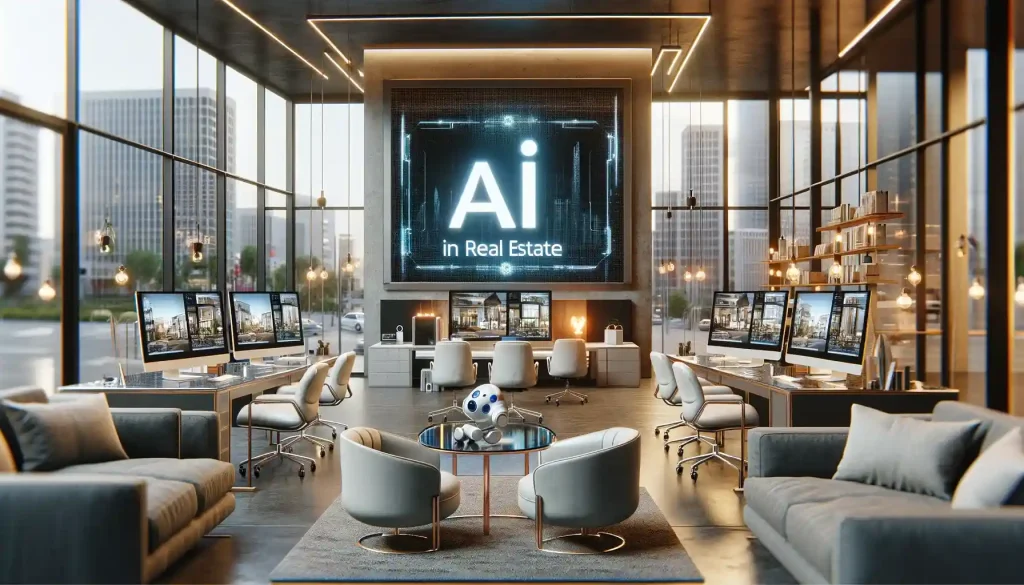
In the grand tapestry of technological evolution, Artificial Intelligence (AI) stands out like a shimmering thread, weaving its way through industry after industry, transforming them in ways once relegated to the realm of science fiction. Nowhere is this transformation more palpable than in the historically significant real estate sector, an arena where tradition and personal touch have long been the cornerstones of every transaction. Yet, as we stand on the cusp of a new era, AI is emerging as a revolutionary force, poised to redefine the very fabric of real estate transactions.
Imagine, for instance, a world where finding the perfect home doesn't involve sifting through endless listings or relying on a real estate agent's intuition. Instead, a smart algorithm curates a selection of properties tailored precisely to your desires, down to the smallest detail. Or imagine a scenario where predictive analytics can forecast market trends, allowing investors to make decisions based not on gut feeling but on data-driven insights. This isn't a distant future; it's the present, and it's being shaped by AI in real estate.
The journey of AI from a niche technology to a central player in the real estate sector has been nothing short of remarkable. What began as simple data analysis tools has now evolved into comprehensive platforms capable of managing everything from property valuations to virtual tours. This leap forward isn't just about efficiency; it's about unlocking previously unimaginable possibilities.
As we analyze the layers of AI's impact on the real estate sector, we'll explore how this technology is not only changing the way we buy, sell, and manage properties, but also how it's improving the experience for everyone involved. From the accuracy of property valuations to the magic of virtual reality tours, AI is making the real estate market more accessible, more precise, and, dare we say, more human.
Join us on this exciting journey as we delve into the world of AI in real estate. Whether you're a seasoned investor, a real estate professional, or simply a tech enthusiast, there's no denying the seismic shift AI is bringing to the industry. It's a revolution that's rewriting the rules of the game, and by the end of this exploration, you'll not only understand AI's role in real estate but also how it's setting the stage for a future where technology and tradition converge in harmony.
The foundation of AI in the real estate sector: understanding AI and its capabilities
In essence, artificial intelligence (AI) is like a digital alchemist, capable of transforming vast amounts of data into actionable knowledge. It's not just about programming computers to perform tasks; it's about teaching them to learn and make decisions based on those tasks. This learning process, driven by algorithms and machine learning, allows AI to predict outcomes, understand preferences, and automate complex processes. In the real estate sector, this translates into countless applications, from optimizing property listings to predicting market trends with astonishing accuracy. It's like having a crystal ball, but based on data rather than mysticism.
Historical context and evolution of the real estate sector
The history of AI in real estate is one of gradual evolution punctuated by periods of rapid transformation. Initially, real estate professionals leveraged basic data analytics to gain insights into market trends and demographics. However, as AI technologies advanced, their application in real estate became more sophisticated. Today, AI in real estate is not just about analyzing data; it's about providing comprehensive solutions that encompass all aspects of the industry.
The integration of AI began with simple tools for aggregating property listings and has since expanded to encompass everything from automated valuation models (AVMs) to chatbots that can handle customer inquiries 24/7. These advancements have not only increased efficiency but have also elevated the customer experience to new heights. For example, AI-powered AVMs use complex algorithms to assess property values with a level of accuracy and speed unattainable for human appraisers. This leap in valuation accuracy is just one example of how AI is reshaping fundamental aspects of real estate transactions.
Furthermore, the evolution of AI in the real estate sector reflects a broader trend toward digitalization and automation across all sectors. As artificial intelligence technologies continue to evolve, their potential applications within the real estate sector expand, promising even more profound changes in how properties are bought, sold, and managed. The future of real estate, driven by AI, is one in which transactions will not only be more efficient and accurate, but also more transparent and accessible for all parties involved.
Essentially, the foundation of AI in real estate rests on the technology's ability to process and analyze data at a scale and speed that surpass human capabilities. This foundation is continually strengthened by advancements in machine learning and data analytics, paving the way for innovative applications that enhance every facet of the real estate industry. Looking ahead, the role of AI in real estate is poised for even greater expansion, heralding a new era where technology and human expertise converge to create a more dynamic, efficient, and inclusive marketplace.
Source: https://julienflorkin.com/es/







