



Representatives of the union met with Consul Eligio Jáquez to outline guidelines for ongoing support for Dominicans living abroad in the United States.
Santo Domingo– Acoprovi, the Association of Housing Builders and Developers, launched its plan, announced a month ago, to strengthen the industry and provide greater security for buyers and investors. A delegation comprised of the organization's president, Annerys Meléndez, and first vice president, Guido Rosario, traveled to New York to meet with Consul Eligio Jáquez to kick off the strategy aimed at preventing members of the Dominican diaspora residing there from falling victim to new real estate scams.
A press release from the association explains that the objective of the representatives' visit to North American territory is to counteract misinformation and prevent new cases of real estate scams and to guide the Dominican diaspora in the processes of acquiring properties at the national level.
“We are currently focusing on guiding the diaspora toward safe real estate investments in the Dominican Republic. We are committed to the construction and housing sector, and that is why we have decided to prepare materials with accurate and relevant information to guide Dominicans abroad on when and how it is safe to invest in real estate in our country,” Meléndez commented during the meeting with the Dominican diplomat.
Jáquez made available to the association the opening of a continuous guidance channel on the subject, whose objective is to safeguard future investments of the Dominican diaspora in real estate on Dominican soil and guarantee their sustainability over time, the press document highlights.
"This step by Acoprovi confirms the entity's commitment to security and transparency in the Dominican real estate market; it also contributes to reducing fraud in this sector and increases the confidence of potential investors, thus contributing to the country's economic and social development," explains the information sent to El Inmobiliario.
Consular representatives valued the effort and sacrifice of the Dominican diaspora in their goal of acquiring a home in their country of origin, being aware that it is their moral duty to protect compatriots from the actions of unscrupulous people who seek to enrich themselves at the expense of the dreams of progress of compatriots residing abroad.
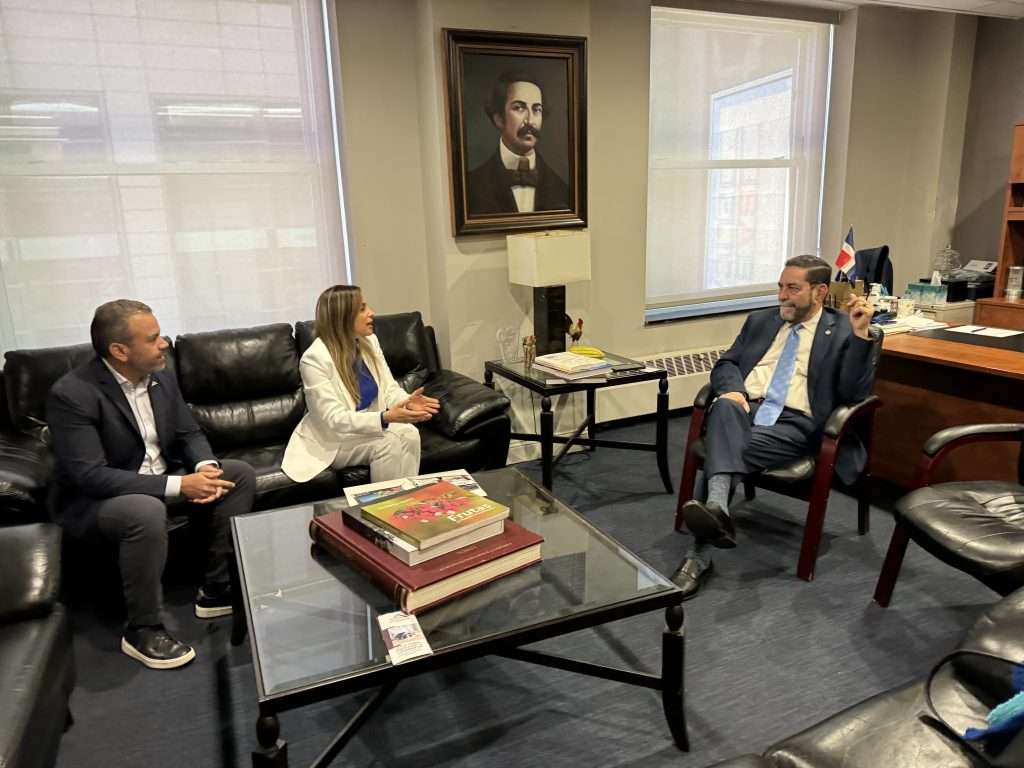
Guido Rosario and Annerys Meléndez during their meeting with Eligio Jáquez. (External source).
The desire to own a home in the Dominican Republic is common among Dominicans living abroad, many of whom plan to return after years of work to enjoy the fruits of their labor in their homeland. However, in recent years, the number of real estate development projects has increased, leading to a rise in real estate scams in the country.
This situation has been attributed, in part, to the sophistication of the tactics used by scammers, especially through social media on the internet, in order to attract the attention of potential investors with purchasing power who work abroad, the press release explains.
They unify actions
Last April, five of the country's leading construction and real estate companies signed an agreement to promote actions and curb real estate scams in the country.
“We have seen how unscrupulous individuals have abused the good faith of Dominicans, leading them to believe they will be provided with housing and then defrauding them. This represents serious harm to buyers, while also casting an unfair shadow over reputable companies in the sector, when the reality is that the leading companies operate in accordance with the law and in compliance with technical requirements. Today, we are joining forces to provide security for Dominicans,” stated Annerys Meléndez, president of Acoprovi.
The organizations that joined forces are also the Association of Housing Promoters and Builders of Cibao (Arpocovici), the Association of Real Estate Agents and Companies (AEI), the Association of Builders and Developers of La Altagracia (Adecla), the Dominican Association of Short Rents (Adoreco) and the Dominican Chamber of Construction (Cadocon).







