


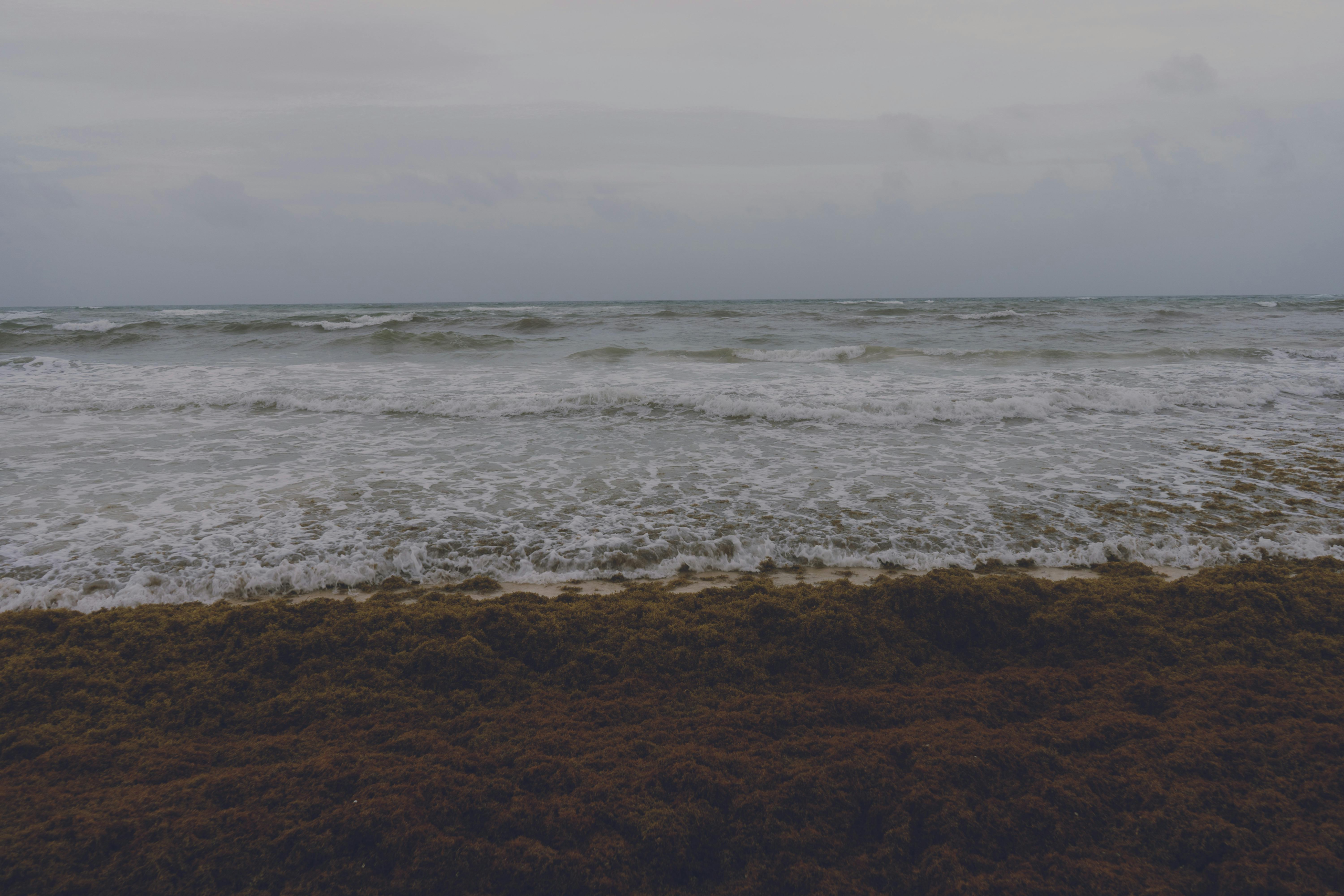
Dominican research is changing its focus: from simple collection and final disposal towards the industrial valorization of macroalgae as an energy raw material
SANTO DOMINGO. – While tourism authorities are strengthening their response capacity to the massive arrival of sargassum on Dominican coasts, a group of researchers from the Technological Institute of Santo Domingo (INTEC) is working on a more ambitious solution: converting the macroalgae into a source of energy and industrial raw materials.
During May 2026, the National Maritime Affairs Authority (ANAMAR) continued issuing surveillance bulletins and trajectory forecasts for the masses of algae moving towards Dominican waters, evidence of a phenomenon that is already part of the environmental and economic reality of the Caribbean region.
According to INTEC in April 2026, researchers from the university, in collaboration with the companies Algaltek (Switzerland) and CADE Soluciones (Spain), developed a technology based on hydrothermal gasification capable of transforming sargassum into synthesis gases with energy potential, while also allowing the separation of arsenic accumulated by marine biomass.
The research was developed with funding from the Inter-American Development Bank (IDB) and is part of the efforts to find productive uses for a raw material that has so far been treated mainly as an environmental waste.
According to information released by INTEC, the process takes advantage of one of sargassum's most challenging characteristics: its high moisture content, close to 88%. Instead of requiring pre-drying, the technology uses this moisture as part of the transformation process, reducing operating costs and increasing its viability for industrial applications.
For researchers, one of the main advances lies in the elimination or reduction of arsenic, an element that has historically limited the widespread use of sargassum in sectors such as agriculture, energy production, and materials manufacturing.
Once this contaminant is removed, the biomass can generate products with higher added value and lower environmental risks. The importance of these developments is better understood by observing the recent evolution of the phenomenon.
The Optical Oceanography Laboratory at the University of South Florida (USF), considered one of the main scientific references for monitoring sargassum in the Atlantic, has documented since 2011 the persistence of the so-called Great Atlantic Sargassum Belt, a gigantic accumulation of macroalgae that extends across the tropical Atlantic Ocean and feeds the influxes that affect the Caribbean, the Gulf of Mexico and part of the Atlantic coasts of America.
USF analyses have shown that the phenomenon stopped behaving as a sporadic event and became a recurring system, with seasonal fluctuations, but with a constant presence on a large scale.
This trend has led many researchers to believe that Caribbean countries should prepare to live with sargassum for decades to come, rather than waiting for the problem to disappear naturally.
In the Dominican Republic, this reality was reflected once again last May. Bulletins issued by ANAMAR warned of the presence and movement of sargassum seaweed towards the national maritime environment, while visible accumulations of algae were recorded in various coastal areas.
Continuous monitoring has become a key tool for planning cleanup operations and for decision-making in vulnerable tourist destinations.
Immediate mitigation
Recently, the Ministry of Tourism, headed by David Collado, delivered equipment to strengthen containment and cleanup efforts in tourist areas. However, the minister himself has publicly acknowledged that the Caribbean still lacks a definitive solution to the phenomenon, which has spurred the search for scientific and technological alternatives.
It is precisely in this space that INTEC's proposal is inserted, which, rather than focusing on the removal of sargassum from the beaches, poses a different question: what to do with the millions of tons of biomass that arrive each year on the Caribbean coasts.
The university has also made progress in other lines of research related to the valorization of sargassum. In May 2016, INTEC researchers published results on the use of this macroalga as a biofertilizer in tomato crops, finding improvements in soil nutrient availability without detecting concerning levels of arsenic, cadmium, or lead in the tested fruit.
These results point to an increasingly broad approach in which sargassum is no longer seen exclusively as a threat but as a potential resource.
The combination of scientific monitoring, operational response capacity, and technological development appears to be the most promising strategy for dealing with a phenomenon whose magnitude continues to grow.
While ANAMAR continues to monitor the masses approaching the Dominican coasts and USF monitors the evolution of the Atlantic belt from space, Dominican researchers are trying to transform one of the Caribbean's biggest environmental challenges into an opportunity for innovation, energy, and productive development.
Recommended readings:







