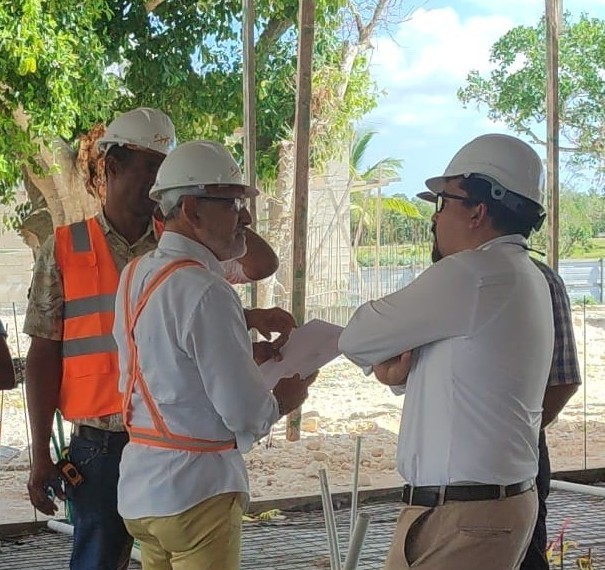
SANTO DOMINGO.– Architect and former secretary general of the Dominican College of Engineers, Architects and Surveyors (CODIA), Edgar Martínez, urged action to address construction flaws in the Dominican Republic, warning that structural incidents recorded during 2025 revealed weaknesses in professional supervision and the application of current regulations.
The specialist argued that collapses, explosions, and structural failures occurring in different parts of the country reflect accumulated deficiencies in construction processes and in the technical control mechanisms applied in the sector.
Martínez described construction defects as a persistent structural problem and a threat to public safety. “The other pandemic in the Dominican Republic is construction defects,” he stated.
A 2025 that left its mark
Among the events cited, the architect mentioned the collapse of the roof of the Jet Setin Santo Domingo, considered one of the most serious non-natural events recorded in the country's recent history, with more than 230 people dead and hundreds injured.
He indicated that the structural failure of the building revealed potential technical deficiencies and a lack of rigorous controls during the maintenance and remodeling processes. “The structure failed, which points to potential flaws that could have been detected with specialized supervision,” he stated.
He also noted the partial collapse of a roof under construction in Santiago and the collapse of a building in La Romana, where three workers died.
These cases are in addition to explosions caused by gas tanks in homes and residential buildings, such as those that occurred in Salcedo and in the Villa Marina sector of the National District, which left multiple people injured.
Technical failures and limited supervision
Martínez explained that many of these incidents are associated with structural defects, use of inadequate materials, unauthorized modifications, and execution of works without calculations or specialized technical supervision.
He pointed out that a significant portion of construction projects in the country are carried out under traditional supervision, limited to general observation without ongoing technical support for specific areas. “Technical responsibility is often delegated to foremen or laborers without the necessary professional backing,” he stated.
The architect warned that these practices increase risks during construction and compromise the safety of workers, users, and nearby communities. “Construction without supervision is a gamble, and we are gambling with lives,” he stated.
Regulations and challenges
The former secretary general of CODIA recalled that safety in construction is supported by legal provisions, such as the Labor Code and occupational safety and health regulations, which establish clear obligations for the prevention of risks in construction projects.
He also highlighted the introduction of the new Construction Code by the Ministry of Housing, Habitat and Buildings (MIVHED), which incorporates updated technical specifications aimed at strengthening safety and quality in the country's buildings.
Similarly, he cited the General Construction Regulations of the Ministry of Public Works and Communications (MOPC), prepared to regulate the design, execution and quality of works, in compliance with Law 687-82 and other decrees.
However, he pointed out that the effectiveness of these regulations depends on their proper application and systematic oversight. “The regulations exist, but if they are not followed or monitored, the risks remain,” he said.
Finally, Martínez indicated that the events recorded during 2025 represent a turning point for the construction sector and raise the need to move towards a culture of technical compliance, safety and professional responsibility in all phases of the works.