


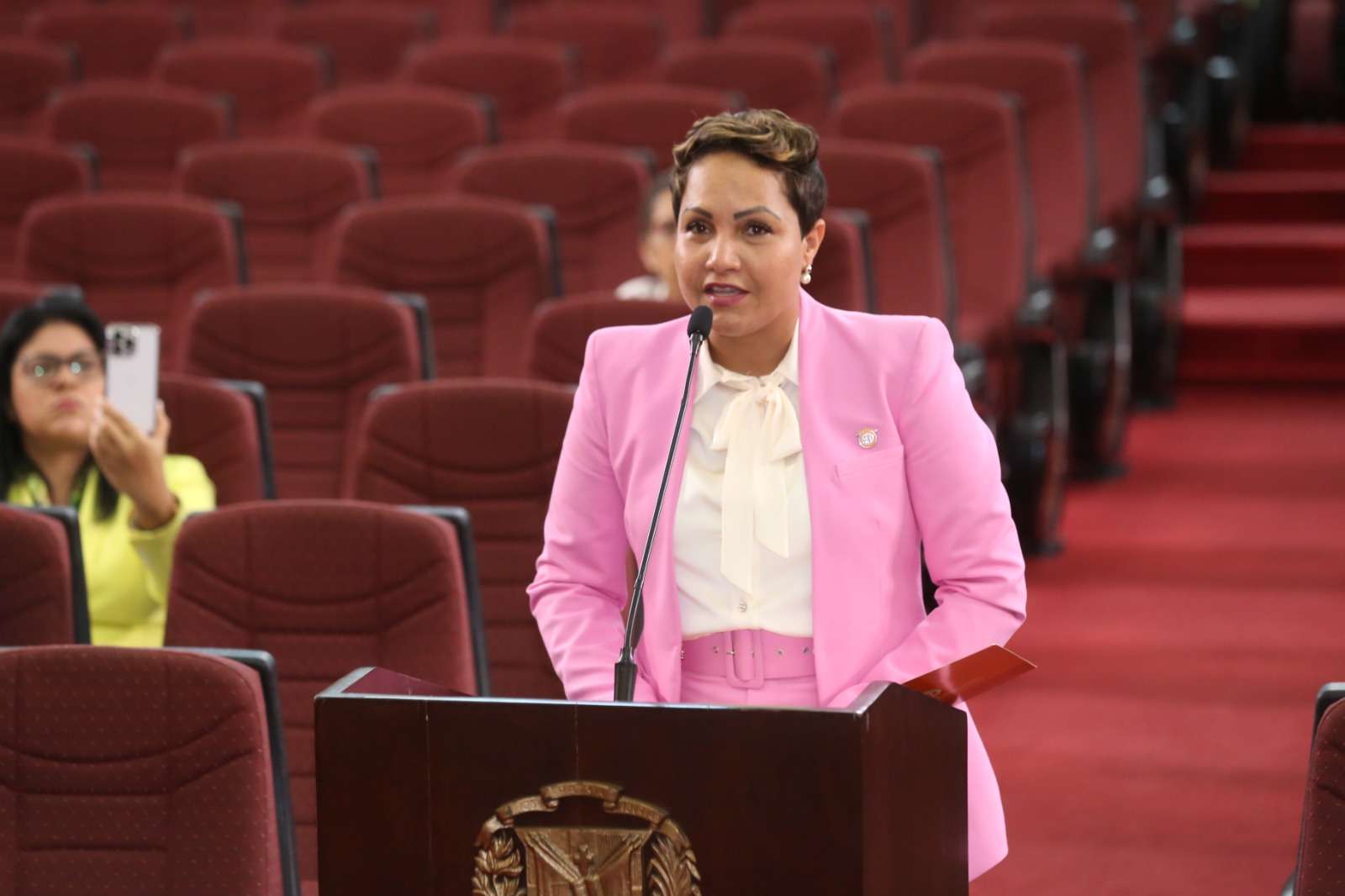
"Many developers take advantage of the inexperience and lack of knowledge of first-time investors to commit their crimes." Reyna Echenique.
SANTO DOMINGO.- The country urgently needs a new penal code that allows for the prosecution of crimes such as fraud with the appropriate sanctions, so that the legislation can provide legal security and the certainty that those who decide to engage in such illegal activities will be prosecuted with the corresponding penalties and that the damage will be compensated.
Ana Bello and Reyna Echenique, two real estate agents specializing in real estate law, agree that the current penal code in the Dominican Republic should be modified because it is an old instrument that does not correspond to the current reality.
The professionals' opinions arose when they were consulted by El Inmobiliario, regarding the real estate scam currently being adjudicated in the Dominican justice system, for which the Public Ministry arrested 7 people last Wednesday, whom they accuse of leading a criminal network that defrauded more than 300 victims of more than RD$700 million pesos by offering them homes in supposed real estate projects, through multiple fraudulent maneuvers.
“What is important to emphasize is that, in the face of a booming real estate market, legislation must provide legal security and the certainty that those who decide to commit such crimes will be prosecuted with a fair punishment and the damage will be compensated,” Bello stated.
According to Echenique, many construction and development companies take advantage of the weakness of the law to commit fraud, exploiting the legal system's minimal penalties, which is why he believes a new penal code is necessary to judge these types of crimes.
“The person who is creating a network to scam from the beginning studies all of that, they know the laws, they know how much they will get when their fraud is discovered, they know the penalty they will face when the crime is uncovered, they study everything because they are experts and they take advantage of that weakness in the judicial system, they make a lot of money and only get two years and with a lot of luck they behave well and ask for parole on bail when they serve 50% of the sentence, that is the mentality of many,” Echenique stated.
 Reyna Echenique. (External source).
He added that many developers take advantage of the inexperience and lack of knowledge of first-time investors to commit their crimes.
In Ana Bello's opinion , "the case suggests a modification of our Penal Code, for which there is already a draft amendment, after considering that the penalty for fraud in the Dominican Republic should be scaled from 5 to 20 years of correctional imprisonment, taking into consideration the possible aggravating factors that could occur in each particular case."
He explained that the Dominican Republic's Penal Code establishes in its article 405 a penalty of six months to two years of correctional imprisonment for fraud and a fine of twenty to two hundred pesos.
“Likewise, the convicted fraudster may be sentenced in an accessory manner to the absolute or special disqualification of the following civic, civil and family rights: Voting and election, eligibility, being a juror or appointed to exercise other public functions, or for the jobs of the administration; carrying weapons; voting or suffrage in family deliberations, among others,” he explained.
The case
Engineer Emmanuel Rivera Ledesma of the company Indisarq was arrested last Wednesday, January 3rd, through "Operation Nest," carried out by the Public Ministry, accused of defrauding, along with 6 other people involved, more than 300 people with fake real estate sales.
Also being prosecuted in the case are Emmanuel Eduardo Rivera Pichardo (son), María Gabriela Rivera Pichardo (daughter), Escarlet Mercedes Cruz Figueroa (Rivera Ledesma's wife), Reilin Arismendy Rosario García, Mirna Catalina Rivera Ledesma (sister), and Juan Omar Rosario López. The hearing to review the request for pretrial detention will be held tomorrow, Tuesday the 9th, at 9:00 AM at the Ciudad Nueva Courthouse.
They did not have a building permit
In the document requesting coercive measures, the Public Prosecutor's Office maintains that in the Ministry of Housing, Habitat and Buildings there are no records of construction licenses for the defendants Emmanuel Rivera Ledesma, Emmanuel Eduardo Rivera Pichardo, Escarlet Mercedes Cruz Figueroa, nor for the companies Indisarq SRL, and CRD Equipos Pesados.
The prosecution states that these individuals sold more than 300 units, including apartments and commercial premises, without having the required permits.
According to the document, the group also did not have the right of ownership over the land where the buildings would be constructed.
According to the more than 400-page document prepared by the General Directorate of Prosecution of the Public Ministry (Digepemp), the prosecuting body indicates that members of that entity obtained certifications from the Registry of Titles of the Real Estate Jurisdiction, which state that the defendants did not have the required property permits.
On the land where nine real estate projects were supposedly going to be built, according to what was advertised on billboards by those named, residential apartment buildings and commercial premises would be erected.
“The Public Prosecutor’s Office obtained certifications from the Real Estate Registry, which corroborate that the land used by the defendants Emmanuel Rivera Ledesma, Emmanuel Eduardo Rivera Pichardo, Escarlet Mercedes Cruz Figueroa, Juan Omar Rosario López, Mirna Catalina Rivera Ledesma, Reilin Arismendy Rosario, Maria Gabriela Rivera Pichardo, Indisarq SRL and CRD Equipos Pesados, establishing the Registry of Titles, shows that they do not have the right to the property where it was presumed that the residential apartments and commercial premises sold to the victims and plaintiffs by the defendants would be built,” says the request for coercive measures.
Similarly, the report underlines in the list of charges for the validation of their request for coercive measures, that these did not have construction permits approved by the General Directorate of Urban Planning of the Santo Domingo East City Council (ASDE), in any of the nine projects.
In this case, the prosecuting body requested preventive detention against the defendants as a coercive measure, as well as that the case be declared complex.







