


He revealed that in the current month of October the Monetary Board approved a new rapid liquidity facility for RD$40,000 million to be placed this time in the construction, manufacturing, export and agricultural sectors, with some RD$13,735 million being placed as of October 19.
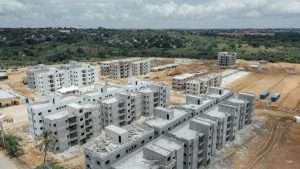
SANTO DOMINGO. – The construction sector continues to recover, expanding 9.5% last September compared to the same month last year, representing the best performance so far this year, according to figures released yesterday by the Central Bank of the Dominican Republic.
Héctor Valdez Albizu, governor of the organization, described the performance of the construction sector in September as "outstanding," a sector which he said has a great multiplier effect on other economic activities in the country.
He said this scenario occurs after the sector posted negative figures in some months of the first half of this year, largely due to the moderation of domestic demand and the high cost of inputs.
Valdez Albizu announced that the monthly economic activity indicator (IMAE) registered year-on-year growth of 3.1% in September 2023, the highest rate this year. With this result, the increase in real gross domestic product (GDP) for the July-September quarter reached 2.6%, for a cumulative total of 1.7% for January-September.
He explained that, according to the latest available data, “the largest contribution in January-September came from hotels, bars and restaurants, which grew 10.9%, maintaining the great dynamism exhibited throughout the year.
Valdez Albizu offered the data in his customary speech on the occasion of the institution's anniversary in the seventy-sixth year of its founding.
Legal fit
He said that the Monetary Board approved a monetary expansion program through which the legal reserve requirement was liberalized and a rapid liquidity facility was established to be channeled by financial entities to households and productive sectors.
He specified that the liquidity measures have allowed some RD$126 billion to be channeled to sectors such as commerce and MSMEs, consumption and housing, construction, manufacturing, agriculture, among others, in most cases at rates no higher than 9.0%.
He revealed that in the current month of October the Monetary Board approved a new rapid liquidity facility for RD$40,000 million to be placed this time in the construction, manufacturing, export and agricultural sectors, with some RD$13,735 million being placed as of October 19.
Valdez Albizu specified that, with inflation under control, monetary policy became more expansionary, through the reduction of its monetary policy rate (MPR) by 100 basis points, from 8.50% in May 2023 to 7.50% currently; and in this way, the rate of the permanent liquidity expansion facility (1-day Repos) is at 8.0% annually, while the rate of remunerated deposits (Overnight) is at 6.25% annually.
He indicated that these decisions will help reduce financing costs for financial institutions and will lead to lower interest rates in the financial system.
Tourism
Valdez Albizu reaffirmed the remarkable evolution of tourism, registering revenues from this sector totaling US$7,594.4 million in January-September 2023. During that period, the country received remittances of US$7,597.1 million, which constitutes “a significant contribution to the economy of the Dominican diaspora,” he said.
He detailed that in September alone, the country received 478,792 tourists by air, accumulating a record 6,023,573 non-resident visitors during the first nine months of the year, with a hotel occupancy rate of 75%. If we add to this the more than 1,607,360 cruise ship passengers who visited the country between January and September, the total number of visitors reached 7,630,933, another historic milestone for tourism.”.
Foreign direct investment
The Governor of the Central Bank stated that foreign direct investment reached US$3,369.5 million in January-September, representing a year-on-year increase of 3.9%. “This flow of resources, mostly destined for energy, tourism, and commerce, demonstrates once again the strong confidence of foreign investors in the country,” he emphasized.
He stressed that “the large volume of foreign currency received by the Dominican economy during January-September has allowed us to maintain relative exchange rate stability in an environment of international reserve accumulation.” In this regard, by the end of September, the Dominican peso had depreciated by only 0.8%, while international reserves stood at approximately US$15,900 million, equivalent to 13.2% of GDP and 5.9 months of imports, exceeding the metrics recommended by the International Monetary Fund (IMF).
Perspectives, projections and reflections
The governor stated that the outlook for the Dominican economy remains positive as long as monetary policy continues to have its intended effect and public investment is fully revitalized. This view is shared by multilateral organizations such as the IMF, which, in its most recent World Economic Outlook report, projects economic growth for the country of 3.0% in 2023 and 5.2% in 2024. He indicated that greater economic dynamism would be achieved within a context of stable prices, with inflation hovering around the midpoint of the target range of 4% ± 1%.
Regarding external sector indicators, he said that by the end of 2023, foreign direct investment is expected to exceed US$4.3 billion, and tourism revenues are projected to surpass US$10 billion, supported by an estimated 10 million visitors arriving by air and sea. He added that remittances are expected to close the year at around US$10 billion.
Finally, he emphasized his strong optimism about the country's economy going forward, based on the resilience of Dominicans and their remarkable ability to overcome critical moments and adapt to new realities. He highlighted that the Central Bank is acting decisively in accordance with legal mandates, proactively adopting the necessary measures in response to macroeconomic developments to preserve stability for the benefit of the population.







