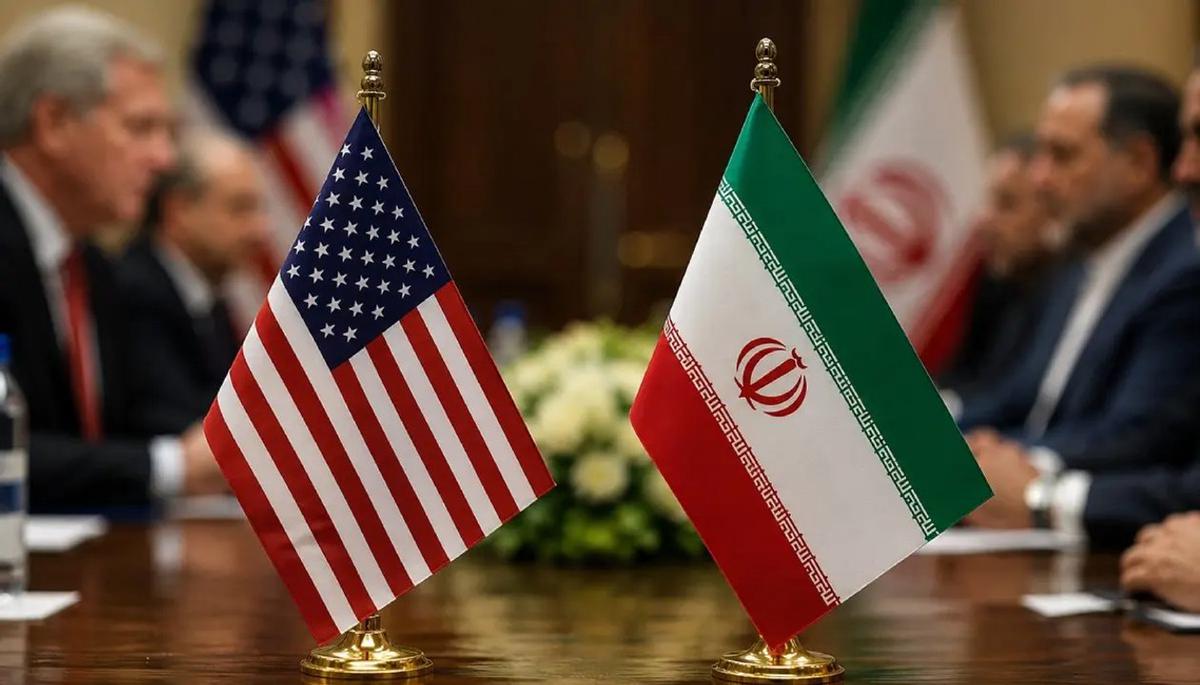
The reopening of the Strait of Hormuz comes at a time when rising oil prices have led several countries, including the Dominican Republic, to evaluate measures to address the impact of the international crisis
SANTO DOMINGO – The agreement announced between the United States and Iran to end hostilities and reopen the Strait of Hormuz could have repercussions that go far beyond the diplomatic sphere, directly influencing global oil trade, energy costs, and the stability of economies that depend on fuel imports.
The information was released last Sunday by US President Donald Trump through his official account on the social network X, where he confirmed the understanding reached between both nations and announced the end of the US naval blockade on Iranian ports located in the Strait of Hormuz.
“Congratulations to all! Ships of the world, start your engines. Let the oil flow!” the US president wrote.
According to the international newspaper El Mundo, the agreement includes the gradual reopening of the maritime route and a relaxation of the restrictions that limited Iranian oil exports. The formal signing of the agreement is scheduled for June 19 in Switzerland.
A key route for the global economy
According to analyses published by the British network BBC and various international organizations specializing in energy, the Strait of Hormuz is one of the most strategic maritime corridors for the world trade of oil, because a significant part of the crude oil exported by the main producers of the Persian Gulf passes through this route.
As the BBC explains, any disruption or threat to that route usually generates concern in international markets, due to the risk of affecting the global energy supply and causing increases in oil prices.
Likewise, specialized media outlets such as ABC and La Vanguardia have indicated that the tensions recorded in the Middle East during the last few months contributed to increasing the volatility of energy markets and raising expectations about possible increases in fuel costs.
What does it mean for the Dominican Republic?
The situation is especially relevant for the Dominican Republic due to its dependence on imported fuels.
The behavior of international oil prices has a direct impact on sectors such as transport, electricity generation, industry, commerce and tourism, in addition to impacting public spending allocated to subsidizing fuels.
Last Thursday, June 11, the presentation of the package of measures to promote economic growth and mitigate the international crisis was carried out by the Minister of Finance and Economy, Magín Díaz, who warned that a scenario of oil prices between US$90 and US$100 per barrel would force the State to allocate between RD$18 billion and RD$32 billion in additional funds to sustain energy subsidies.
More oil on the market, less uncertainty
According to analyses published by ABC Economía and reports from the Spanish newspaper El País, one of the effects most observed by the markets after the announcement of the agreement is the possibility that Iran will progressively increase its oil exports once maritime traffic in the region is normalized.
Experts consulted by both media outlets point out that a greater availability of crude oil usually helps to alleviate pressures on international prices, especially in times of high geopolitical uncertainty.
La Vanguardia also highlights that the reopening of the Strait of Hormuz could reduce some of the risks that currently concern international shipping companies, insurers and logistics operators, factors that ultimately influence the costs of global trade.
Impact on transportation, inflation, and cost of living
According to economic analyses published by Al Momento, variations in the price of oil not only affect fuels, but also maritime and air transport costs, industrial production and the distribution of goods.
For this reason, the media outlet Expansion , in various analyses, considers that an eventual stabilization of energy markets could help to moderate some of the inflationary pressures that have affected different economies in recent months.
While the final details of the agreement are being worked out, its evolution continues to be closely monitored, due to the potential impact it could have on economic growth, public finances and energy prices globally.
Recommended readings: