



BBC NewsWorld
Commodity markets around the world have been shaken by the war in Ukraine.
This has not only been a consequence of the harsh Western sanctions against Russia, which now include gas and oil.
The price of raw materials has also skyrocketed due to supply disruptions caused by the Russian invasion, which has blocked the flow of grains and metals from the region.
Russia and Ukraine play a strategic role in global commodity markets.
They are major exporters of basic raw materials, from wheat and cereals to oil, natural gas and coal, gold and other precious metals.
And the war has already affected both domestic production and crucial supply chains for the rest of the world, driving prices up.
The situation has been described as "catastrophic" for many countries, particularly the poorest ones.
Experts warn of the consequences of what they call "extreme volatility" in the markets as a result of the invasion of Ukraine.
And there are fears about economic growth in countries that are still recovering from the Covid pandemic.
These are 4 key exports that are being impacted by the war in Ukraine.

1. Energy
Russia's economy is heavily dependent on the export of oil and gas.
It is the world's third largest oil exporter (after the US and Saudi Arabia) and one of the largest gas exporters.
Before the invasion of Ukraine, Russia supplied one out of every 10 barrels of oil consumed by the world.
But now, with the war, and the announcement by the US, Canada and the UK to ban the import of Russian energy products, the world oil market faces its greatest turbulence since the 1970s.
Experts say prices are likely to continue rising as long as the war lasts, since there are few alternatives to replace Russia's exports of approximately five million barrels per day.
OPEC indicated that finding those alternatives will not be easy, as OPEC Secretary General Mohammad Barkindo told the press.
"There is no capacity in the world" that can replace Russian production, he indicated, adding that "we have no control over current events, geopolitics, and this is dictating the pace of the market.".
But even countries with low imports of Russian energy will feel the impact, as the measures are likely to increase already high wholesale prices.
2. Food
Both Russia and Ukraine are major exporters of food products.
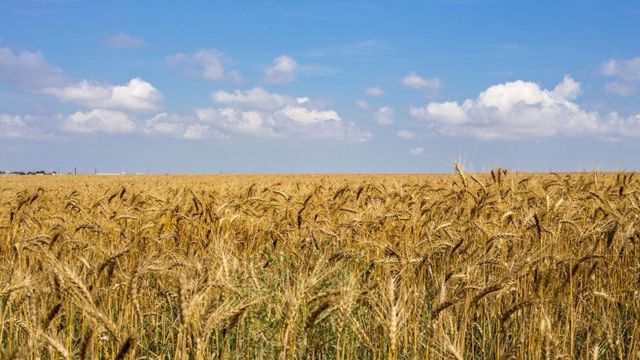
The two countries, known as "the breadbasket of Europe", account for 29% of global wheat exports and 19% of corn exports, according to JP Morgan.
Ukraine is the world's largest producer of sunflower oil, and Russia is second, according to S&P Global Platts. Together, they account for 60% of global production.
Wheat prices on some futures exchanges have been trading at 14-year highs.
Both wheat and sunflower oil are key raw materials used in many food products.
And if their harvesting or processing is hampered, or if exports are blocked, importing countries have to find ways to replace supplies.
Analysts warn that the impact of the war on grain production could double global wheat prices.
This could seriously affect several countries that depend on grain imports from the Black Sea region.
Turkey and Egypt receive almost 70% of their wheat imports from Russia and Ukraine. And Ukraine is also the main supplier of corn to China.
The director of the World Food Programme, David Beasley, told the BBC that rising food prices due to the conflict in Ukraine could have a catastrophic impact on the world's poorest countries.
"Lebanon gets roughly 50% of its grain from Ukraine. Yemen, Syria, Tunisia, and I could go on and on, depend on Ukraine as a grain supplier," he noted.
"So (Russia and Ukraine) are going to go from being a breadbasket to literally having to distribute bread to them. It's simply an incredible reversal of reality," he added.
3. Metals
Russia is one of the world's largest suppliers of metals used in all kinds of products, from aluminum cans to copper wires and car components.
It is the world's fourth largest exporter of aluminum and one of the top five global producers of steel, nickel, palladium, and copper.
Ukraine is also a major producer of industrial metals and has a significant share in the export of palladium and platinum.
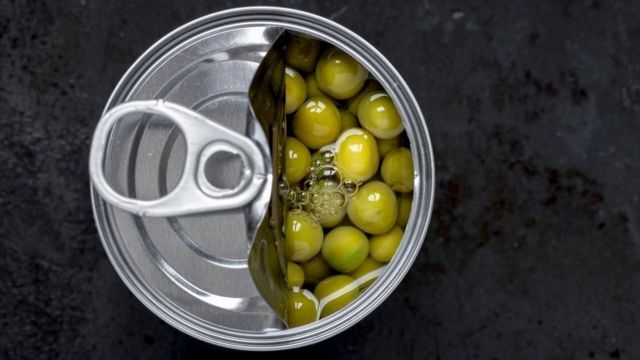
This means that, due to the invasion of Ukraine, we could see a price increase for canned goods and copper wiring.
"We've seen aluminum and nickel rise by 30% since the beginning of the year, and that will eventually be passed on to consumers when they buy their beverage cans made of aluminum, or when they do renovations on their home and need copper for their wiring - all those prices contribute to the overall inflationary pressure," Matthew Chamberlain, director of the London Metal Exchange, told the BBC.
Russia is also the world's third-largest gold producer, after Australia and China. According to data from the World Gold Council, it supplied 350 tons of the precious metal last year.
Gold reached its highest price since August 2020 in early March, trading at over US$2,000 an ounce.
This is due to the influx of capital from investors seeking a safe haven in times of market uncertainty.
But the price of other metals soared due to fears of supply disruptions from Russia and Ukraine.
In early March, nickel – used in lithium-iron batteries – surged 76%, and palladium – used in catalytic converters in cars to reduce emissions – reached record levels, Reuters reports.
Any disruption in the supply of palladium, analysts point out, could pose serious problems for automakers.
"Russia accounts for 38% of global palladium production. Since supply cuts cannot be offset elsewhere, the market risks falling into a significant supply deficit," Commerzbank strategist Daniel Briesemann told Business Insider.
4. Neon
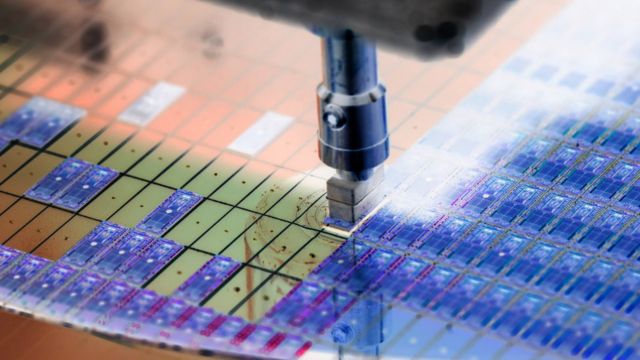
Ukraine is one of the main suppliers of purified rare gases such as krypton and neon, the latter being essential for manufacturing semiconductors.
According to TrendForce data, Ukraine accounts for almost 70% of global exports of purified neon gas, which is used to create the lasers that etch patterns onto semiconductors.
And more than 90% of the neon used by the US chip industry comes from Ukraine.
Any disruption to their supply could worsen the microchip shortage, which was already a major problem in 2021.
"Because Russia supplies more than 40% of the world's palladium and Ukraine produces 70% of the world's neon, we can expect the global chip shortage to worsen if the military conflict persists," wrote Tim Uy of Moody's Analytics in a recent report.
"During the 2014-2015 war in Ukraine, neon prices increased several times, indicating how serious this can be for the semiconductor industry.".
"Semiconductor companies account for 70% of total neon demand, as it is an integral part of the lithographic process for making chips," he added.







