



Taken from BBC Mundo
Russian President Vladimir Putin announced a "special military operation" in eastern Ukraine on Thursday morning. The first explosions were heard immediately afterward in several Ukrainian cities.
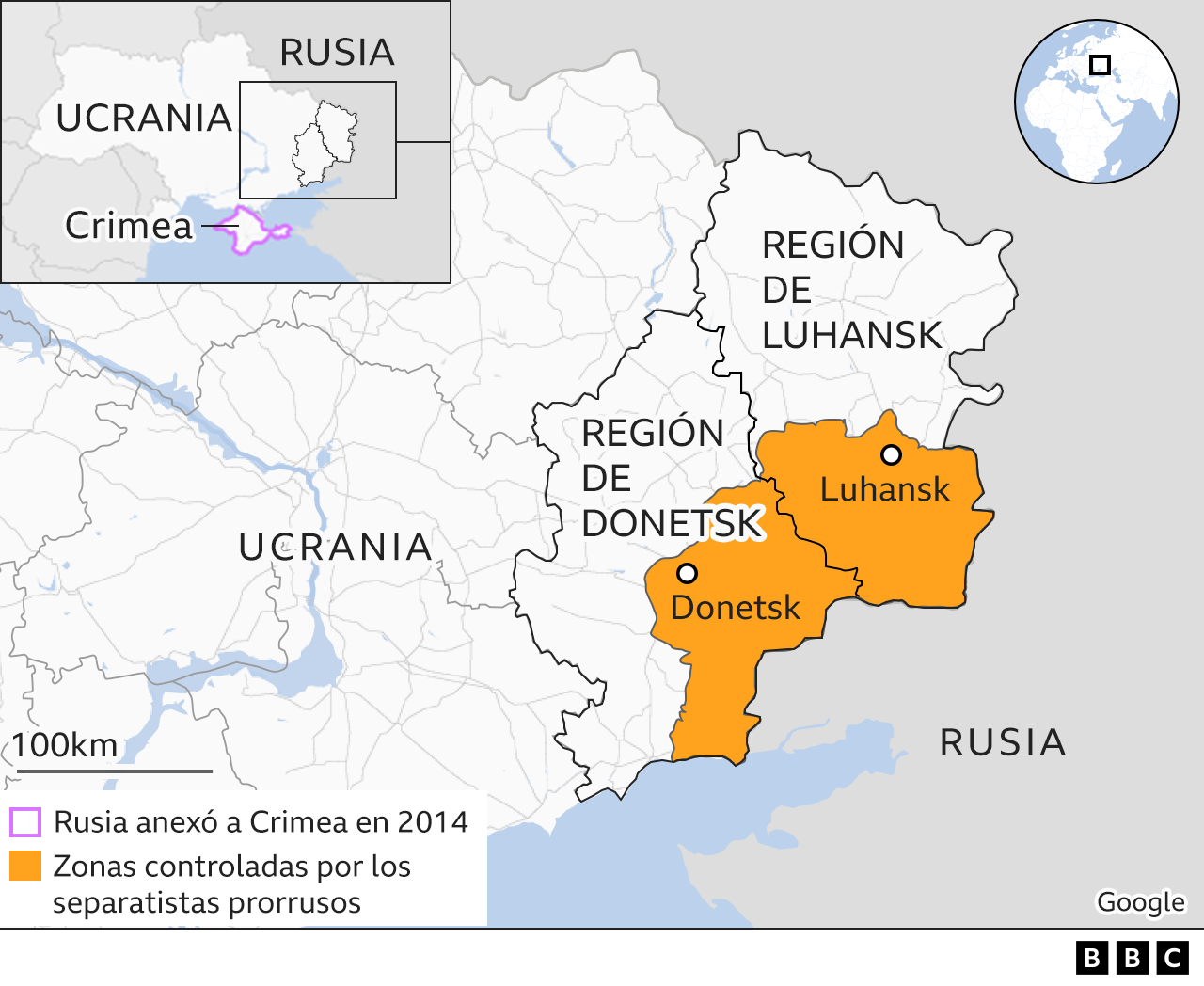
On Monday, Putin had already announced the deployment of Russian troops to the rebel regions of Donetsk and Luhansk, after recognizing the independence of both.
Putin's actions led to an invasion of Ukraine, and there are fears in Europe that it could escalate into a war involving more countries. International condemnation was swift, and US President Joe Biden asserted on Wednesday that Russia would be held accountable for its actions.
However, Washington rejected the possibility of sending troops on Wednesday.
This is the latest chapter in a conflict that dates back to at least 2014, when Russia took control of the Ukrainian territory of Crimea and supported pro-Russian separatist forces in the Donetsk and Luhansk regions.
1. What did Putin say when announcing the "special military operation"?
Russian President Vladimir Putin announced a "special military operation" in the Donbas region of eastern Ukraine.
He announced this in a televised speech that took place at the same time as the United Nations Security Council implored him to halt all military action.
Putin said the operation aims at the "demilitarization and denazification of Ukraine.".
He explained that the decision was made after receiving a request for help from the leaders of the Russian-backed separatist territories formed in eastern Ukraine in 2014, although Western intelligence had been warning of a potential invasion for weeks.
"I have made the decision to carry out a special military operation. Its objective will be to defend the people who have suffered persecution and genocide at the hands of the kyiv regime for eight years," the Russian president stated, in a claim for which he has presented no evidence.
Putin called on Ukrainian soldiers to lay down their arms immediately.
"All members of the Ukrainian army service who comply with these demands will be allowed to leave the battle zone," he said.
He also issued what appeared to be a warning to other countries, such as the United States, that have supported Ukraine.
"Anyone who tries to interfere with us, or worse, create threats to our country and our people, should know that Russia's response will be immediate and will have consequences unlike anything it has ever experienced in its history. We are ready for any turn of events.".
2. What was Ukraine's reaction?
Ukrainian Foreign Minister Dmytro Kuleba noted shortly after the announcement that "several Ukrainian cities are under attack.".
"Putin has just launched a full-scale invasion of Ukraine. It is a war of aggression. Ukraine will defend itself and win," he said. "The world must stop Putin," he demanded.
This Thursday morning the president announced that Ukraine was breaking off diplomatic relations with Russia and assured that they were providing weapons to anyone who wanted to defend the territory.
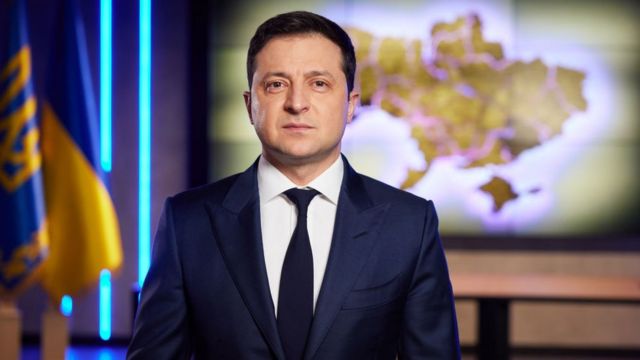
Shortly before Putin's announcement and the start of the military operation, Ukrainian President Volodymyr Zelenskyhad given an emotional speech on television.
Zelensky first spoke in Ukrainian and warned that a Russian invasion would be "the start of a major war on the European continent.".
He then switched to Russian and in that language asked the population of the neighboring country to reject an attack and pointed out that they are being lied to about Ukraine.
"They say the flame [of war] will liberate the people of Ukraine, but the Ukrainians are free," he said, according to BBC Eastern Europe correspondent Sarah Rainsford.
The Ukrainian leader stressed that his country is ready for a Russian attack and warned: “We don’t need any war, not cold, not hot, not hybrid. But if the troops attack us, if they try to take our country—our freedom, our lives, the lives of our children—we will defend ourselves.”.
"If they attack us, they will see our faces, not our backs," the Ukrainian president said.
3. How does Putin justify the "military operation"?
On Monday, Putin had already delivered a televised speech in which he announced that he recognized the independence of two areas of Ukraine controlled by Russian-backed separatists.
This was seen by analysts as a prelude to a military operation. In fact, on Wednesday, pro-Russian rebel regions in Ukraine asked Putin to send troops.
Putin's arguments against Ukraine include historical and security-related ones.
On Monday he claimed that Ukraine had no history of being a real nation and accused Ukrainian authorities of corruption.
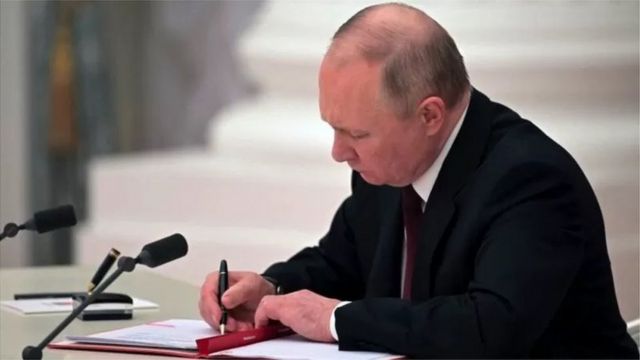
Shortly after the announcement, Putin signed an order for troops to perform "peacekeeping duties" in both rebel regions.
Let me emphasize once again that Ukraine is not just a neighboring country to us. It is an integral part of our own history, culture, and spiritual space,” he said.
He also accused the Ukrainian government of being a "puppet" of the US and alleged, without foundation, that Ukrainians are being "brutalized" by their leaders and that the country could obtain nuclear weapons and pose a greater threat to Russia.
During the speech, Putin reiterated the dangers of Ukraine being admitted to NATO (the organization does not even have its acceptance on its agenda and it is only an aspiration of Kiev) and assured that if the country joins the alliance, Russia would be at risk of an "attack".
Putin also claims, without evidence, that there is a "genocide" being committed by Ukraine against Russian speakers in the east of the country.
4. How did this situation come about?
The origins can be traced back to 2014, when Russia took control of Crimea and supported separatist forces in eastern Ukraine.
Rebel groups created people's republics in Donetsk and Luhansk.
The conflict has so far claimed some 14,000 lives.
On February 18, the BBC's Ukrainian service reported that the heavy artillery and mortars fired in the region were the heaviest in years.
In their latest report, international monitors from the Organization for Security and Co-operation in Europe reported hundreds of ceasefire violations between February 17 and 18.
The leaders of the two breakaway areas backed by Russia announced the evacuation of residents and said that Ukraine had stepped up its shelling and was planning an attack.
Denis Pushilin, head of the Donetsk People's Republic (DNR), announced an evacuation in a video purportedly filmed on Friday. However, a BBC analysis of the video's metadata showed it had been recorded before hostilities broke out.
In November of last year, Russia began deploying large numbers of troops in areas near the border with Ukraine.
But on February 15, Putin suggested there would be a partial withdrawal of Russian forces.
However, Ukraine and its allies said there was no reduction in the number of Russian troops in the border areas.
"They have always deployed forces from one side to the other," said NATO Secretary General Jens Stoltenberg, a day after Russia's announcement.
"It's been a big up-and-down, back-and-forth movement all this time; but the trend in recent weeks and months has been a steady increase in Russian capabilities near the borders with Ukraine.".







